

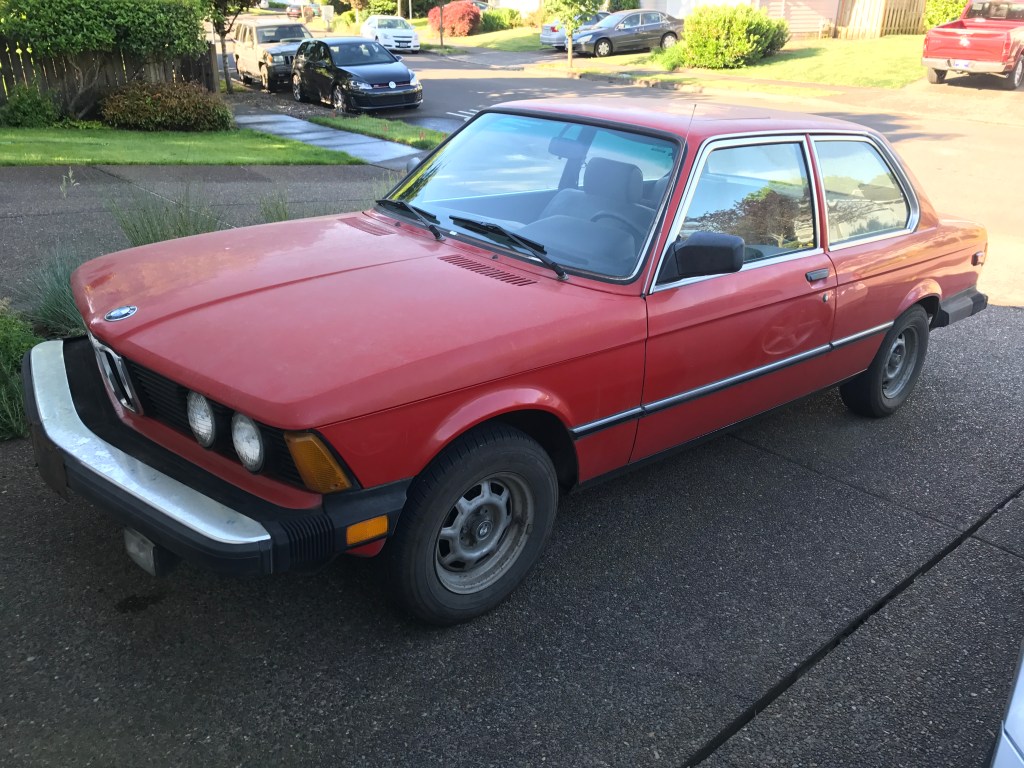
For as long as I can remember, I’ve been fascinated by classic BMWs. There’s something about their design, simplicity, and focus on driving that sets them apart from the rest. I regrettable sold an e30 1991 318is about 12 years ago for $1200 and it has haunted me since. About 8 years ago I was wanting to get back into BMW and not wanting to pay the current e30 chassis “hype tax”. I decided to give the unloved older brother a chance and picked up an E21. This blog series will take you through my journey of restoring and reviving my 1980s BMW E21 starting with a few retrospective to get you up to speed. From the first purchase, through the challenges (spoiler alert: there are a lot), to the ultimate transformation and all the way to its current state and more. This first post sets the stage with an overview of the E21’s legacy, how I found my car, why this model is so near and dear to me, ending with the biggest issue I’ve faced in my car history.
The E21: The OG 3 Series
The BMW E21 was introduced in 1975 as the successor to the legendary BMW 2002, a car that cemented BMW’s reputation for building compact, driver-focused sports sedans. The E21 marked the birth of the 3 Series, which would go on to become BMW’s most successful and recognizable model line. Designed by Paul Bracq, the E21 featured the iconic “shark nose” front end, a sleek, aerodynamic shape, and a driver-centric interior layout that emphasized BMW’s dedication to the driving experience.

The E21 came with a variety of engines ranging from the humble 1.6-liter four-cylinder to the more potent 2.3-liter straight-six. While it wasn’t as powerful as later models, the E21 made up for it with a lightweight chassis and a direct, analog driving feel that appealed to purists. One of the most distinctive features of the E21 was its center console angled toward the driver—a subtle yet effective design choice that laid the groundwork for the driver-focused interiors that would become a hallmark of future BMWs. Though it’s often overshadowed by the E30 that followed, the E21 is cherished by those who recognize its role in shaping BMW’s reputation as a maker of “The Ultimate Driving Machine.”
What Makes the E21 Special?
The BMW E21 is special for many reasons. Introduced as the successor to the 2002, it marked BMW’s transition into the era of the modern sports sedan as the first 3-series. The E21 introduced features that would become staples of the 3 Series lineup, including the driver-focused cockpit with an angled center console and zero cupholders—subtle details that showed BMW’s commitment to making cars for people who loved to drive. The biggest driver for its special-ness right now is the price. The fickle mechanical fuel injection isn’t know for massive power and scares unseasoned mechanics away. As well as being is one of the worst victims of the crash bumper era cause the E21 to have some of the worst “diving boards” in the business. All of this means prices are way under what E30s and 2002s are going for in similar condition. Underrated and under appreciated, The E21 is a future classic on a budget.
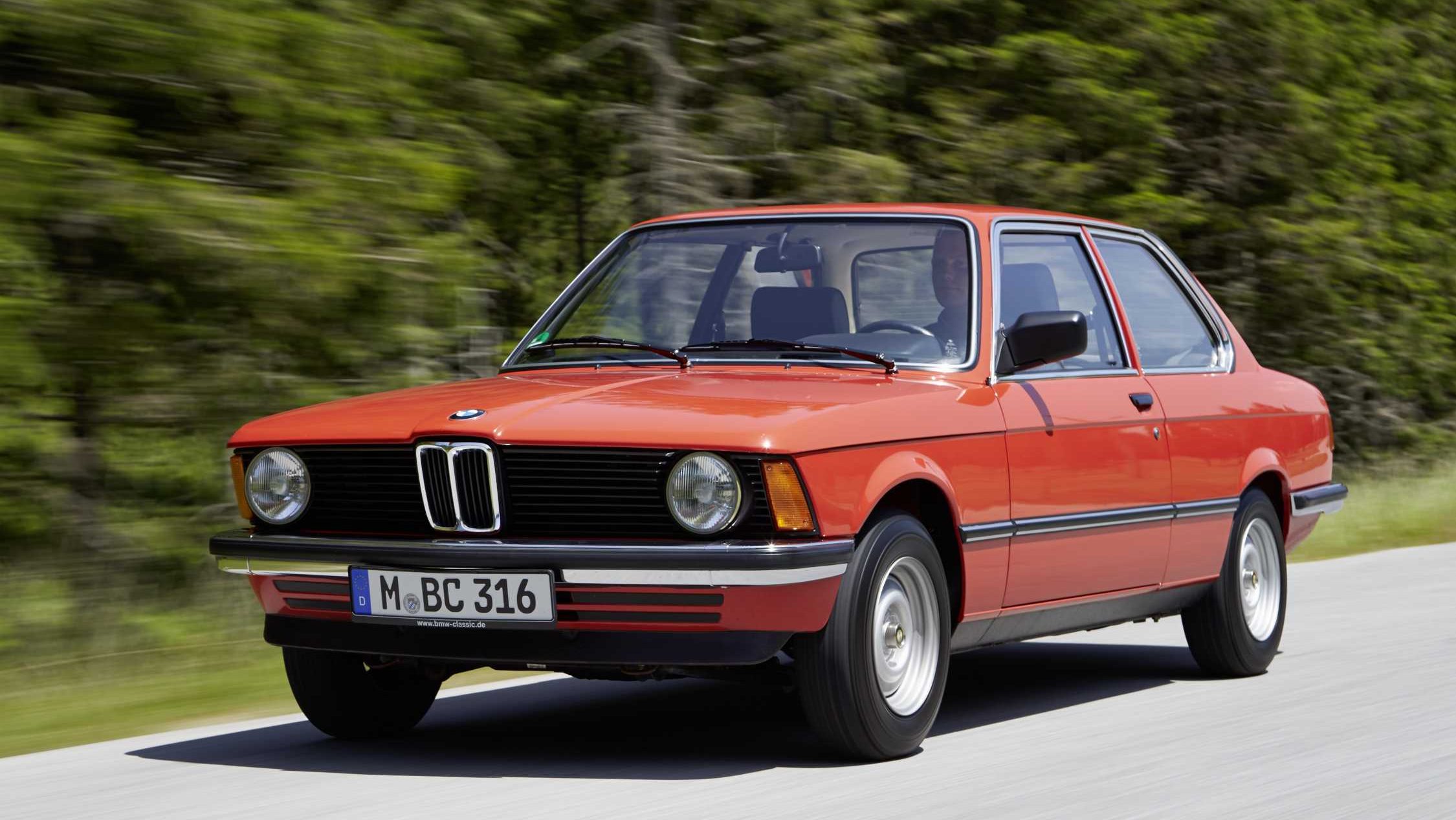
While it never gained the cult following of the E30, the E21 set the stage for BMW’s rise to prominence in the ‘80s and ‘90s with is prominent “shark nose”. Its lightweight chassis, rear-wheel-drive layout, and straightforward mechanics made it a joy to drive and work on. Owning an E21 is a nod to a time when BMW prioritized driver engagement over digital conveniences. With prices reflected by its forgotten status, the E21 was the perfect project for me, as it enabled me to get into retro BMWs again for a limited budget. Simple mechanics and cheap prices wrapped up in a Bavarian badge and rear-wheel drive, what could go wrong?
A Rough Diamond In The Rough
My journey with this project ultimately began at an unexpected place: Bob’s Auto Cafe in Tualatin, Oregon. Bob’s isn’t your average used car lot; it’s a unique establishment with a focus on community and giving cars a second chance at life. Bob’s takes donated cars and breathes new life into them by fixing and flipping them for a profit. However, its not just a cash grab. All of the mechanics working at Bob’s are training for SAE certification and Bob’s serves as a hands-on training for underserved communities. Pretty cool idea, so when I heard they had an E21 for sale, I knew I had to check it out.
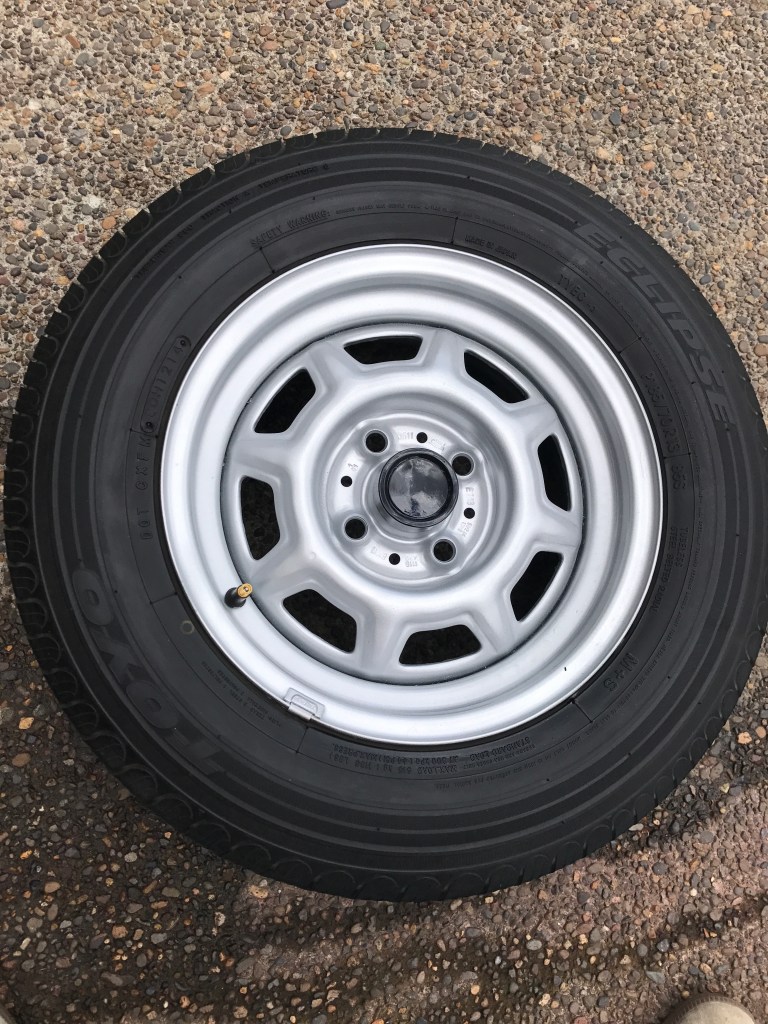
The car was a diamond in the rough—far from perfect but full of potential. They had it listed for $1000 on Craiglist so I made an appointment to get down there as soon as I could. It was a 1982 320i with 314K miles on the clock. Not the ideal car, but I wanted to see it anyway. As I looked over the car, I knew it wouldn’t be a straightforward project, but that’s part of the appeal. Dirty, rusted, and oxidation were the main staples of the car. However, a trunk full of extra parts, included an extra head and set of wheels and “Bob’s” upfront transparency about the cars problems had me thinking I needed it. Additionally the car came with almost 2 inches thick of full records for the car since new, including the original service schedule with stamps from BMW and an excel spreadsheet with all receipts organized had me thinking it was at least loved. After a few chats with the folks at Bob’s Auto Cafe and a test drive that cemented my decision. I couldn’t pass up on the car even though it was a mess. I relished the challenge of bringing the car “back from the dead” and into its former glory.
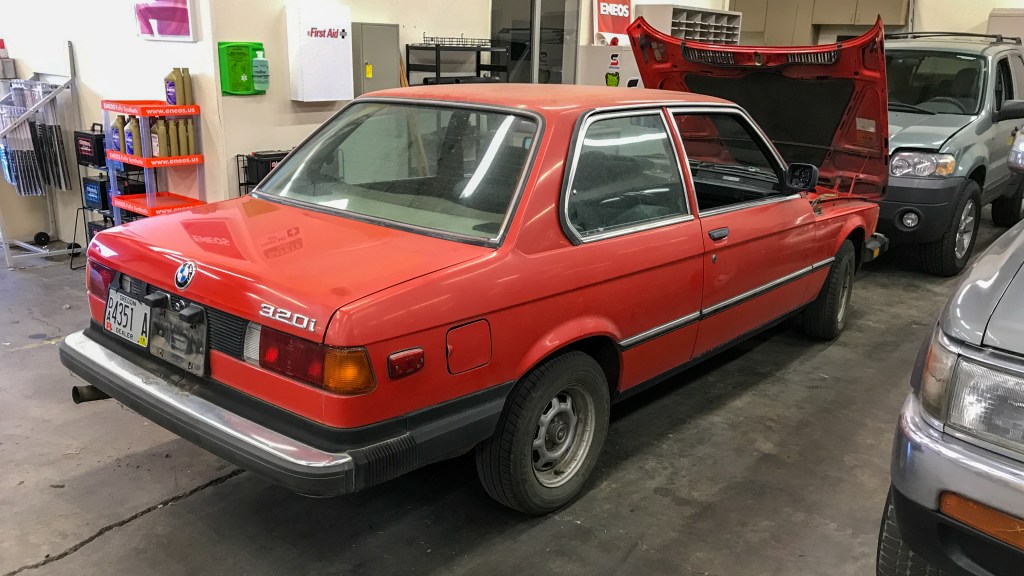

Seeing the potential and after some negotiation, I ended up purchasing the car for $900. Since Bob’s was a dealer, in Oregon that included 2 years registration, smog, title, and dealers fee included. A deal I will quite literally never be able to do again. Driving it home, it was beat up and leaning slightly to the right due to a blown shock, but I was grinning cheek to cheek. Finally, a real project was in my possession. I took the first step in what I knew would be a rewarding (and possibly challenging) journey. I just didn’t know how much of a journey this car would be.
The Best 3 Days With A Car
With the E21 now in my garage, I spent the next few days getting familiar with the car—checking the basics, planning out the build, and enjoying the simple pleasure of driving a classic. There’s something irreplaceable about the feeling of a vintage BMW on the road, with its direct steering, mechanical feedback, and the raw sensation that modern cars often lack. The car felt alive, and every drive was a reminder of why I chose this project. Just having it in the driveway felt like home. I was ready for the future with my new ride and nothing was going to stop me. However, as with any old project car, not everything is as smooth sailing as it appears.
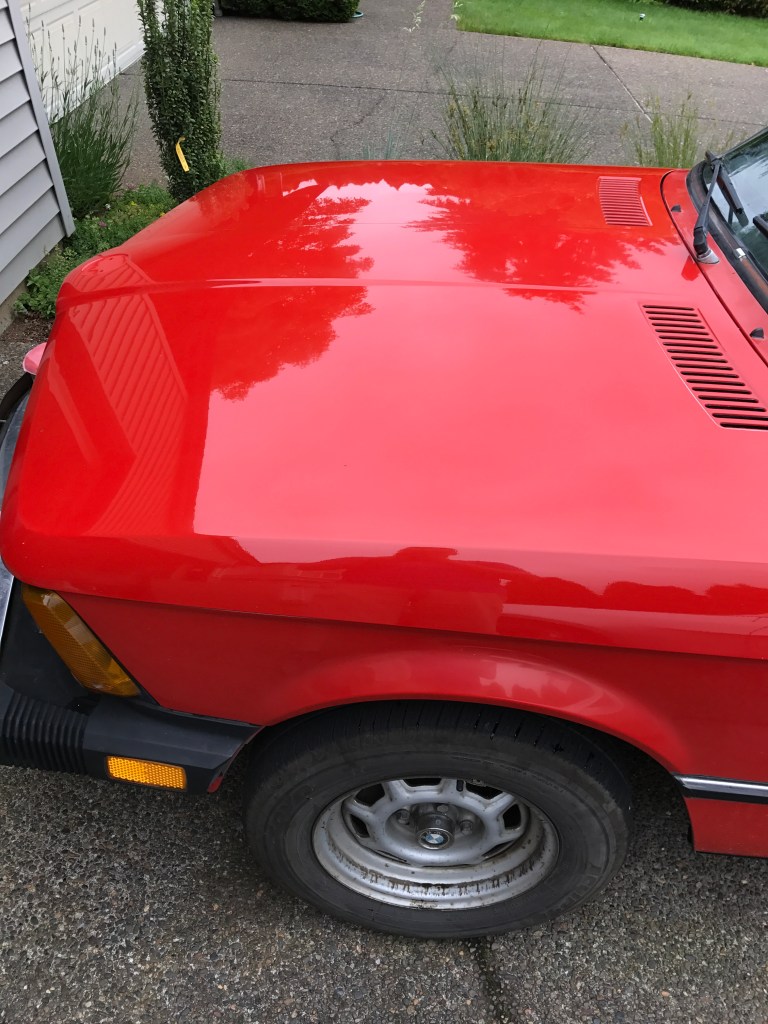
Buying the car on a Thursday evening, I spent most of Friday and the rest of my weekend cleaning it and polishing what I could. A quick wash and hand polish did wonders on the car. Apparently, it’s technically a red car not an orange one, but you wouldn’t have know that with so much oxidation. The before and after was mind blowing (See images). It was looking the part now and just needed some peace of mind maintenance. I changed out plugs, wires, distributor, fuel filters, oil, and air filter. With the car on the upswing back to it’s prime, I decided to fill it up with gas and go for a drive. As I left the gas station ready for a good time, I downshifted a bit high and the engine revved up. Not a crazy amount, but close to redline and that’s when disaster struck. The excitement turned into a moment of uncertainty, and the journey took a sharp turn into what would become an unexpected chapter of learning.
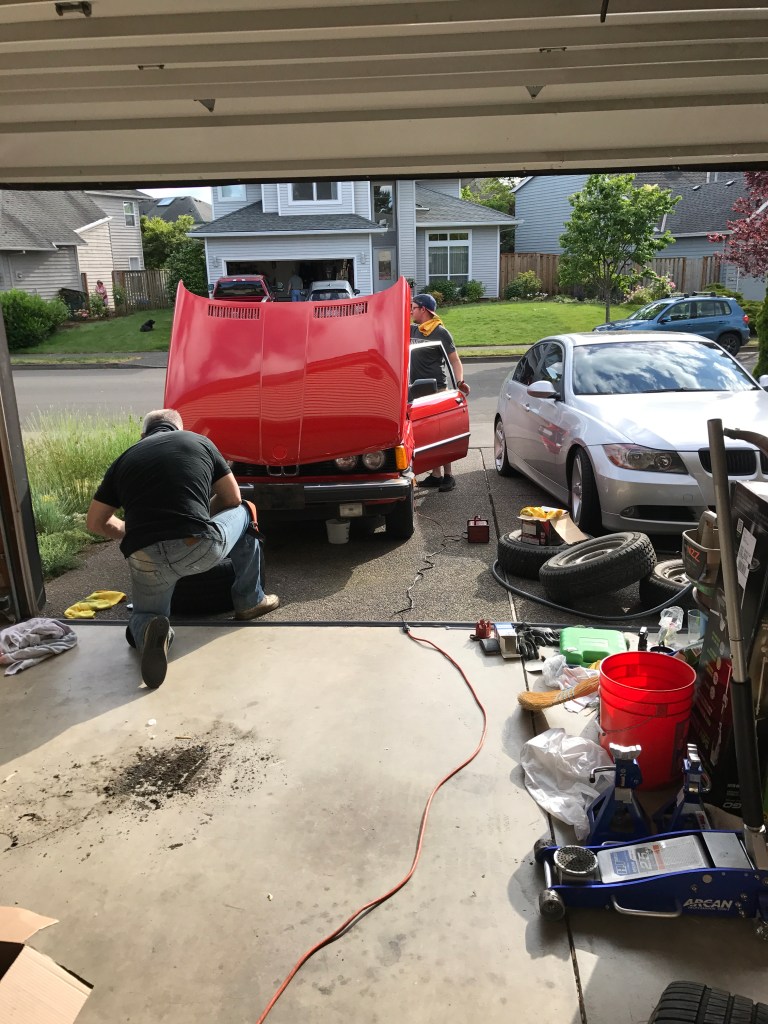

“BMW believes life begins at 6000 RPM” but apparently that’s when mine died. The sounds of loose gravel being dragged around in a metal wheel barrel. Apparently something in the head did not enjoy being used and completely nuked itself. Luckily I was only about a block from my house so I limped it home. I know you shouldn’t drive a car with that much metal clucking in the engine, but my thought was another 1/4 mile isn’t going to hurt a destroyed engine with 314K miles on it. At least its was not going to get much worse limping back to the house in neutral.
Back in the driveway, cleaned and polished, but dead on arrival is where the car ended up and where this part of the story ends. The search of a new engine and the steps forward became my main focus. But that’s a story for part two of this series, where I’ll dive into the details of what happened and how I decided to move forward with project E21. Stay tuned as the journey unfolds and I tackle the first of many challenges that come with bringing an old classic back to life in a big way. Spoiler Alert: It involves a lot of machine polishing, a massive euro parts grab, and possibly Weber carburetors. The madness is just beginning.
 The Late Brake
Leave a Reply