


“Simplify, then add lightness.” – Colin Chapman
In the world of motorsport, Lotus Cars’ founder Colin Chapman’s philosophy has been echoed by countless manufacturers, yet few truly commit to the concept with the dedication it deserves. The Rush SR, however, takes this mantra and runs with it—straight past cars costing three times as much. With their recent debut in the Gridlife series, these cars are proving that affordable racing doesn’t have to mean slow racing. In fact, it’s quite the opposite.
What is the Rush SR?
The Rush SR is a purpose-built race car that weighs an astonishing 1,100 pounds. For reference, my MK7 GTI weighs about 3,000 pounds as newer cars continue to bulge into massive beasts. This extreme weight reduction creates a cascade of performance benefits: smaller brakes work more efficiently, tires last longer, components endure less stress, and most importantly, the car goes faster while demanding less from the driver’s budget. Priced at around $48,995, the Rush SR is exponentially cheaper than its performance rivals, and that’s without getting into operational cost.

With an 11,800 RPM redlining engine sourced from a Suzuki GSX-1000 street bike, the Rush SR delivers an impressive power-to-weight ratio that rivals GT3 cars costing north of $150,000. Yet, it achieves this without requiring exotic materials, sky-high maintenance costs, or excessive horsepower—producing only 145 whp. The car’s lightweight design isn’t just about speed—it’s about making high-performance racing accessible to more drivers than ever before. It’s a breath of fresh air compared to the quad-digit horsepower battles dominating the supercar market.
The Rush SR also brings high-end motorsport technology to an affordable price point. Typically reserved for six-figure race cars, features like a no-lift and auto-blip sequential paddle-shifting system come standard. These go-karts on steroids even come with 500 pounds of downforce out of the box, which is a shitload when considering that’s nearly 50% of the car’s actual weight. With a central seating position, left-foot braking capabilities, and race-derived aerodynamics make it a driver’s dream. It combines the best aspects of a great race car into a tiny, easy-to-transport chassis. In 2025, the Rush SR will offer access to racing that literally no other company can match. Getting behind the wheel of one is the kind of immersive experience that turns good drivers into great ones. This engineering marvel could very well become a breeding ground for the next generation of racing talent.
Why Affordable Motorsport Matters
For decades, the cost of entry into high-performance motorsport has been a significant barrier for many aspiring racers. The Rush SR aims to dismantle that barrier by offering an economical, high-speed alternative to traditional race cars. The affordability of the Rush SR isn’t just in its purchase price but in its operational costs as well.
The extensive and inexpensive parts catalog is one of the car’s standout features. The bodywork consists of 14 separate panels, each small enough to ship without having to rely on heavy freight charges. If a driver damages a panel during a race, replacing it is quick, easy, and—most importantly—affordable. Unlike other spec race series’ that can require costly crated shipping for even minor parts, the Rush SR’s modular design ensures that repairs are financially manageable.

The running costs are equally impressive. Tires and brakes last significantly longer when they’re not trying to control two tons of metal. Rush Autoworks estimates annual operating costs between $3,000-$5,000, assuming a full season of track use. This cost structure is a game-changer, making the Rush SR a viable alternative to spec series like Spec Miata, Spec E30, and Spec E46—all while delivering faster lap times and a superior driver experience. Don’t mistake me, these parts are not “cheap” by any means, but compared to other series’ its a significant drop in affordability. To get a sense of the level of work the team behind the car put into the interchangeability, poke around https://raw-parts.com/ and look at the options for upgrades and replacement parts.
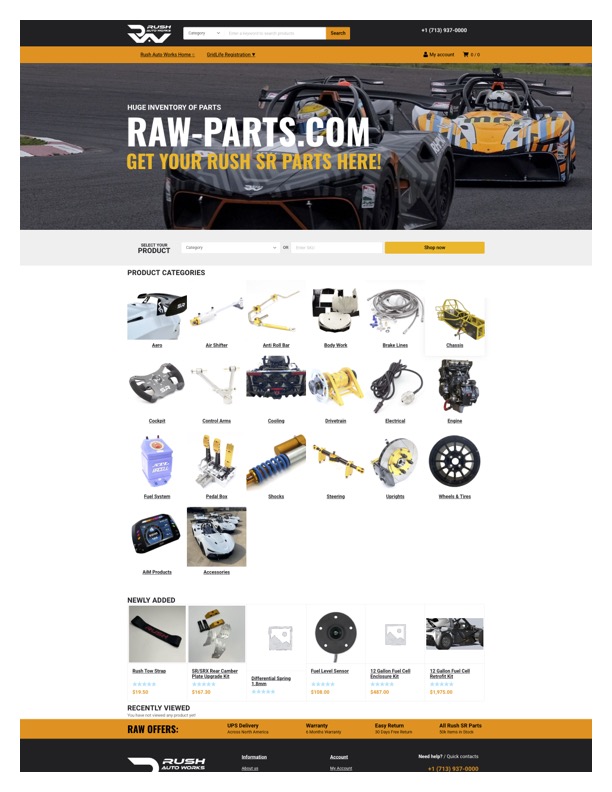
Additionally, the Rush SR was designed for ease of maintenance. Both front and rear clips can be removed without tools, providing complete access to the engine, suspension, and electronics. This allows for quick repairs and adjustments, reducing downtime and making the car an ideal choice for both amateur and professional racing teams. All can be done within the confines of a standard track garage. However, due to the size of the Rush SR, you are able to fit them two wide, making running multiple cars or sharing a garage even easier further cutting down on costs per car.
Gridlife: Bringing the Rush SR to the Mainstream
The partnership between Rush Autoworks and Gridlife was a pivotal moment for the Rush SR in 2024. Gridlife has spent years cultivating an event series that celebrates automotive performance in all its forms while maintaining accessibility and enthusiasm often missing from traditional motorsports. The addition of a dedicated Rush SR category to Gridlife’s roster brings something unique: a true spec racing series where driver skill—not budget—determines the winner. I was lucky enough to get to watch this live at last year’s Gridlife Laguna. I highly recommend watching even a little bit of the race. The closeness makes for a great battle and the low costs getting the drivers gunning for position without fear of damages.
Gridlife’s high-energy atmosphere and massive fan engagement provide the perfect platform for the Rush SR to gain visibility. Its impressive performance and affordability make it an ideal choice for drivers looking to compete in a professional-grade race series without the astronomical costs typically associated with motorsport.
If you’ve been following The Late Brake, you already know my thoughts on spec racing. Its meritocratic format ensures a level playing field—every car is identical in performance potential, making racecraft and strategy the key success factors. Significantly decreasing the cost barrier makes the Rush SR the prime choice for entry-level racing at the grassroots level. This aligns perfectly with Gridlife’s mission to make motorsport more accessible, bringing in new drivers while giving existing racers a fresh, competitive series.
The Future of Affordable Racing
The Rush SR is not just another race car—it’s a revolution in how motorsport can be approached. By prioritizing lightweight design, cost-effective maintenance, and high-performance capabilities, Rush Autoworks has created a machine that redefines the accessibility of professional-level racing. With Gridlife adopting the Rush SR into its 2025 event series, the car is now positioned to receive even further recognition. This partnership will not only introduce more drivers to the thrill of racing but also demonstrate that cutting-edge performance doesn’t have to come with a six-figure price tag.

For those who have always dreamed of competitive wheel-to-wheel racing but have been deterred by costs, the Rush SR represents the most viable path to legitimate competition. It offers pure racing thrills—11,800 RPM worth of thrills, to be exact—without the financial burden that so often sidelines talented drivers. In a motorsport landscape increasingly dominated by exclusivity and rising costs, the Rush SR stands as a true equalizer: racing that’s about the racing, not the spending. And in today’s world of increasingly inaccessible motorsport, that might just be the most revolutionary concept of all.
A simpler, lighter car with even lighter costs—Colin Chapman would be proud.

 The Late Brake
Leave a Reply