

There’s a special kind of joy that comes with hearing your project car come to life for the first time after months or in this case, years of setbacks. If you’ve been following along with Project E21 on The Late Brake, you already know that Part 2 ended in a mess of engine trouble and a whole lot of staring at a car that looked the part but couldn’t quite live up to it. Part 3? Well, this one’s all about getting over that hill. Or at least, crawling up it with busted knuckles, a stubborn idle, and eventually, a trailer ride of shame. This is the story of how the new to me M10B18 finally made its way into the car, carbs and all, the tuning drama that followed, and the E21’s first big outing.
New Engine, Who Dis?
After the saga of the blown motor and chasing dead ends that wrapped up Part 2, finally dropping in the fresh M10B18 felt like a rebirth. It was the kind of moment that almost made you forget how many nights you spent chasing vacuum leaks or rewiring brittle connectors. Almost.
As you know, I ditched the old Bosch K-Jetronic fuel injection system entirely. No more finicky control pressure regulators or ancient cold-start valves (which were broken already). Instead, I went full analog with a pair of Weber DCOE 40s. If you’re gonna embrace classic car ownership, you might as well lean into the charm and chaos of carburetors. Of course, carbs meant rebuilding the fuel system from scratch. I swapped in a Carter low-pressure pump, added a proper regulator, and ran fresh lines throughout. The result? A stripped-down, simplified system that no longer relied on half-century-old electronics and vacuum magic to function. With the K-Jet wiring out of the picture, the engine bay suddenly looked cleaner—and a lot less intimidating.
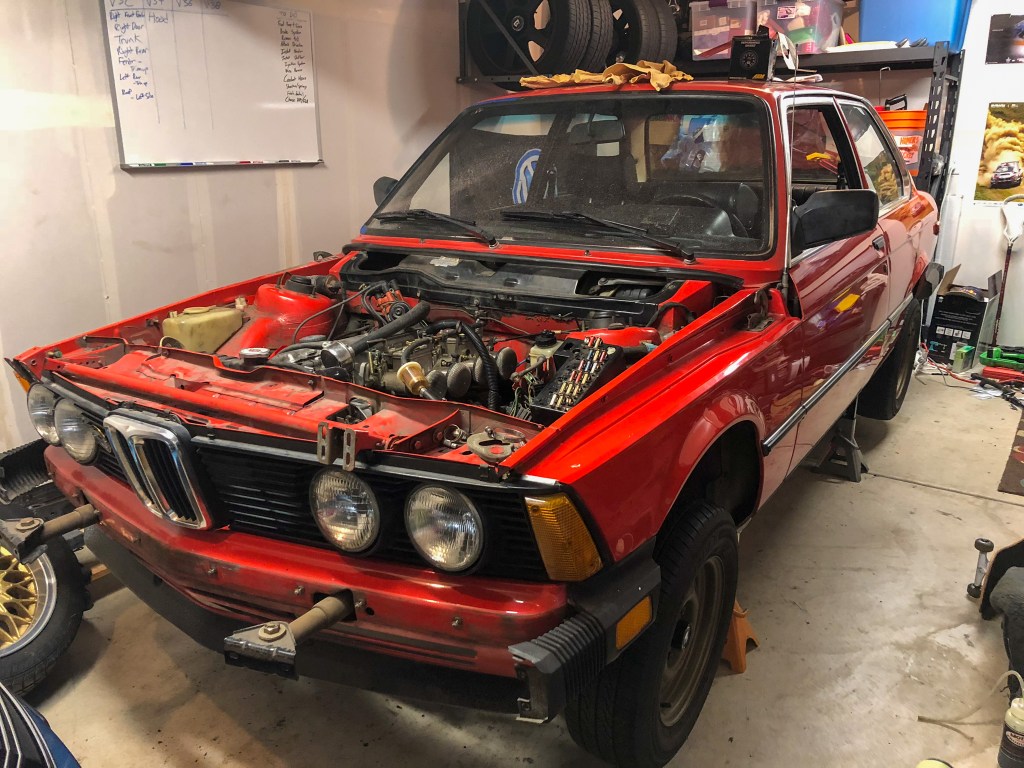
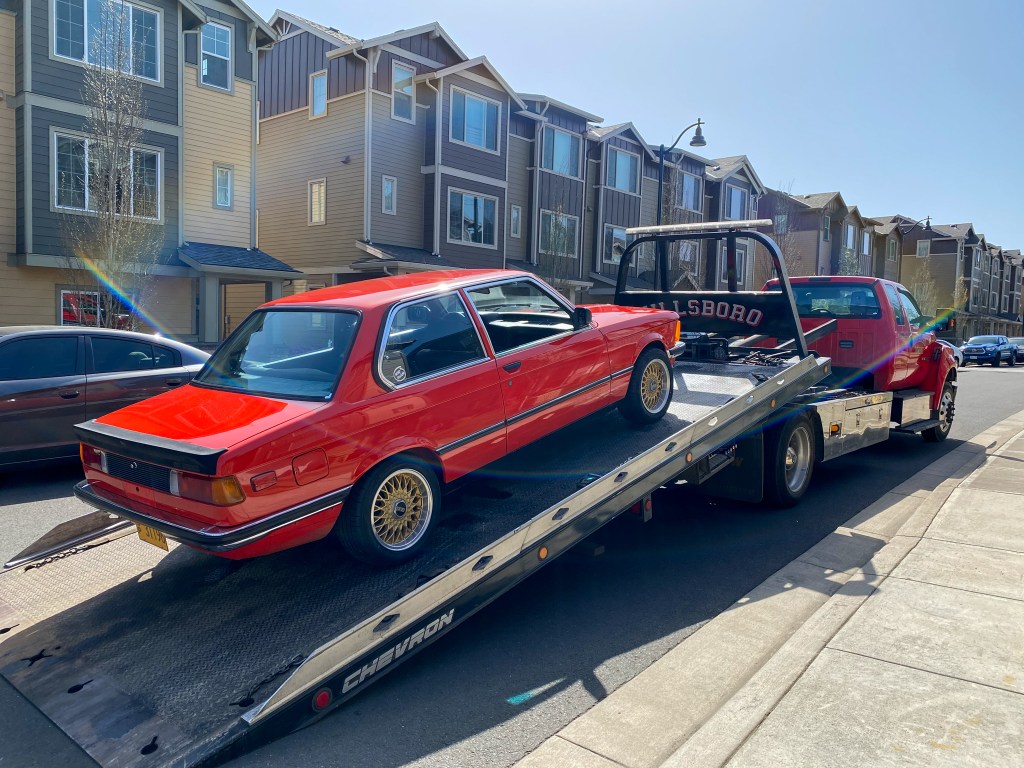
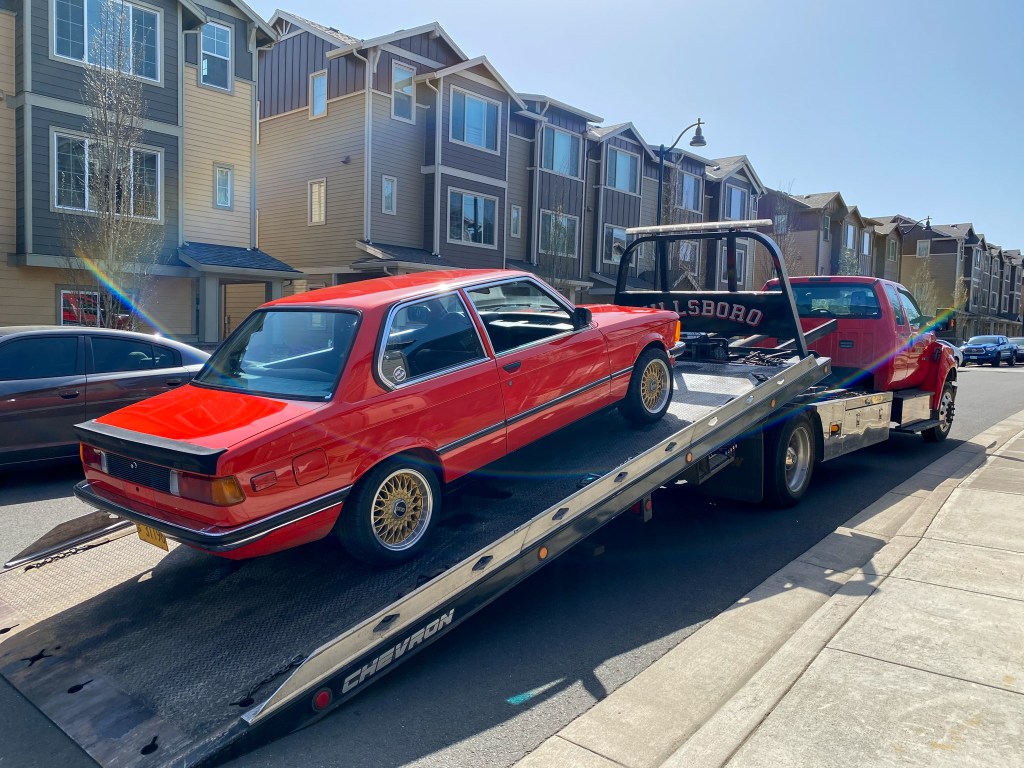
The engine was finally ready to give it a go and be on the road. After some initial testing with starter fluid, we got the engine to fire and the fuel system to work. I decided to send the car off to a local shop to have the carbs set up properly as well as the exhaust built out. At the time, it was just headers and it was brutally loud to run in the garage without a muffler. A tow truck showed up and I sent the car off to what I thought would be a little more than a week.
Now, I don’t want to go into detail about this, but basically, there were some massive miscommunications and the shop I worked with did some absolute garbage work. Some was outsourced without my knowledge, other work was shoddy to get my car off their rotation. Long story short, I got the car back but it was in need of more work. But it had an exhaust and was running and driving, kinda of. Despite everything, when I finally turned the key and the car rumbled to life, it felt like a proper win for once. A huge one. After everything from Part 2, hearing that engine catch for the first time for real was a high I won’t soon forget. It was just fuel, air, spark—and a bit of prayer. Riding the momentum, I decided not to let the car stumble into the back of the garage. I made some calls and got a tip on a guy that lives and breathes Weber carbs.
Old-School Tune, Modern Results
But just because it started didn’t mean it was right. Part of the issue with the last shop was that the tach was not working. They tried to tune the idle without actually seeing what it was idling at. The car sounded okay. Not great, but okay. Then I got the tach fixed (Which was just a fuse) and discovered it was idling at 2,100 RPM. That’s not an idle—that’s a cry for help. Throttle response was off, driveability was weird, and the whole setup felt like a house of cards. Clearly, it was time for a second opinion.
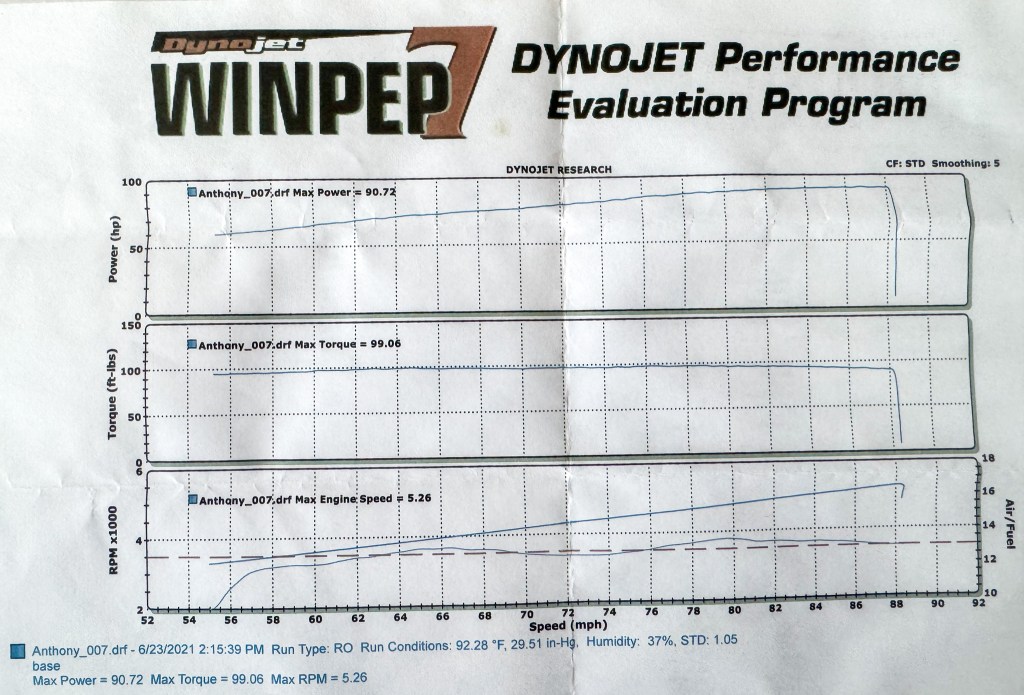
Enter TopTech Motorsports in Oregon City. This guy knows his stuff. No fancy laptop tuning, no sensors galore, just a rolling dyno, a few jets, and a lot of patience. He worked through the air/fuel mix, adjusted timing, and got both carbs perfectly synced. Unfortunately, the engine was real tired and the compression was below what he was comfortable going forward on with suspected bad piston rings. However, while being low it was perfectly even across the board showing 120 psi in each cylinder. Should be closer to 150, but even is tunable. I explained that I just needed the car to run smooth, not last and he made it happen. The difference was immediate. Throttle response was crisp, idle was steady, and for the first time, the car actually wanted to drive. There’s something deeply satisfying about watching old-school tech get dialed in the right way. No guesswork. Just experience. And the sound of a freshly tuned M10 on open carbs? Absolutely worth it. It even dyno’d at 90hp at the wheels which is insane for a 1.8L with bad rings. The guy from TopTech estimated around 117hp at the crank, kinda crazy when you consider that BMW claimed these had 101hp new. Broken or not, I’ll take it.
Getting it on the road home from his shop was a treat. Finally getting to drive the car for real felt so good. No radio, just the sweet sound of working carbs and the open road. I was ready to start enjoying this thing and not a moment too soon; Motorfest 12 was the following week.
A Grand Entrance (Almost)
With the car running right, it was time for a shakedown. Naturally, I pointed it toward Portland Cars and Coffee, the weekly ritual for local gearheads of all flavors. It was the morning before Motorfest 12 and seemed like the perfect place to start the day. The drive was drama-free (a miracle), and the car got plenty of love in the lot. There are not a lot of E21s on the road, and even less with the care and love put into them as mine had. Others just wanted to hear it idle. It was the kind of morning that made you forget how much you spent on the thing. Feeling good with the bad background thoughts quieting, I made my way to Motorfest 12.

Motorfest 12, the annual BMWCCA event in Silverton, Oregon, about an hour from the Portland area. This was it. The big debut. My freshly running E21, ready to take its place among other Bavarian classics. A rolling symbol of persistence, cursing, and barely-contained enthusiasm. At the time I was on the board for BMWCCA and had spent 4 years talking about my car, but never being able to bring it to any events. This was a moment in the making.
I hit the road, nerves buzzing. The drive was beautiful. Rural Oregon, twisty backroads, the Webers singing at every throttle blip. I started to let myself believe that maybe, just maybe, everything was finally clicking into place. Rocking out to a Bluetooth speaker seatbelted into the back seat and nothing stopping me. And then, about 1000 feet from the event entrance, the car died. No warning. Just a sputter, a cough, and silence.
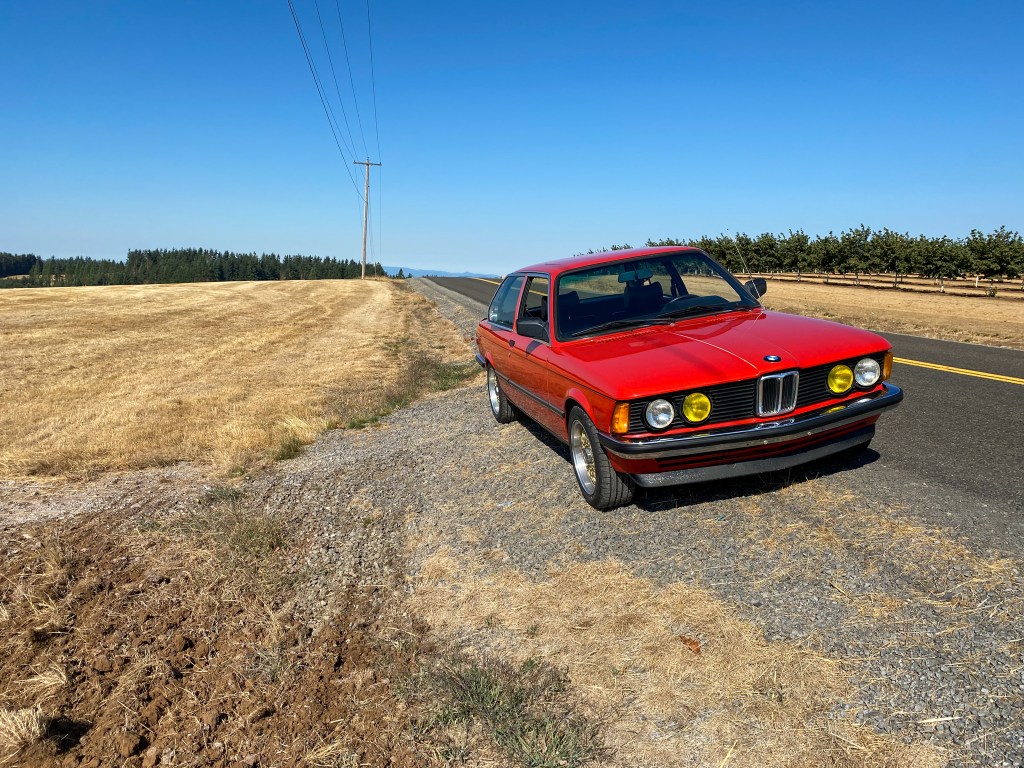
I was about 90% up a hill and tried to get it started again. The one thing that did work on the car was the battery. Starting it in gear and letting the engine turning over push me up the hill was the only thing that saved me. I got to the top and was able to pull off the road. I was in rural Oregon so a shoulder was non-existent, but I manage to get into a nice farmer field. Thankfully, the word got out and who host Brian met me with a trailer. We loaded up the E21 and took it to the show. We dropped off the car and finally, the car was at a show. Technically, the car made it to Motorfest 12. Just… not under its own power. Probably the worst case for actually arriving, but it was there!
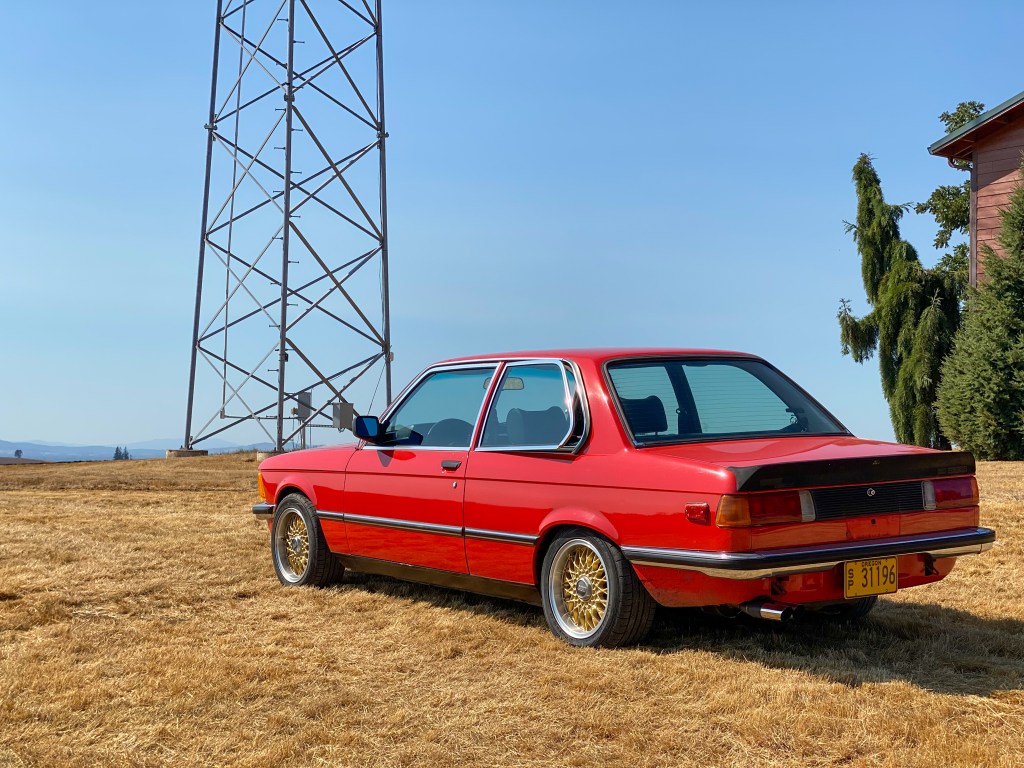
I stayed for a bit, tried to enjoy the show, then caught a ride home in an e30 with a buddy while my pride and joy sat at the show. Months earlier, My wife and I decided we were going to move to Austin. As if the timing couldn’t be tighter, I was scheduled to move just a few days after Motorfest. Brian was nice enough to let me leave the car on his property since I’d be driving past his house anyway with the moving truck and trailer later that week. But I had a decision to make: fix it in a rush, or take the L and sell it, or haul it out with me, dead weight and all.
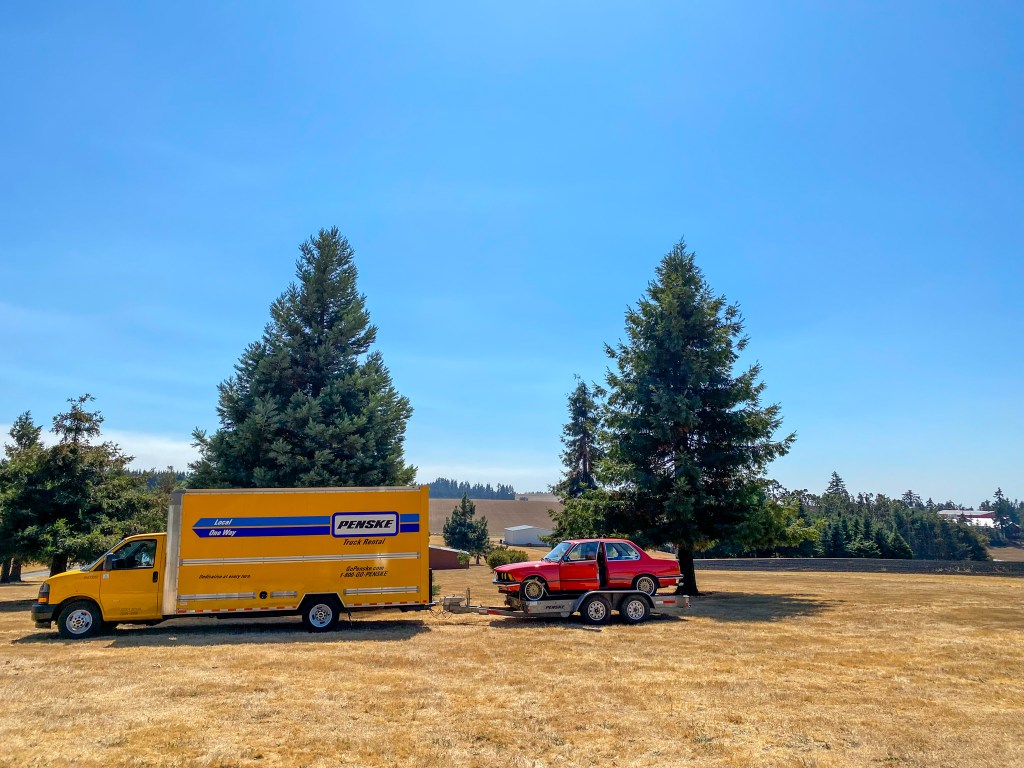
The bigger issue was that I didn’t have a place to put it in Austin. Having family in Reno, NV, the plan was to leave the car at my in-laws’ house and have it shipped once we settled into a place in Austin. This really threw a wrench in my plans. I didn’t want to leave behind a busted project. But thankfully, my family was kind enough to take it in. This was classic classic-car ownership, in a nutshell. Masses of challenges, hints of passion, but ultimately problems.
The Joy Is in the Journey (Even When It Sucks)
With a plan in place to leave it at the in-laws’, I hooked a trailer to the back of the moving truck and towed the E21 to Reno, Nevada, where it now sits in my in-laws’ garage, out of sight, but never out of mind. I still didn’t know what was the problem, but it would have to wait. I had a new chapter in my life to write and Austin was in my sights. It wasn’t the ending I had hoped for, but in a way, it was fitting. This project has never followed a straight line. And maybe that’s the point. Progress can be messy. Sometimes, you just need to hit pause, pack up, and believe there’s more good stuff waiting down the road. Because there is.

If you’ve ever owned a classic car, you know the score. For every win, there’s a handful of breakdowns. For every quiet, satisfying drive, there’s a mystery misfire waiting in the wings. But those brief moments when it all does come together? They hit differently. That’s the lesson of this chapter in Project E21. It’s not just about getting the engine in, or the carbs tuned, or the inevitable breakdowns. It’s about learning as you go, making mistakes, and stubbornly pressing forward even when the car seems to hate you.
I didn’t have formal training. I wasn’t born with a wrench in my hand. I just knew I loved this dumb little BMW and wanted it to run right. And if you’re thinking about starting your own build, even if you’ve never swapped an engine or even touched an engine, trust me: you can do it. It’ll be frustrating. It’ll be expensive. You’ll break down in the most embarrassing places possible. And yes, sometimes you’ll tow your half-dead project car across state lines and park it in someone else’s garage while your life resets. But when the stars align and the Webers sing again? It’s all worth it.
Here’s to new beginnings; new garages, new cities, and likely new fuel pumps…
 The Late Brake
Leave a Reply