

There’s something magical about pointing your car down an unfamiliar highway with nothing but a full tank of gas and the promise of automotive nirvana waiting at the end. This past weekend, that journey led me from the high mountain passes of the Sierra Nevada to the San Jose Earthquakes stadium for RADwood NorCal 2025, and it turned out to be everything I hoped for and more.
For the third time, I found myself drawn to the gravitational pull of RADwood’s unique brand of automotive celebration. But this time was different. This time, I wasn’t just another spectator clutching a camera and soaking in the nostalgic vibes. This time, I was rolling up as a participant with my newly acquired Peugeot 106 Rallye, ready to add my own small piece to the mosaic of 80s and 90s automotive culture.
The Journey Through California’s Heart
The adventure began long before I reached the venue. With nearly 300 miles of California’s diverse landscape stretching between me and San Jose, the trip itself became part of the RADwood experience. Loading up the little French hot hatch, I pointed it toward the mountains with that familiar mix of excitement and mild anxiety that comes with taking a “new to you” car on its first proper road trip.
The route took me over Donner Pass, where the 106 Rallye proved it still had the spirit that made these little pocket rockets so beloved in their heyday. Climbing through the high-altitude mountain passes, the naturally aspirated 1.3-liter engine pulled cleanly, never missing a beat despite the thin air and massive incline. There’s something satisfying about driving a car the way it was meant to be driven, especially when that car was designed for precisely this kind of spirited mountain driving.
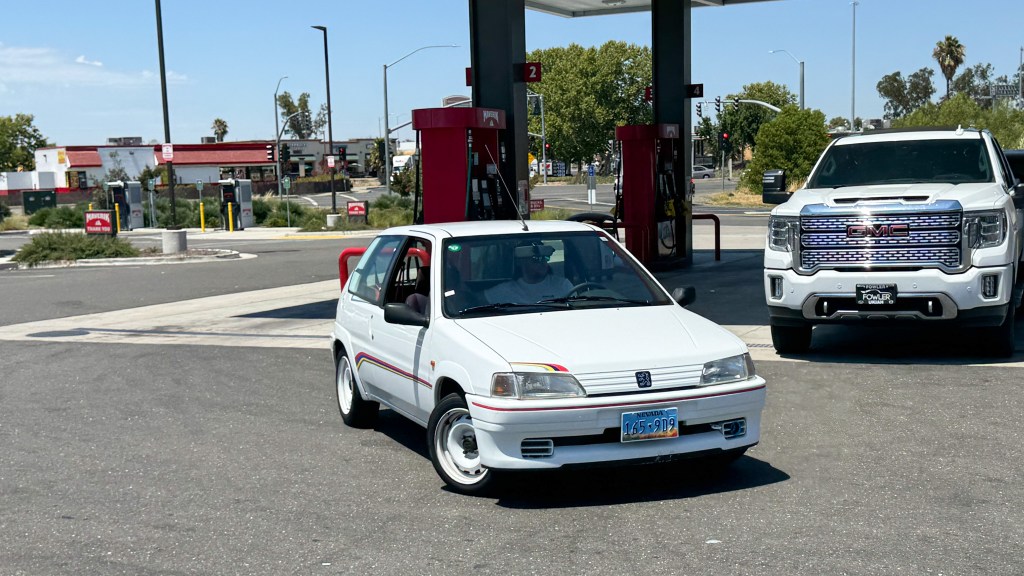
Descending from the mountains into California’s Central Valley, the landscape transformed into the endless farmlands that feed much of the nation. The temperature gauge climbed as we hit the valley floor, but the little Peugeot soldiered on without complaint. Mile after mile through the agricultural heartland, past irrigation canals and endless rows of crops, the car settled into a comfortable cruise that ate up the highway with surprising refinement for something so focused on performance.
The best part about any proper road trip isn’t just the destination, it’s these moments of connection between driver, machine, and the road itself. Windows down, experiencing every shift in temperature and terrain, you remember why we fell in love with cars in the first place. Modern vehicles would have made this journey easier, more comfortable, and certainly more efficient. But they wouldn’t have made it nearly as memorable. There’s a rawness to driving an older car that connects you to the experience in ways that electronic aids and climate control simply can’t replicate.
What Makes RADwood Special
For those who don’t know, RADwood started as a celebration of the no longer overlooked automotive era spanning roughly 1980 to 1999. Born from the minds behind the Driving While Awesome podcast, the concept was simple but brilliant: create a Goodwood Revival-style event focused on the cars, culture, and aesthetic of the 80s and 90s. It’s not just about the vehicles, though they’re certainly the stars. It’s about the entire cultural zeitgeist of those decades, from the fashion to the music to the technology that defined how we lived and what we drove.
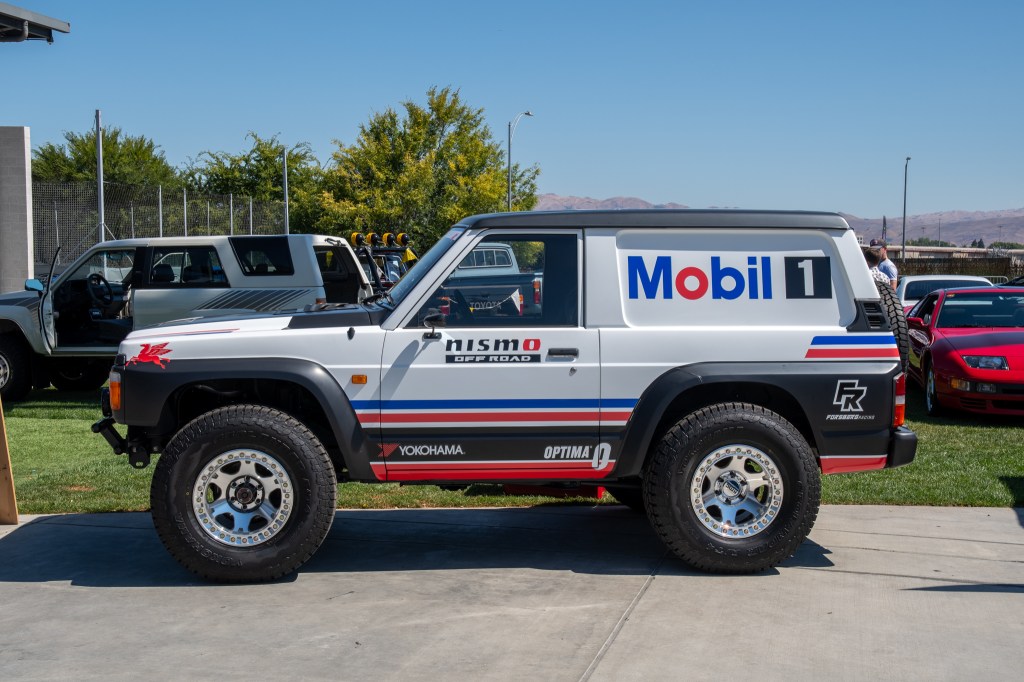
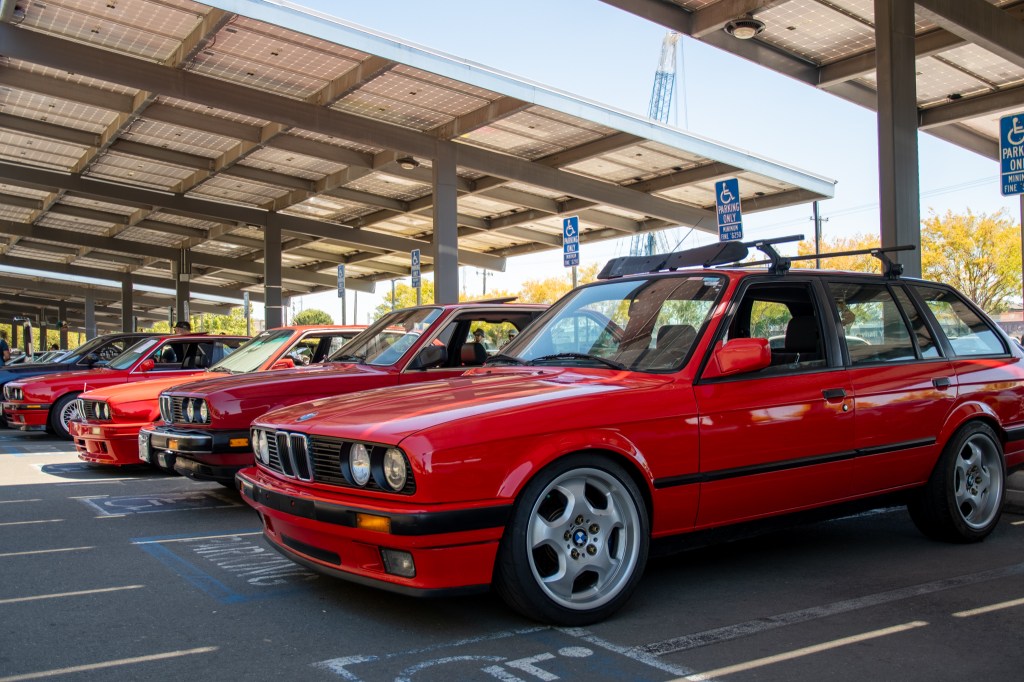
The genius of RADwood lies in its inclusivity. While other shows might focus exclusively on exotic supercars or pristine concours trailer queens, RADwood celebrates everything from Honda CRXs to Lamborghini Diablos with equal enthusiasm. The criteria isn’t rarity or value, it’s authenticity and the story each car tells about its era. This democratic approach creates an atmosphere unlike any other automotive gathering, where a well-preserved Toyota Tercel can draw as much admiration as a Ferrari Testarossa.
Third Time’s the Charm
RADwood NorCal 2025 marked my third time attending a RADwood event, but my first as a participant rather than just another enthusiast wandering the lot with a modern daily driver and a camera. I’d been to shows in Austin and San Francisco before, so I figured I knew the drill. I was wrong in the best way.
This year’s venue, PayPal Park in San Jose, flipped the script completely. Rather than the typical lot or pier setup, RADwood went full stadium. Cars poured in from the surrounding lots, winding through the concourse and back out onto the general admission lawn inside the stadium. The result? A surreal, multi-lot automotive time capsule brought to life under the California sun.
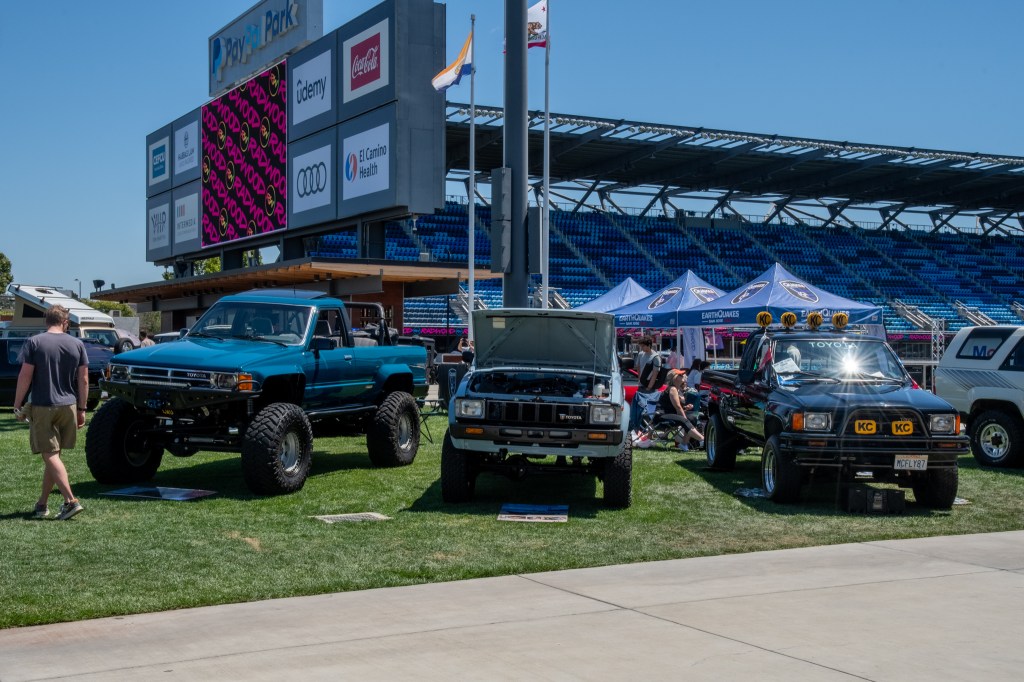
But it wasn’t just the layout that made this show next-level, it was the vibe. Imagine ’80s and ’90s hits bumping from the stadium speakers as the RADwood logo lit up the jumbotron above what is apparently the largest outdoor bar in North America. Vendors lined the concourse offering era-appropriate swag, streetwear, and retro collectibles. The many bars kept things festive, complete with frozen Modelos being served in a soccer boot. The energy was electric, laid-back but buzzing with everyone from hardcore collectors to casual fans vibing to the same synth-heavy soundtrack of a bygone era.
What really stood out this year, though, was the people. Everyone was approachable, excited, and genuinely stoked to be part of it. Conversations sparked effortlessly over shared memories, obscure trim packages, and forgotten tuner brands. It was refreshing to be surrounded by car lovers who weren’t there to flex or compete, but to connect. RADwood has this uniquely chill atmosphere that strips away ego and replaces it with real enthusiasm. It was the kind of easy, authentic social interaction that’s often missing at more polished shows, and it reminded me why I fell in love with car culture in the first place.

Even without the cars, this would’ve been one of the best shows I’ve attended. But with them? Unmatched.
The Stars of the Show
While every car at RADwood tells its own story, certain vehicles and moments stood out as absolute showstoppers that embodied everything special about this particular era of automotive culture.
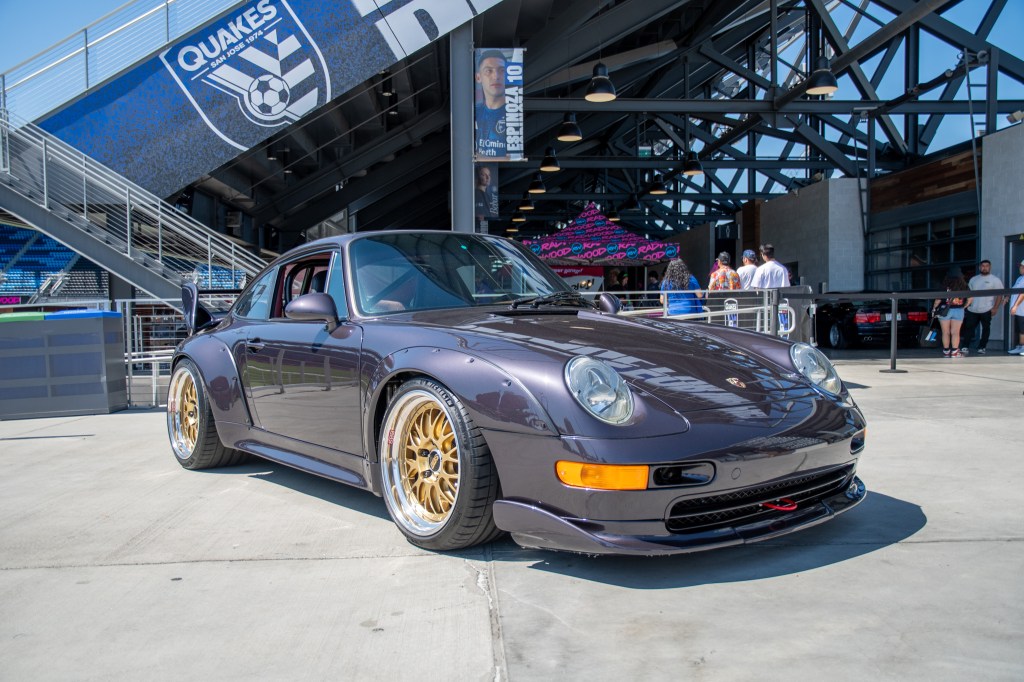
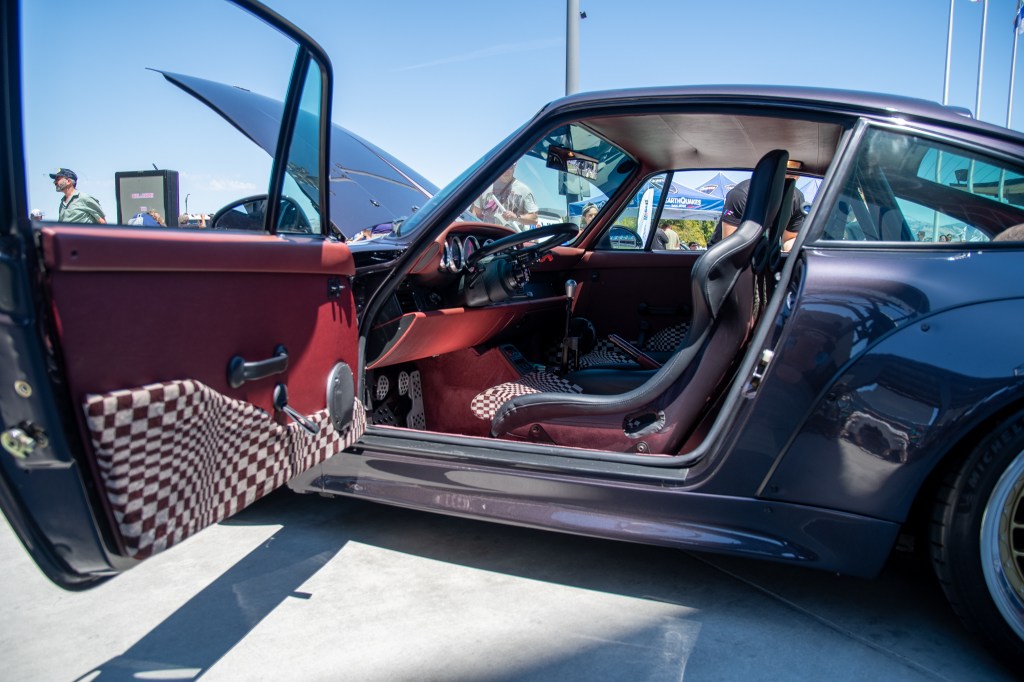
One of the most striking cars at the show was a Porsche 993 fitted with a full GT2 body kit, sitting perfectly on clean gold BBS wheels. The wide fenders, aggressive aero, and purposeful stance gave it serious presence, but what really set it apart was the attention to detail. Inside, a pair of period-correct Recaro bucket seats had been reupholstered to match the era, and the car was full of subtle, era-appropriate touches that showed real care and knowledge went into the build. It felt like a love letter to ’90s Porsche tuning—tasteful, functional, and true to the spirit of the time. Unsurprisingly, it took home the Best in Show award, a well-deserved honor for such a meticulously crafted tribute.
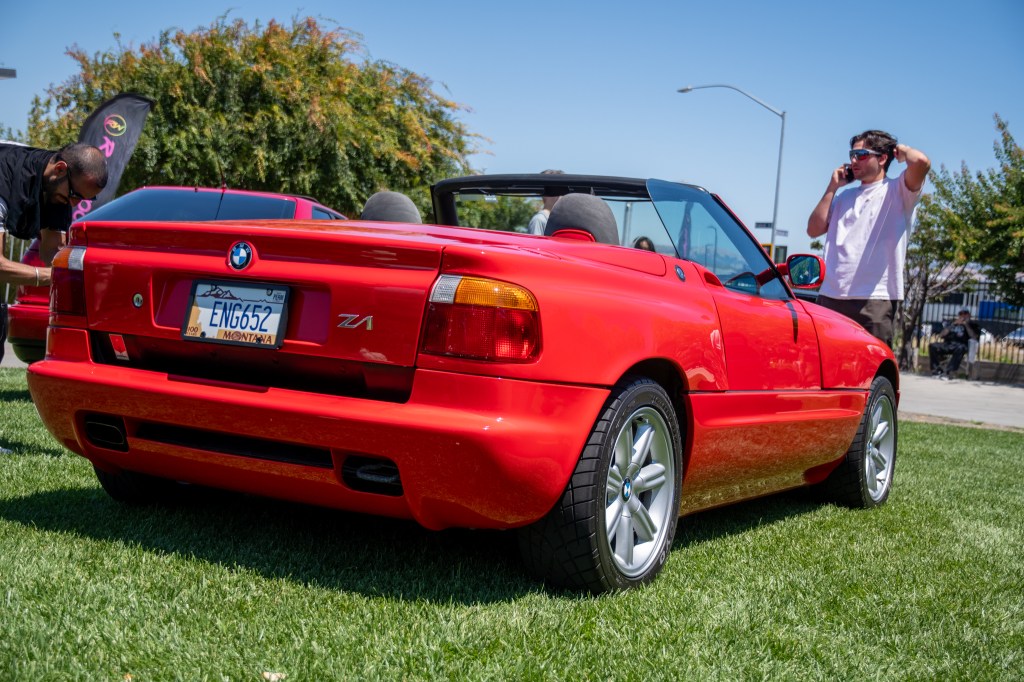
Equally mesmerizing was the BMW Z1, a car so ahead of its time that it still looks futuristic today. With its electronically retracting doors that disappear into the sills and advanced plastic body panels, the Z1 represented BMW’s experimental side during an era when the company was willing to take bigger risks. Watching the doors retract never got old, and the perpetual crowd surrounding the car proved that true automotive innovation transcends decades.
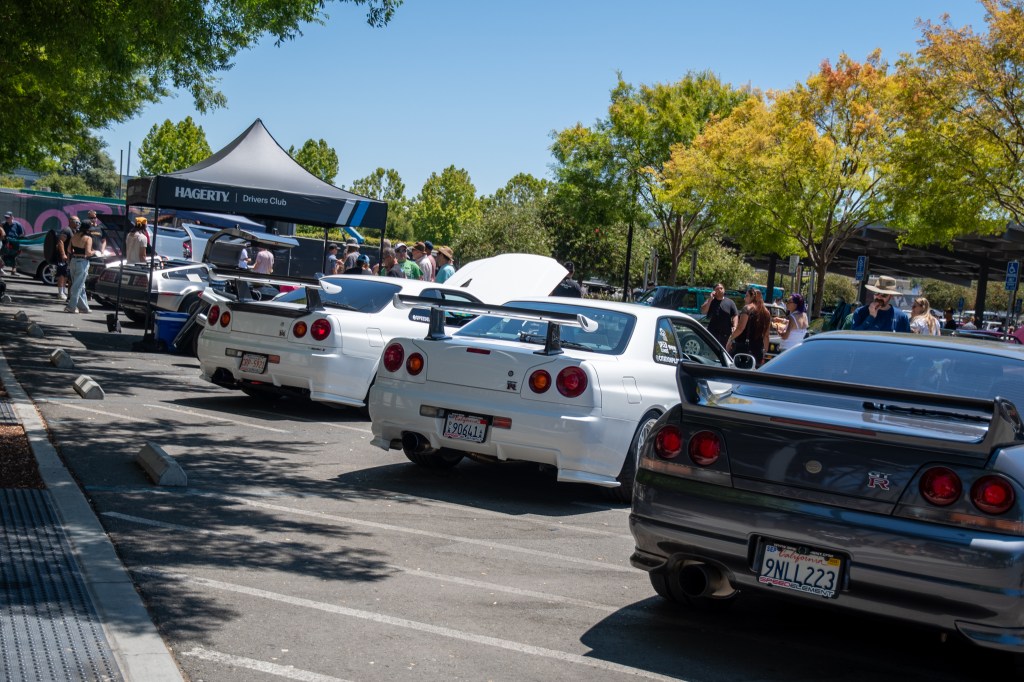
Perhaps nothing said “’90s performance” quite like the multiple Nissan Skyline GT-Rs scattered throughout the venue. These Japanese legends, only recently legal for import to the United States, represent the pinnacle of ’90s tuner culture and technological advancement. Each one drew crowds of admirers who understood they were looking at automotive history, cars that defined an entire generation of enthusiasts. The distinctive sound of their RB26 engines firing up sent chills down the spine of anyone who grew up playing Gran Turismo.
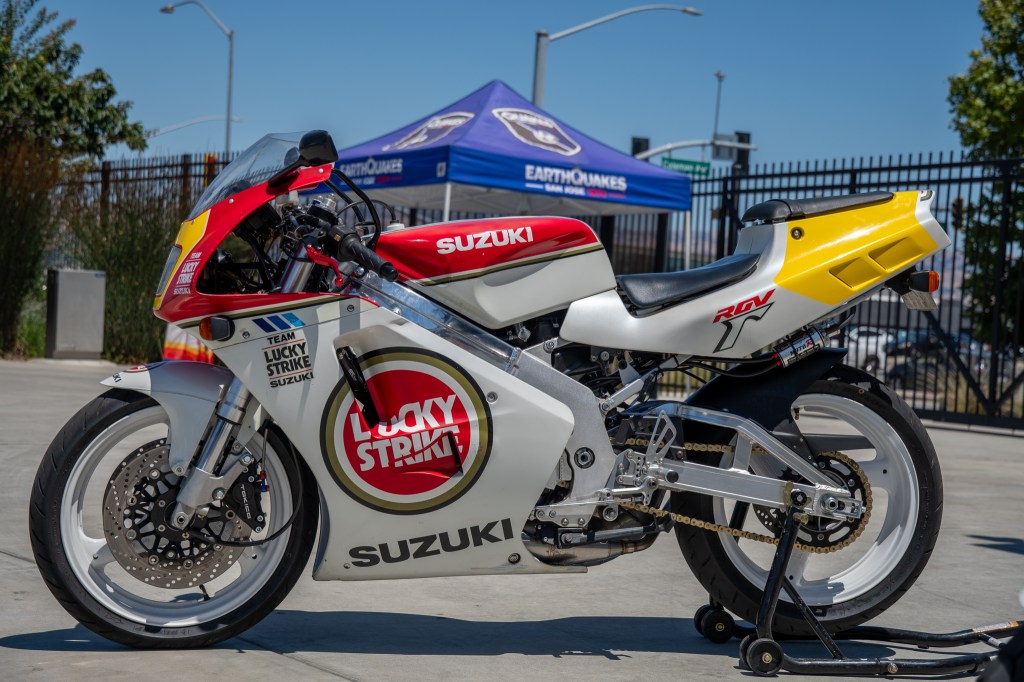
A standout among the cars was a Suzuki RGV250 in Lucky Strike livery, a rare sight in the U.S. and a perfect fit for the RADwood era. This two-stroke sportbike looked clean and well-ridden, with its factory race-replica graphics recalling Suzuki’s Grand Prix efforts of the early ’90s. The Lucky Strike paint scheme gave it instant visual presence, and the compact, lightweight chassis underscored just how focused these bikes were. It was refreshing to see a motorcycle at the show that wasn’t just era-appropriate but also a reminder that RADwood is about more than just cars, it’s about everything that made ’80s and ’90s motorsport and design so memorable.
The highlight of my entire experience came when I had the opportunity to meet Art Cervantes, one of the original founders and current Director of RADwood. What struck me immediately was how down to earth he was, still walking the show floor and genuinely engaging with attendees rather than operating from some VIP area. Speaking with Art, it became clear that RADwood’s success stems from authentic passion for this automotive era. We ended up chatting for about 5-10 minutes about my Peugeot and the drive to the event. His genuine excitement was infectious, proving he truly loves this stuff as much as any attendee. It made so much sense why the event was so successful, the minds running RADwood do it for the love of it, not the paycheck.
The vibes throughout the event were absolutely immaculate. RADwood creates an atmosphere where automotive obsessions can flourish without judgment, and conversations flowed naturally between strangers united by their appreciation for angular bodywork, digital dashboards, and the kind of unfiltered driving experience that modern cars have largely engineered away.
The Culture Lives On
What makes RADwood NorCal 2025 particularly significant is how it demonstrates the staying power of ’80s and ’90s automotive culture. These aren’t just nostalgic curiosities anymore, they’re legitimate collector vehicles that represent specific moments in automotive development and cultural expression. The prices of pristine examples from this era have steadily climbed, but more importantly, the enthusiasm for these cars continues to attract new generations of admirers.
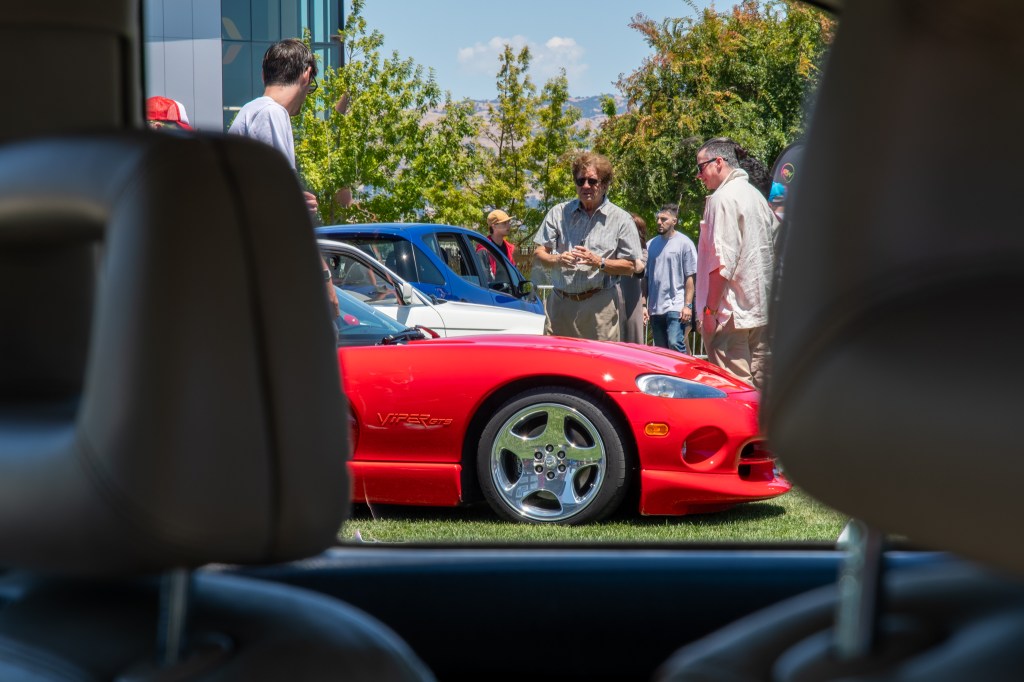
Walking through the event, I noticed plenty of younger enthusiasts who weren’t even born during the cars’ original production runs. For them, these vehicles represent a different kind of automotive experience than what’s available today. They offer mechanical simplicity, analog feedback, and visual drama that modern cars have largely abandoned in favor of efficiency and safety regulations.
The preservation effort happening at events like RADwood extends beyond just maintaining individual vehicles. It’s about documenting and celebrating an entire era of automotive culture before it disappears completely. Every conversation between an original owner and a young enthusiast represents knowledge transfer that can’t be replicated through internet research or YouTube videos.
Looking Forward
RADwood NorCal 2025 proved that this particular automotive subculture isn’t just surviving, it’s thriving. The quality of vehicles continues to improve as owners invest in preservation and restoration. The community remains welcoming and inclusive, focused on sharing knowledge and passion rather than exclusivity and competition. And the events themselves keep evolving and improving, finding new ways to celebrate familiar themes.
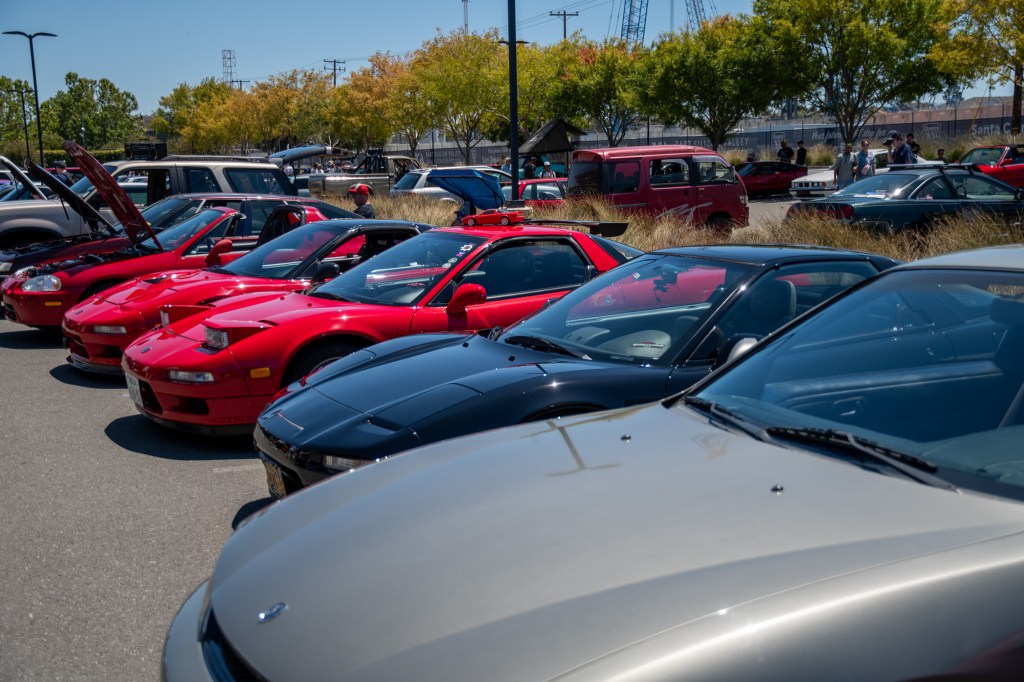
For anyone who lived through the ’80s and ’90s, RADwood offers a chance to reconnect with the automotive culture that shaped their enthusiast journey. For younger generations, it provides education about an era when cars were designed to be visually distinctive and emotionally engaging rather than efficiently invisible. And for all of us, it creates a space where automotive passion can flourish without judgment or pretension.
The drive home in my little Peugeot 106 Rallye felt different than the journey there. The car was no longer just my latest acquisition, it was now part of my RADwood story, a small but meaningful piece of the larger automotive tapestry that these events work so hard to preserve and celebrate. Nearly 600 miles over two days, through mountain passes and valley heat, proved that these cars weren’t just meant to be admired in static displays. They were built to be driven, enjoyed, and shared with fellow enthusiasts who understand that sometimes the journey really is just as important as the destination.
RADwood NorCal 2025 wasn’t just an automotive event, it was a reminder of why we fell in love with cars in the first place. In an increasingly digital world, there’s something profoundly satisfying about gathering around mechanical objects that represent human creativity, engineering ambition, and the simple joy of movement. Basically, RADwood is “all that and a bag of potato chips!”
 The Late Brake
Leave a Reply