


The first thing that hits you when you walk into the “People’s Champ” exhibit isn’t the cars—it’s the silence. Not literal silence, but that moment when your brain stops processing the museum chatter around you because you’re staring at the actual Hoonicorn. There it sits, black with those unmistakable Hoonigan graphics, and suddenly you’re 15 years old again, watching Gymkhana videos until 3 AM. The reverence in the room is palpable. People aren’t just looking at these machines—they’re paying respects to a legend gone too soon.
Ken Block was a motorsports icon and pioneer of automotive content in the age of online media. The rally driver and DC Shoes co-founder utilized his marketing acumen, driving expertise, and automotive enthusiasm to create the enormously popular Gymkhana video series and co-founded Hoonigan, an automotive lifestyle brand and production company that has captivated audiences for over a decade. Two years after his tragic passing in a snowmobile accident, the Petersen Automotive Museum has assembled the most comprehensive collection of his vehicles, personal effects, and memorabilia ever displayed in one place.
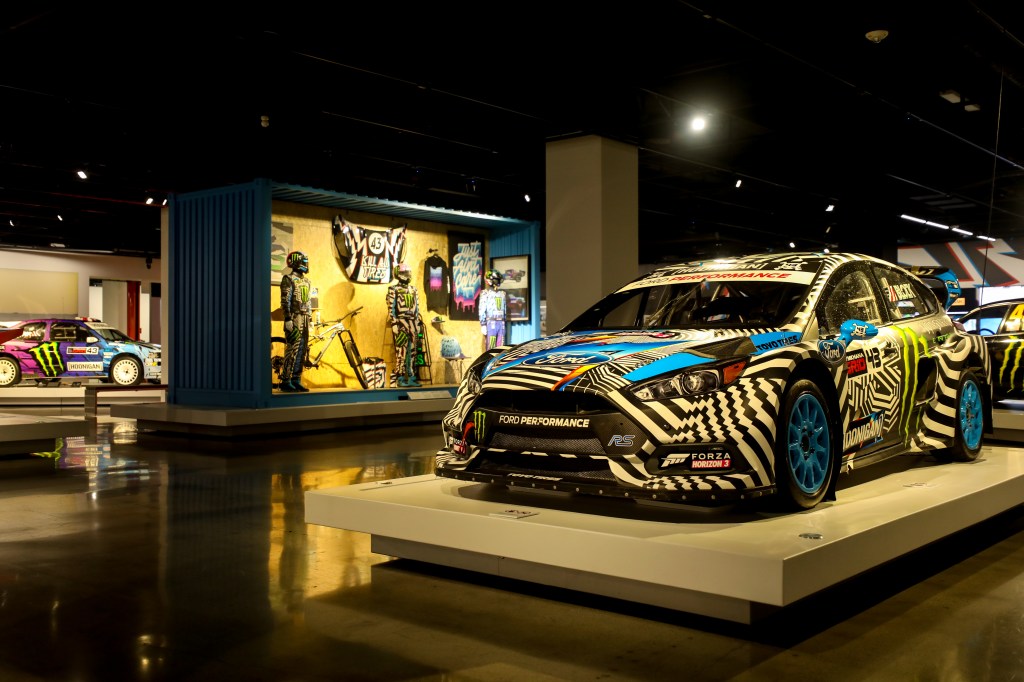
The curation is presented by the Block family and Ken’s nonprofit organization, the 43 Institute, ensuring the exhibit stays true to his vision and values. It’s a fitting tribute to someone who showed an entire generation that being genuinely passionate about cars could lead to something bigger than anyone imagined. This exhibit runs through October 2025, giving Ken Block fans from around the world the chance to see up close the machines that redefined what car culture could look like in the digital age.
The Machines That Changed Everything
Walking through the exhibit, you’re surrounded by the actual cars that redefined what automotive content could be. Each machine tells a different part of Ken’s story, from his humble beginnings to his final, most ambitious projects.
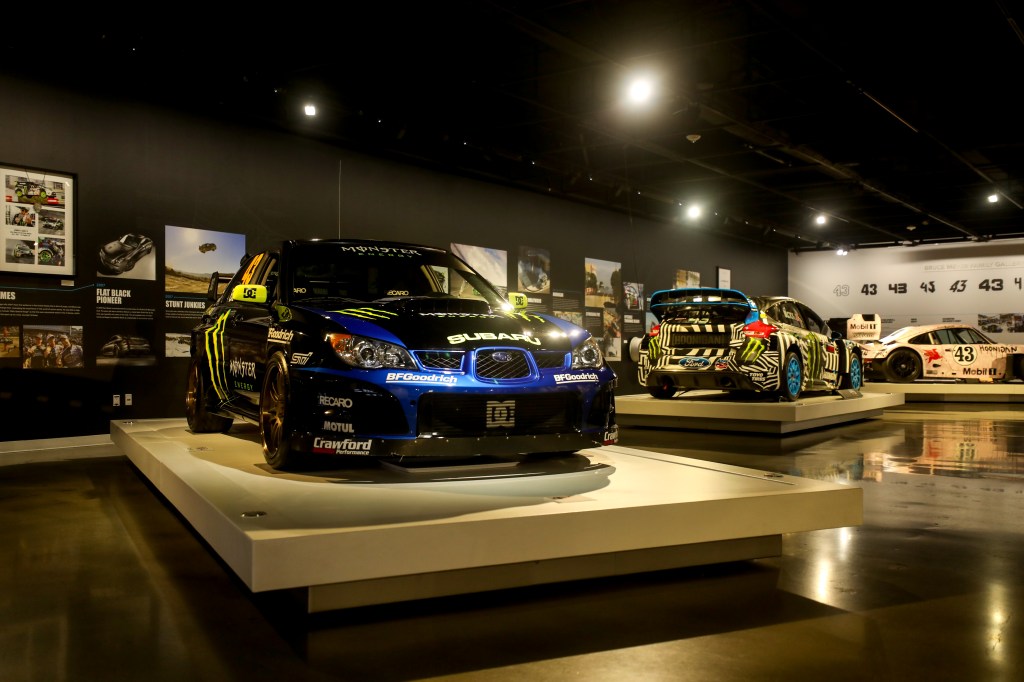
The heart of the exhibit showcases most of Ken’s most famous vehicles, each representing a different chapter in his remarkable career. The 2005 Subaru WRX STI from Gymkhana One sits prominently—this unassuming black and blue rally car generated over 17 million views and launched a revolution in automotive content. What started as a simple video of Ken throwing a Subaru sideways around an airfield became the blueprint for every car video that followed, not just his.
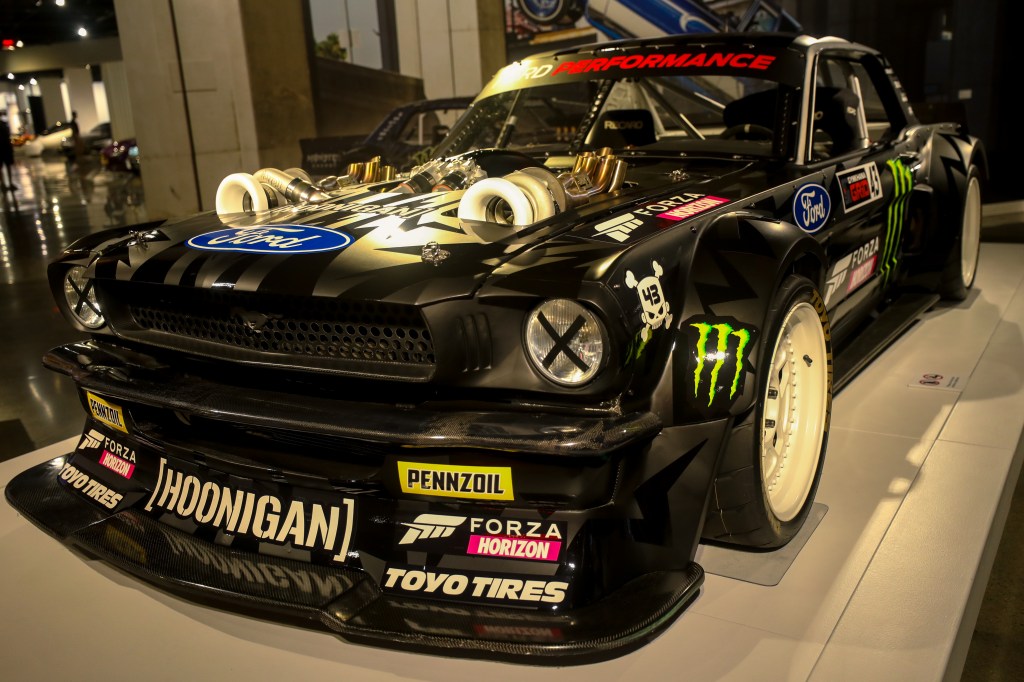
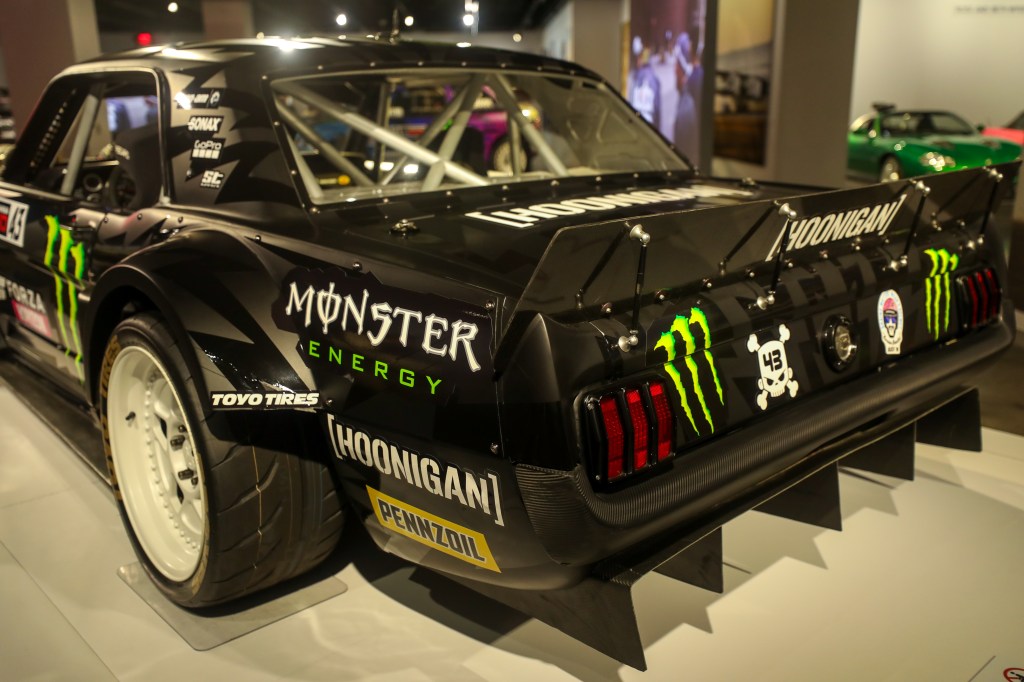
The centerpiece of the entire exhibit is the Hoonicorn V2, the 1965 Ford Mustang RTR that starred in Gymkhanas Seven and Ten, plus Climbkhana, as well as the controversial Top Gear episode. This isn’t just any vintage Mustang, but a 1,400-horsepower, all-wheel-drive monster that represents everything Ken was about: taking something classic and making it absolutely mental. The craftsmanship is staggering, every detail purpose-built for maximum sideways action. One of my prized possessions is a Larry Chen shot 6 foot wide poster of the Hoonicorn drifting Evo Corner at Pikes Peak, that sits just above my desk in my office. Seeing it in person was surreal to say the least.
The 2008 Subaru Impreza WRX STI from Gymkhana Two tells the story of Ken’s evolution as both a driver and a visionary. First filmed in 2009 at the Port of Long Beach, this was the first car purpose-built specifically for a Gymkhana video, featuring a turbocharged 2.7-liter flat-4 putting out 566 horsepower through all four wheels. While the original Gymkhana car was a modified street machine, this WRX STI represented Ken’s commitment to pushing the boundaries further—it was far more heavily modified and showed his understanding that the videos needed to evolve. Subtitled “The Infomercial,” Gymkhana Two was also the first to promote a merchandise line matching the vehicle’s livery and Ken’s race suit, proving his marketing genius extended beyond just making cool videos.
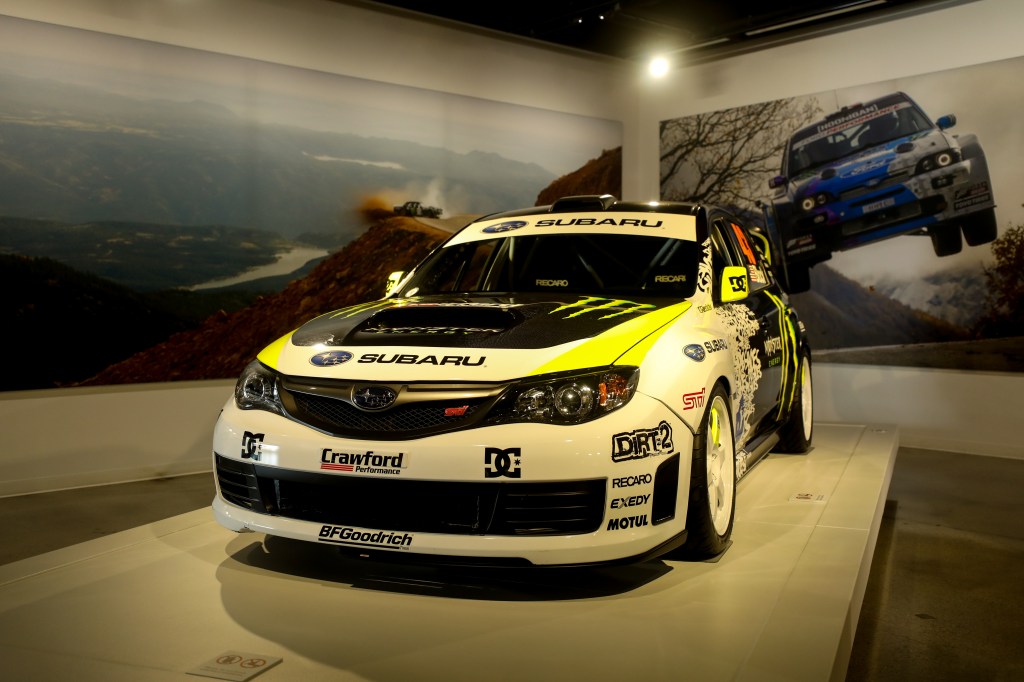
The exhibit also features several other significant machines from Ken’s collection. The Hoonitruck, a 1977 Ford F-150 with 914 horsepower inspired by his father’s truck where he first learned to drive, brings a deeply personal element to the display. His 1986 Ford RS200 Evolution—one of only 24 ever made—represents his childhood dream car and connection to Group B rally. The Cossie V2, a rebuilt 1994 Ford Escort RS Cosworth with 600 horsepower, tells a story of resilience after his original was destroyed by fire.
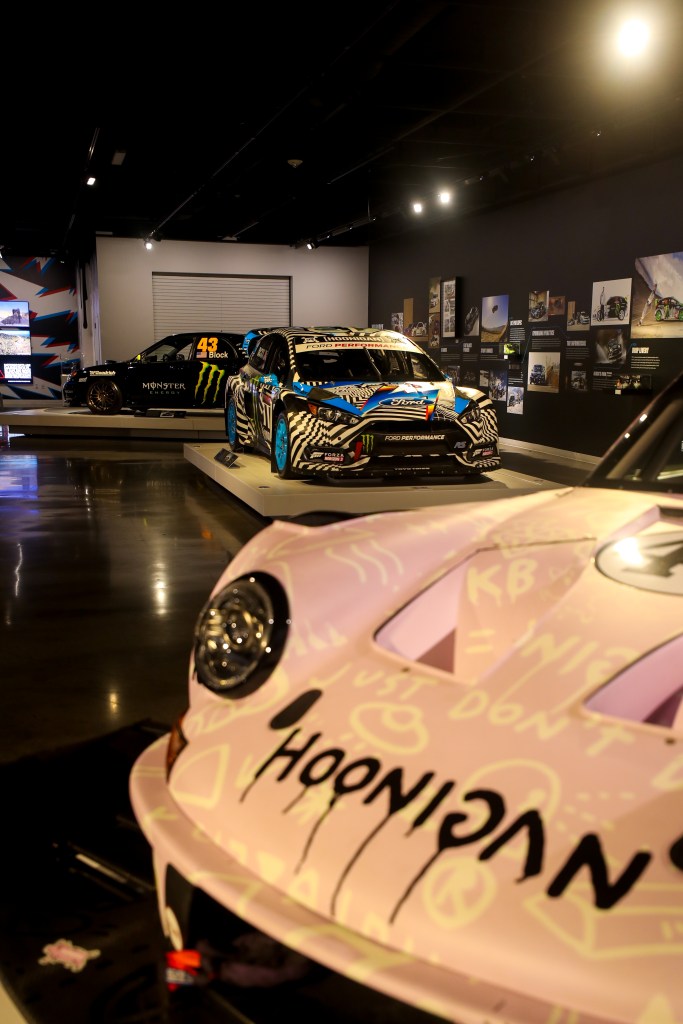
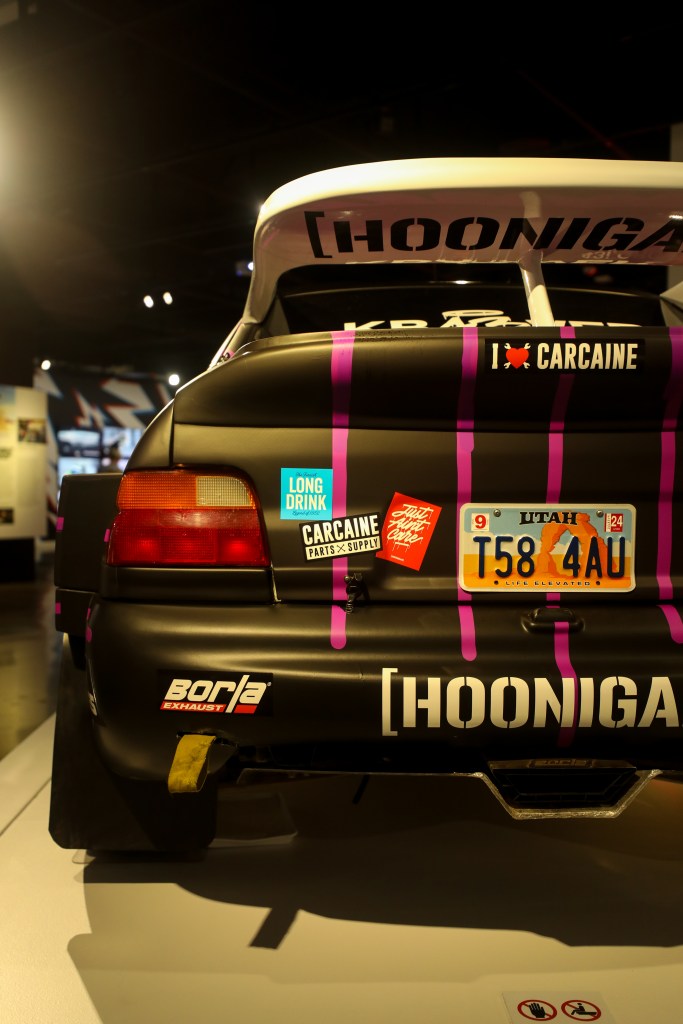
Most poignant is the Hoonipigasus, Ken’s final and most ambitious build. This 2022 Porsche 911 SVRSR with 1,400 horsepower was built for the 100th Pikes Peak International Hill Climb, representing his constant push to innovate while honoring racing history with its “Pink Pig” tribute livery.
Standing among these machines, you realize you’re not just looking at cars—you’re witnessing the physical manifestation of Ken’s evolution from entrepreneur to rally driver to global icon. Each vehicle carries the weight of countless hours of development, thousands of miles of testing, and the unwavering belief that the next project could be even more spectacular than the last.
Beyond the Cars
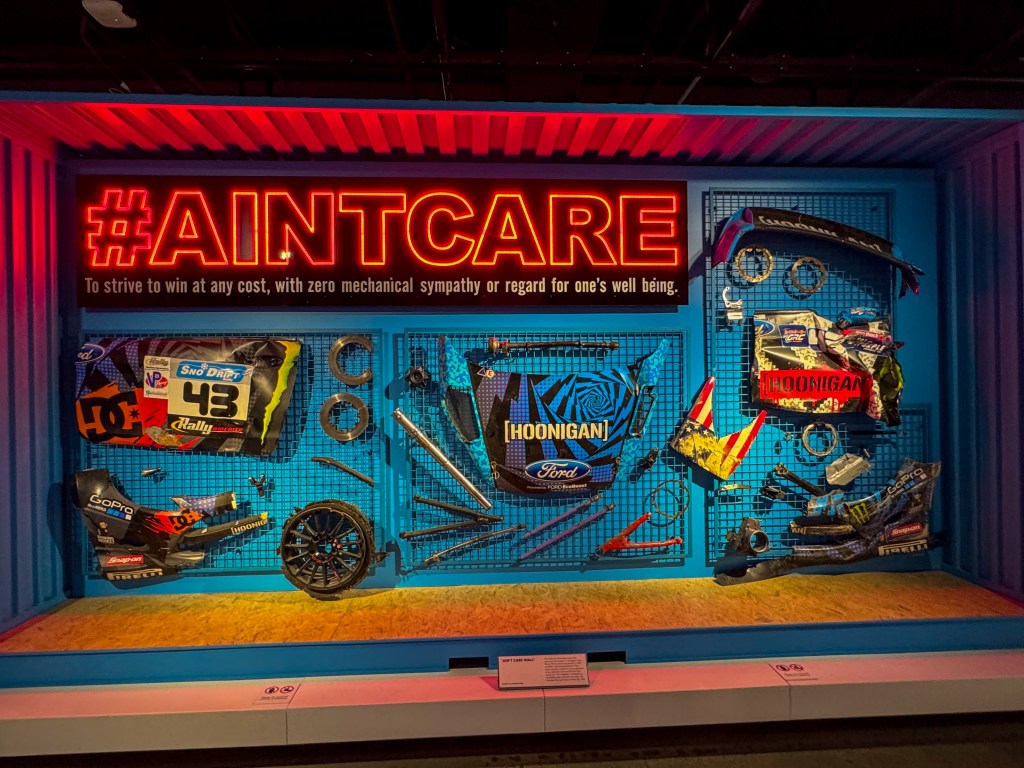
The non-automotive displays throughout the exhibit tell Ken’s story in ways the cars alone cannot. The “Ain’t Care Wall” immediately grabs your attention. A collection of broken suspension arms, destroyed wheels, and shattered bodywork pieces mounted like battle trophies, each showcasing his rally motto “To Strive to win at any cost, with zero mechanical sympathy or regard for one’s well being.” Each mangled component represents Ken’s fearless approach to everything he touched, a physical manifestation of his famous “ain’t care” attitude.
Giant posters line the walls of the exhibit, featuring iconic shots from the Gymkhana series and rally career, many of which have never been displayed publicly before. These images capture Ken in his element—sliding sideways, committed, always pushing the absolute limit. The photography showcases not just his driving ability, but the cinematic quality that made his videos so compelling.

Perhaps my favorite section was the multiple stacked TV screens playing various timed highlight reels from Ken’s career. Giving you the ability to watch every Gymkhana video all at once. Watching these videos in the context of the exhibit, surrounded by the actual cars that made those moments possible, adds an entirely new dimension to footage many of us have seen hundreds of times. This time it really hit differently.
In addition to the cars, tons of actual memorabilia were scattered throughout the exhibit. Ken’s racing suits, worn and weathered from countless battles, hang behind glass like artifacts from another era. His helmets, which protected him through crashes that would have ended lesser drivers’ careers, sit alongside wheels, DC Shoes from his entrepreneurial days, and Hoonigan merchandise that helped build a global community around his vision. Every piece of memorabilia reinforces just how much Ken accomplished across multiple industries.
The final element is the comprehensive timeline stretching across the full back wall that tracks key events in Ken’s life and racing career, from his early days co-founding DC Shoes to his final projects. Reading through his progression from successful entrepreneur to rally rookie at nearly 40 to global automotive icon, you’re reminded just how impossible his trajectory should have been. As a die-hard Ken Block fan, even I was impressed and surprised by some of the highlights of his career.
Recognition Long Overdue
What strikes you most about this exhibit isn’t just the quality of the presentation—it’s the recognition it represents. For too long, driving talent has been overshadowed by horsepower numbers and lap times in automotive media. Ken Block was one of the greatest car control artists who ever lived, and seeing his life’s work displayed with this level of respect and reverence feels like justice finally being served.
The Petersen could have easily thrown together a few cars and called it a tribute. Instead, they’ve created something that truly honors Ken’s impact on multiple industries as a racer, entrepreneur, and creative visionary. Every detail, from the lighting to the layout to the carefully curated artifacts, shows the museum understands what Ken meant to automotive culture.
This exhibit also serves as validation for everyone who ever defended Ken’s place in motorsports history. The critics who said he was “just a YouTube driver” or dismissed the Gymkhana series as mere marketing stunts never understood what Ken was actually accomplishing. He was democratizing car culture, showing that you didn’t need a factory backing or a multi-million-dollar budget to create something that mattered. All you needed was passion, creativity, and the willingness to send it when the cameras were rolling.
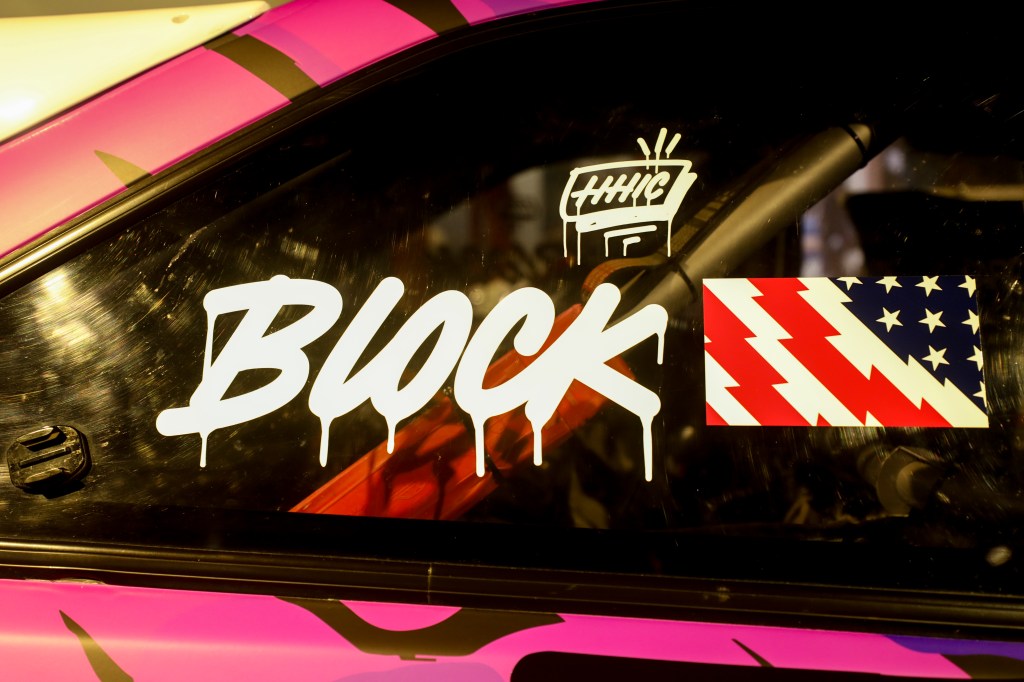
Seeing families with young kids walking through the exhibit, watching those kids’ eyes light up at the cars and videos, you realize Ken’s real victory. He inspired a generation to care about cars not because they were the fastest or most expensive, but because they represented freedom, creativity, and the courage to be different. Even in death, Ken continues giving back through the 43 Institute, his nonprofit that creates paths of opportunity for driven individuals who may lack proper support systems in action sports, motorsports, and the creative arts—ensuring his legacy of inspiration continues helping the next generation of automotive enthusiasts. I won’t get too sentimental in this one, but Ken was real inspiration to a lot of people, myself included. Getting to see him celebrated as that was very sobering and helped me find some peace in his passing. If you want to know what I really think he meant to enthusiast, see my article on Ken here.
The Legacy Continues
“People’s Champ: The Impact of Ken Block” is more than a museum exhibit—it’s a reminder of what one person can accomplish when they refuse to accept limitations. Ken took his marketing background, combined it with legitimate driving talent and an eye for storytelling, and created something entirely new in the automotive world.
Block and the Hoonigan team revolutionized motorsports filmmaking and became a pillar of automotive culture by producing authentic, enthusiast-centered media that was tailor-made for online viewing. This exhibit ensures that the legacy they, not just Ken, will be preserved and continue inspiring future generations of automotive enthusiasts.
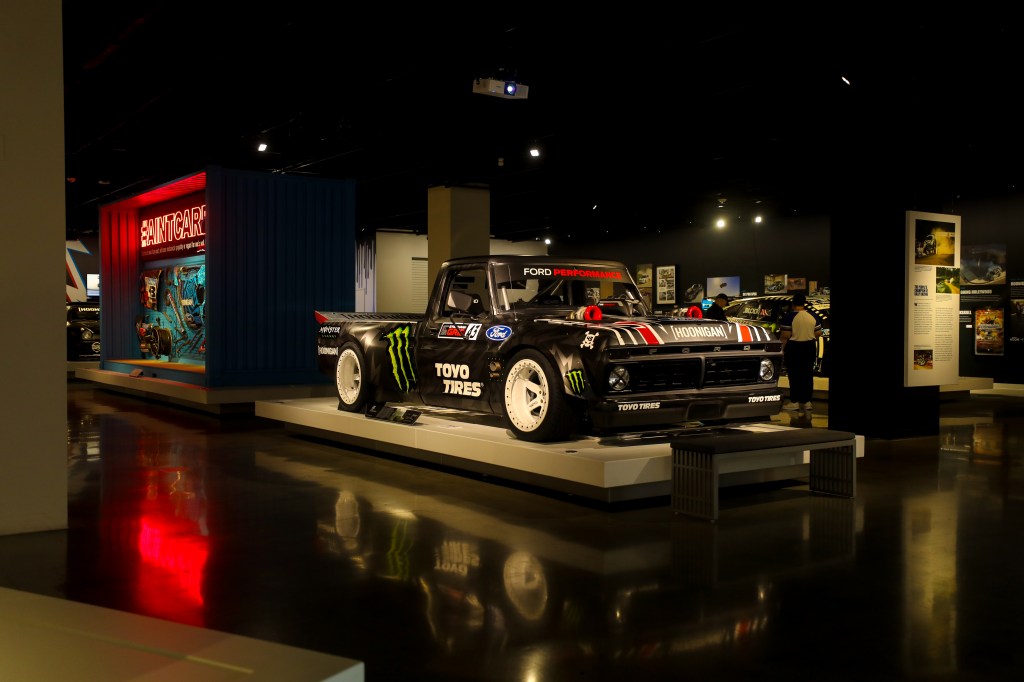
The exhibit runs through October 5, 2025, giving Ken Block fans worldwide the chance—though time is running out to pay their respects to a true original. For those of us who grew up watching Gymkhana videos and learning what car culture could be, this isn’t just a museum visit; it’s a pilgrimage to honor someone who showed us that being genuine and passionate about cars could lead to something extraordinary.
Ken Block proved that sometimes the best thing you can do is ignore what everyone else thinks and just send it. That lesson, displayed beautifully throughout this exhibit, will outlive us all. As always with Ken, I’ll leave you with his final mantra: “Be creative, live a fun life, and don’t be an asshole”.
“People’s Champ: The Impact of Ken Block” runs through October 5, 2025 at the Petersen Automotive Museum in Los Angeles. For more information and tickets, visit petersen.org. To support Ken’s ongoing legacy of helping the next generation, consider donating to the 43 Institute at 43i.org.
 The Late Brake
Leave a Reply