

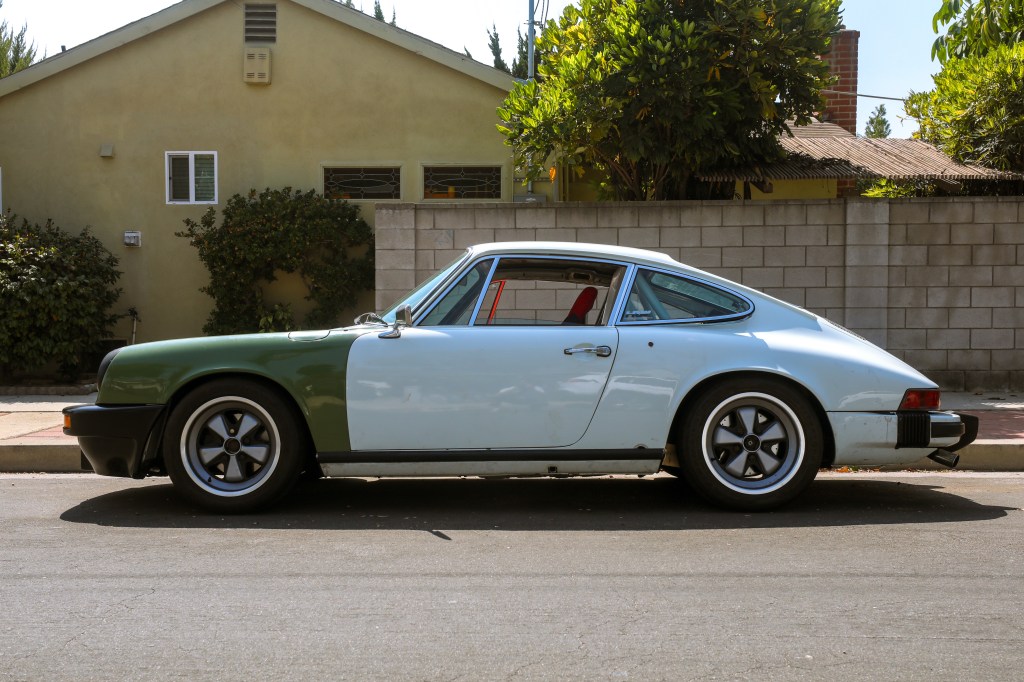
There’s a special kind of madness that strikes car builders when they stare at their project long enough. It starts innocently: maybe a simple engine refresh, perhaps some suspension work, definitely “just a few bolt-ons.” But somewhere between researching parts and scrolling through build threads at 2 AM, the voices in your head start whispering dangerous things. What if we went bigger? What if we went different? What if we threw the rulebook out the window entirely?
This is exactly the kind of madness that birthed Hikari Rennwerke, a project that’s currently making Porsche purists clutch their pearls while simultaneously making the rest of us lean in closer. When Sebastien decided to drop a Honda K24 into a classic Porsche chassis, he sparked a conversation about accessibility, authenticity, and what it really means to honor automotive heritage in 2025. Sebastien was gracious enough to let me into his world and show me why his build is so special.
The Man Behind the Madness
Sebastien, the founder and chief architect of Hikari Rennwerke, represents a new breed of automotive enthusiast. While traditional builders might spend decades saving for the “correct” Porsche engine rebuild, Sebastien looked at the landscape of modern performance and asked a simple question: why limit ourselves to what Stuttgart originally intended?
His background spans both European precision and Japanese reliability, having spent years working on everything from air-cooled VWs to whatever a Ute is. This cross-cultural mechanical education gave him something most builders lack: the ability to see past brand loyalty and focus purely on engineering merit. Where others see sacrilege, Sebastien sees opportunity.
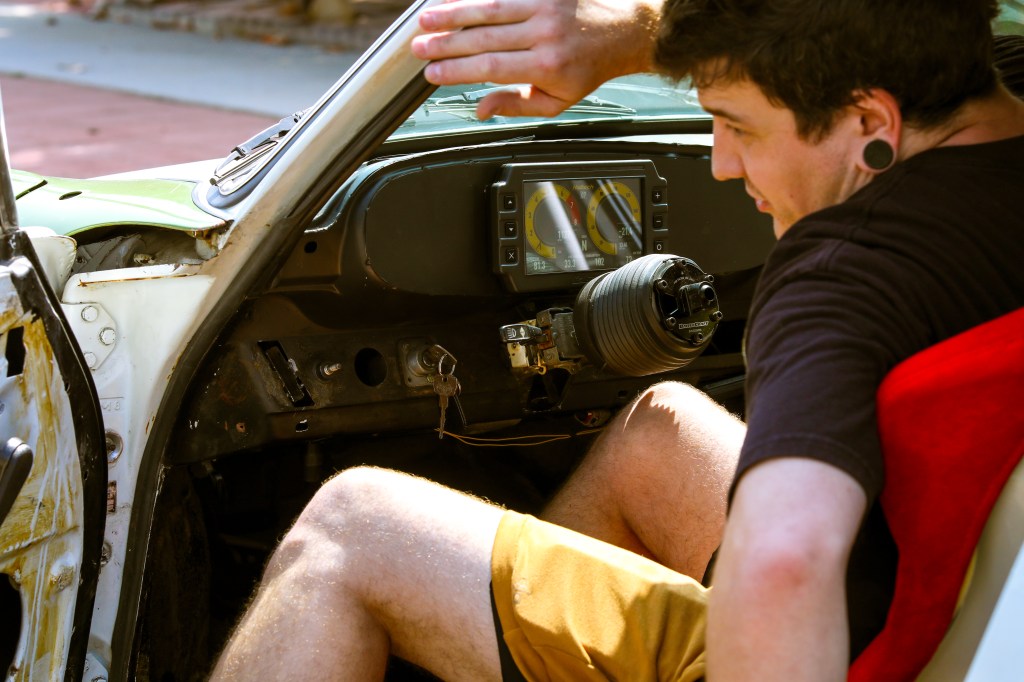
The name Hikari Rennwerke itself tells the story. “Hikari” means light in Japanese, while “Rennwerke” translates to racing works in German. It’s a perfect metaphor for what this project represents: illuminating new possibilities by bridging two automotive cultures that rarely intersect. Sebastien isn’t just building a car; he’s building a philosophy that performance should be accessible, reliable, and most importantly, personal.
But beyond the engineering challenges and community building, there’s a deeper motivation driving this project under the surface. Sebastien is building this car with his son watching and learning from the garage floor, soaking in lessons that lectures could never teach. Any parent can talk about perseverance; Sebastien chose to demonstrate it instead. Every fabricated bracket and failed test fit becomes a lesson that will outlast the build itself.
It’s this same determination, whether planting seeds in a young mind or converting an air-cooled icon to water-cooled reliability, that defines the Hikari Rennwerke philosophy: see it through, no matter how unconventional the path. I was exceptionally grateful that he was open to sharing this part of his personal life with me. It just goes to show you what kind of man he is: always focused on improvement, not the current state. Something we all could learn from.
The Heart of the Matter: Why K24?
Walk into any Honda tuner shop and mention the K24, and you’ll see eyes light up. This 2.4-liter four-cylinder represents everything Japanese engineering does right: bulletproof reliability, incredible tunability, and performance per dollar that makes German alternatives look like financial mistakes. But dropping one into a Porsche? That takes the kind of vision most people reserve for fever dreams.
The K24 Sebastien chose isn’t just any K24. We’re talking about the K24A2 variant, sourced from an Acura TSX, which brings the ideal combination of high compression ratio and robust internals. This particular engine produced about 200 horsepower in stock form, but that’s just the starting point. With proper tuning, intake, exhaust, and maybe a touch of forced induction later, this powerplant can easily exceed 400 horsepower. Try doing that with an original Porsche flat-four without spending more than most people’s annual salary.
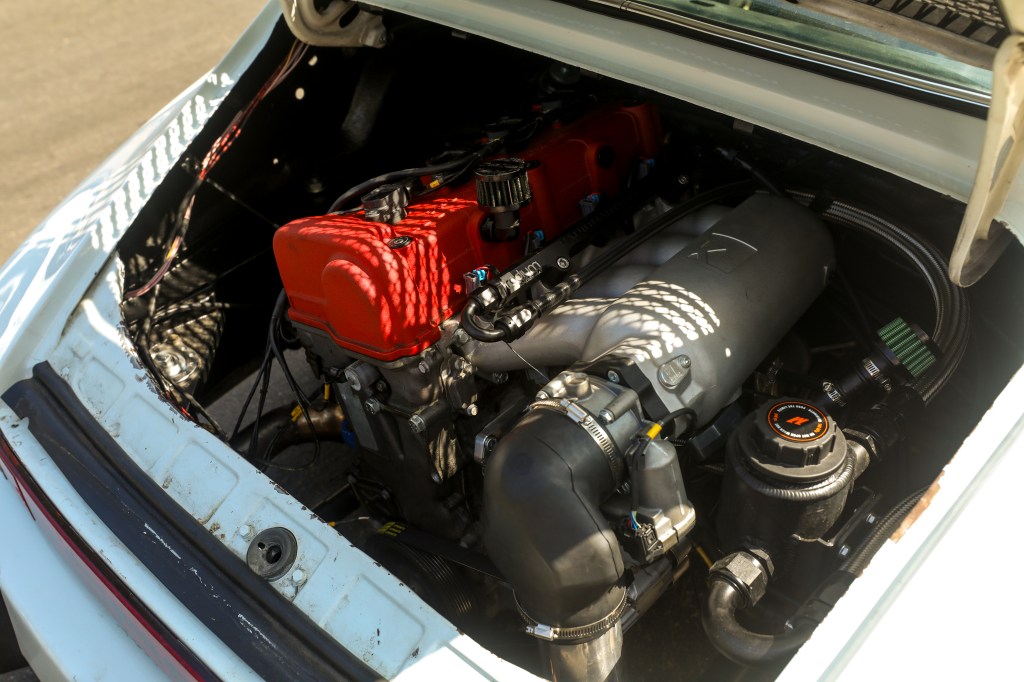
The technical challenges of this swap are fascinating. The K24’s inline configuration meant completely rethinking the engine bay packaging. Sebastien fabricated custom motor mounts that position the engine optimally for weight distribution while maintaining access to critical service points. The transmission adaptation required creating a bellhousing adapter that would mate the Honda engine to the Porsche gearbox, preserving the car’s original shifting characteristics while accepting the K24’s torque delivery.
Cooling system integration proved to be the most critical challenge of the entire swap. Converting from the original air-cooled system to water-cooled fundamentally changed how the car manages heat. The biggest hurdle was mounting radiators in the fender wells, a space never designed for liquid cooling, and then running hard lines the entire length of the car back to the rear-mounted engine. Sebastien worked entirely by hand, test-fitting components and fabricating custom brackets and coolant lines through multiple iterations. With support from CSF Radiators, he sourced and tested different radiator configurations to find the optimal setup. Every connection point is a potential leak, every bend adds restriction, and getting it wrong means catastrophic overheating. This cooling conversion represents the most important aspect of the swap, and the fact that Sebastien tackled it through hands-on fabrication without computer-aided design demonstrates both his skill and commitment to making this work properly.

The fuel system required a complete redesign as well. Modern Honda fuel injection systems operate at different pressures and flow rates than vintage Porsche setups. This meant new fuel lines, upgraded pumps, and a standalone engine management system that could properly control the K24’s variable valve timing while integrating with the Porsche’s existing electrical systems. Not exactly for the faint of heart, only for the die-hards.
Addressing the Elephant in the Garage
Let’s address what everyone’s thinking: Porsche people are not going to like this. The 911 community, in particular, has spent decades building an almost religious devotion to “authenticity.” Mention words like “numbers matching” or “original specification” at a Porsche meet and watch grown adults nod with the solemnity usually reserved for church services.
But here’s the uncomfortable truth nobody wants to discuss: traditional Porsche restoration and modification has become a rich person’s game. Want to properly rebuild a 2.7 flat-six? That’s $25,000 before you even think about increasing displacement or adding performance modifications. Need a replacement case because yours has the dreaded intermediate shaft bearing failure? Hope you’ve got another $15,000 lying around.
The Porsche tax has really destroyed the market for most entry-level enthusiasts. They live and breathe by the saying “you’ve got to pay to play.” This pricing reality has created a two-tier system where authentic Porsche ownership becomes increasingly exclusive while younger enthusiasts are priced out entirely. Sebastien’s approach challenges this paradigm by asking whether the emotional connection to these cars should be limited by the financial barriers of period-correct parts.

The criticism writes itself: “It’s not a real Porsche anymore.” “He’s destroying automotive heritage.” “There are plenty of other cars to modify.” These arguments miss the fundamental point. Sebastien isn’t destroying anything; he’s preserving the core essence of what made these cars special: lightweight, balanced chassis dynamics combined with responsive, engaging powertrains. Without affordable swaps, this car could end up just another junkyard scrap heap rusting away for eternity.
The K24 swap actually maintains many characteristics Porsche enthusiasts claim to love. It’s naturally aspirated, so throttle response remains immediate. It’s relatively lightweight, preserving the car’s balance. Most importantly, it provides the reliability that allows the car to be driven and enjoyed rather than becoming a garage queen that only emerges for concours events.
Consider this: Porsche themselves have never been purists about engine swaps. The factory regularly moved engines between model lines, updated designs mid-production, and offered factory modifications that significantly altered original specifications. The idea that any deviation from original specification somehow violates the car’s spirit ignores the innovative culture that created these cars in the first place. Think about the “sacrilege” when Porsche announce the 996 generation would be water-cooled. Fans lost their minds. But since then, there hasn’t been a non-water-cooled engine and no one cares about that. Everyone hates the first trailblazer, then preaches how great the trail is now that its been blazed.
The Real Innovation is Restraint
Walk up to Sebastien’s Porsche and the first thing you’ll notice is what isn’t there. No flashy widebody kit. No Instagram-worthy wrap. No unnecessary aero bits bolted on for aesthetics. The car looks almost spartan, stripped down to its essential elements. But look closer, and you’ll realize this isn’t about cutting corners. It’s about understanding the difference between need and want. Something 99% of us project car owners should learn from.
Take the fuel cell, for instance. Sebastien didn’t cheap out with a repurposed OEM tank or budget setup. He invested in a proper racing fuel cell, the kind of component that costs serious money but provides safety, reliability, and performance where it actually matters. The same philosophy extends throughout the build: expensive, well-engineered parts in critical areas, nothing wasted on superficial additions.
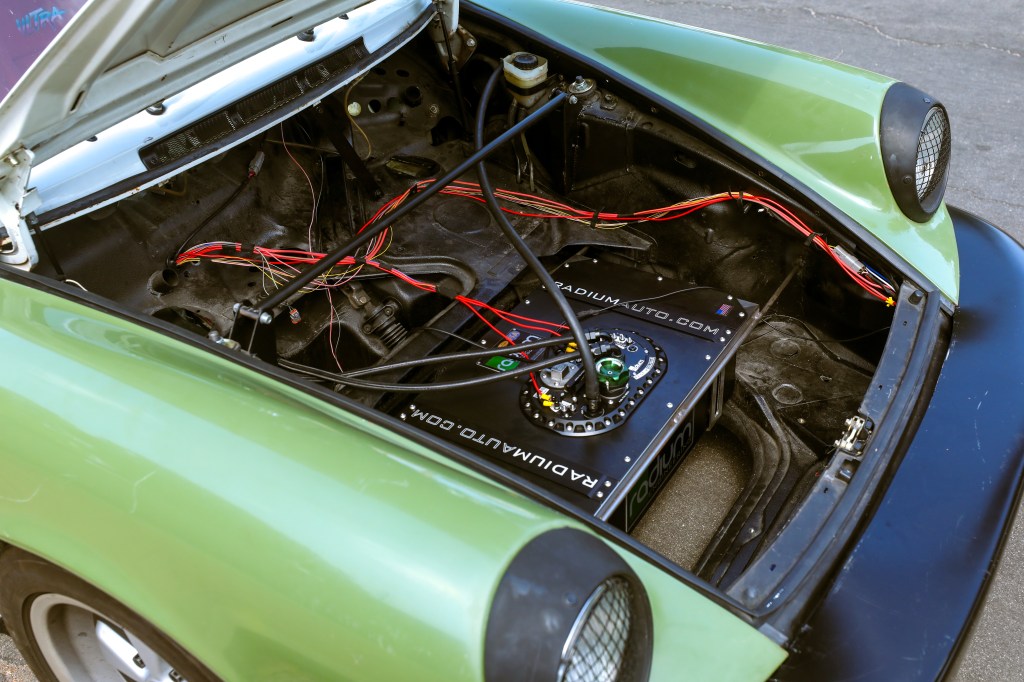
This approach reveals a maturity that’s rare in the build community. Scope creep kills more projects than mechanical failure ever will. It starts innocently: maybe some custom interior panels while the dash is out, perhaps a full paint correction, definitely those wheels you’ve been eyeing. Before you know it, your six-month project is entering year three and you’re no closer to actually driving the thing. Sebastien recognized this trap early and set a clear baseline goal: get the car running, driving, and sorted mechanically. Everything else can wait.
The car has everything it needs and literally nothing else. Functional seat (yes, one seat). Proper safety equipment. Reliable fuel delivery. Sorted cooling. Dialed-in engine management. These aren’t sexy Instagram posts, but they’re what separate successful builds from garage ornaments. Once this foundation is solid, once the baseline is established and the car is actually being driven, then comes the time for refinement and personalization.
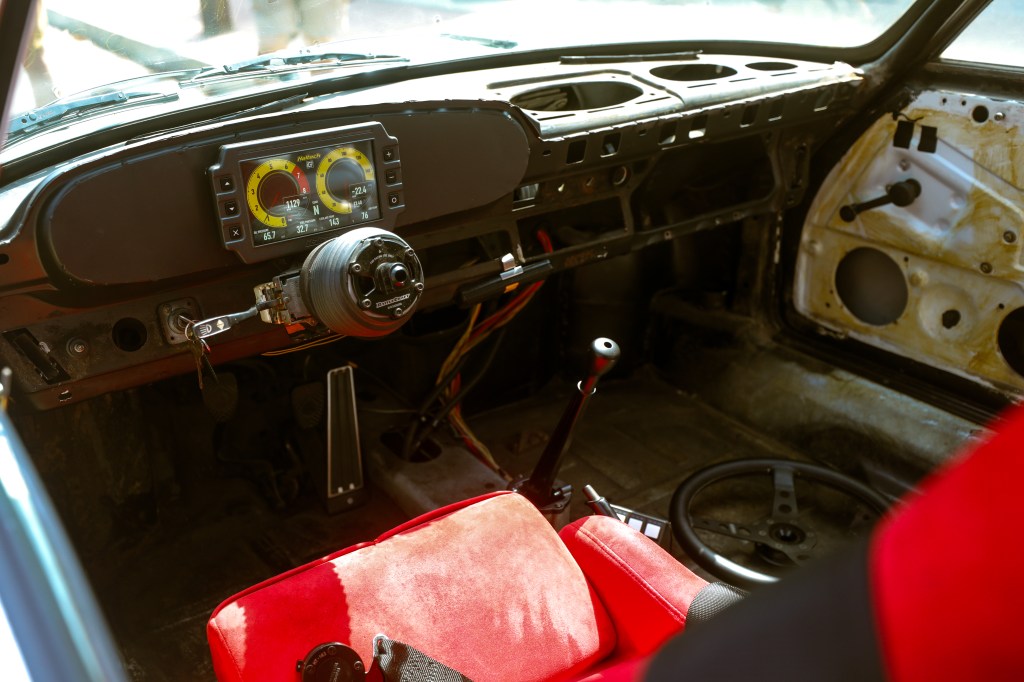
There’s wisdom in this approach that extends beyond just this project. Sebastien understands that finishing a build that’s 80% of your vision is infinitely better than never finishing a build chasing 100% perfection. The goal isn’t to impress other people at car meets. It’s to create something you can actually use, enjoy, and improve over time. That final goal is in sight precisely because he hasn’t let it drift into an ever-expanding list of “wouldn’t it be cool if” additions. You’ll enjoy showing a nearly-complete project that actually runs far more than a fully-finished project that’s sitting at home not working. Take notes people, Seb knows what he is doing.
Building Community Through Conversation
What sets Hikari Rennwerke apart from countless other build channels aside is the genuine community Sebastien has cultivated around it. While most YouTube builders let comments scroll by with superficial engagement, Sebastien created a dedicated Discord server where followers actively participate in the build, not just watch it.
This isn’t your typical YouTube echo chamber where questions go unanswered. Sebastien’s Discord is a living workshop where ideas flow freely. Followers suggest exhaust routing alternatives, and he discusses the pros and cons, sometimes implementing their ideas. Questions about engine management? He shares data logs and explains his reasoning in detail. When a cooling part was installed wrong, he didn’t hide the failure. He showed it, explained what went wrong, and brought the community along for the redesign.
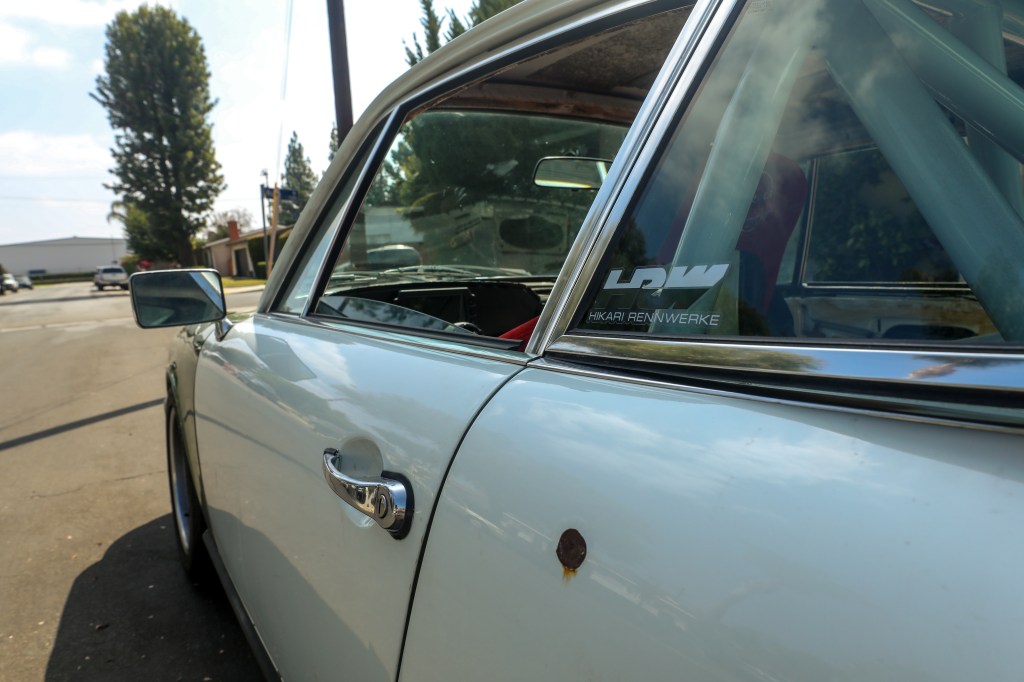
You can tell Sebastien genuinely loves this interaction. He’ll spend an hour on Discord walking newcomers through K-series oil system fundamentals or debating turbo manifold designs with experienced builders. This isn’t a marketing strategy to kick up metrics; it’s pure passion for the craft and the people who share it. It has even led him to make some Honda-inspired stickers. You can pick one up here.
The Discord has evolved into a hub where Honda tuners learn Porsche chassis dynamics, where Porsche enthusiasts discover K-series potential, and where budget builders find encouragement. This cross-pollination of knowledge between automotive subcultures is rare and valuable. Sebastien openly shares files, parts sources, and fabrication techniques, even admitting when he’s unsure about the best approach. That level of accessibility is uncommon, especially for builds this complex, and it’s created a feedback loop where community input improves the build while the process educates everyone involved.
The Broader Implications
Hikari Rennwerke represents more than one man’s creative vision; it’s a case study in how enthusiast culture might evolve. As original examples become increasingly valuable and difficult to maintain, alternative approaches that preserve driving experience while improving practicality may become mainstream.
From a performance perspective, the swap opens possibilities that simply didn’t exist with the original powerplant. The K24’s robust internals and aftermarket support mean reliable power increases that would require exotic and expensive modifications in traditional Porsche engines. Forced induction, high-compression builds, and unconventional engine swaps become realistic rather than wallet-emptying fantasies.
The knowledge sharing aspect cannot be understated either. Sebastien’s documentation of this process will undoubtedly inspire similar projects, creating a community of builders who understand both the technical and philosophical aspects of cross-platform integration. This kind of innovation has historically driven automotive enthusiasm forward, from the first small-block Chevy swaps to modern LS conversions. It’s not about the Honda engine itself, but what it represents to the community: Progression and innovation.
Being a Trailblazer Isn’t Easy But It Has Its Rewards
Standing at the intersection of tradition and innovation requires thick skin and unwavering conviction. Sebastien knew that dropping a Honda engine into a Porsche would generate controversy, but he also understood that meaningful progress often requires challenging established norms. The automotive world has always advanced through individuals willing to try approaches that seem radical at the time.
The real reward isn’t in proving critics wrong or gaining social media fame. It’s in the smile that spreads across your face when you fire up that K24 and hear it settle into its smooth idle. It’s in the way the car pulls cleanly through the rev range without the hesitation or oil leaks that plague aged German engines. Most importantly, it’s in the knowledge that you’ve preserved something special while making it better suited for the realities of modern ownership.
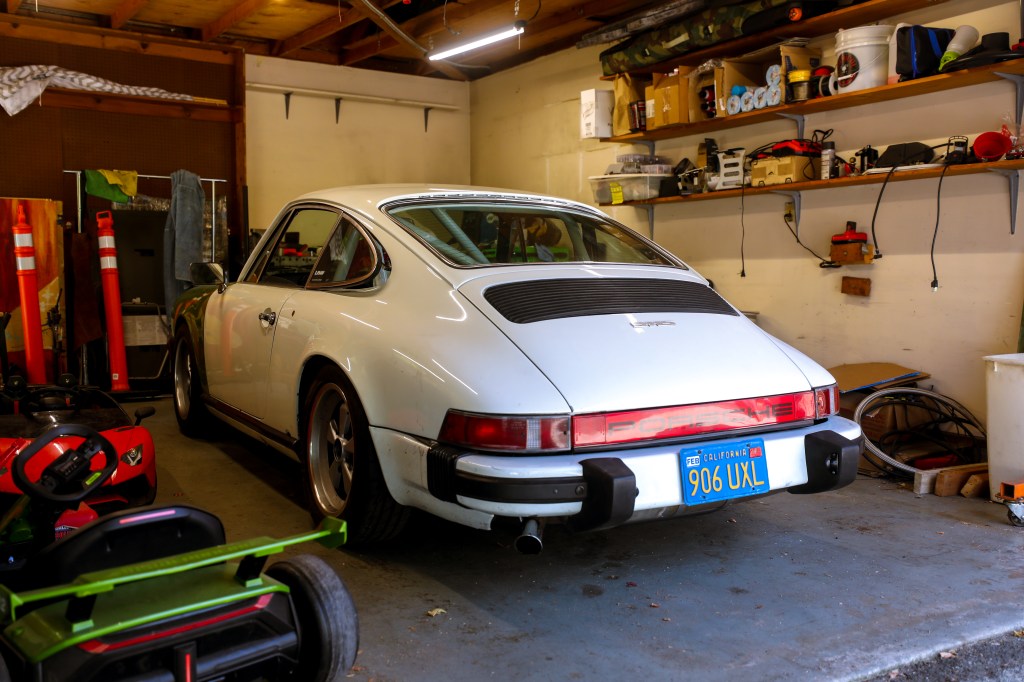
Every time Sebastien drives his creation, he’s demonstrating that passion projects don’t have to be financially ruinous or technically compromised. He’s showing that respect for automotive heritage can coexist with practical innovation. He’s also proving you don’t need a five-lift garage with every tool known to man to build something extraordinary. This entire project came together in a humble workspace with determination, ingenuity, and a willingness to figure things out. Hikari Rennwerke reminds us that the best builds aren’t always the most expensive or most correct. Sometimes they’re the ones that capture the builder’s vision most completely while creating something new and unexpected in the process.
And if the rumors are true, this is just the beginning. Word on the street is that a widebody kit and turbo setup might be in the car’s future. Once that baseline is dialed in and the car proves itself reliable, Sebastien might just turn the controversy up another notch. After all, if you’re already making purists uncomfortable, why stop now? So go and buy and sticker and support him, or comment that he is an idiot and completely ruined the car. Either way, you’ll make his day.
 The Late Brake
Leave a Reply