


There’s a moment that happens at every great car event. It’s not when the supercars roll up or when the cameras start flashing. It’s quieter than that. It’s when you’re standing next to your car, coffee in hand, watching the morning light reflect off your paint, and a stranger walks up to ask about your car. Not because they want to judge or compare, but because they genuinely want to know your story.
That moment happened to me about fifteen times at Camp Overcrest and Sportscar Vacationland this past August. And each time, it reminded me why I fell in love with car culture in the first place.
What Is Overcrest?
If you haven’t heard of Overcrest Productions yet, prepare to have your assumptions about car events completely upended. Overcrest is more than just a rally, or podcast. They’re a production company built as a conduit to spread an idea. Direct from their website, Overcrest is led by Kris Clewell (encyclopedia of opinions and grandpa car connoisseur), Jake Solberg (perpetual optimist and avid Birkenstock enthusiast), and Jeff Bull (brand/designer extraordinaire and shady character), this isn’t your typical automotive media company.
Their mission is simple but radical: they seek to inspire others to use what we believe is the best tool for exploration and personal autonomy ever created. Through events, films, and spoken word, they want everyone to explore the world around them. “Take The Car.” That last part isn’t just a tagline. It’s a philosophy, a challenge, and an invitation all rolled into two simple words. It’s never all that easy to “Take The Car”, but that’s why it’s important to do just that.
Where most car events focus on static displays and carefully orchestrated photo opportunities, Overcrest builds experiences around movement, discovery, and genuine human connection. They’re not interested in creating Instagram moments or networking opportunities for industry insiders. They want to remind people that cars, at their best, are instruments of freedom and exploration. When Kris and team decided to bring this philosophy to Monterey Car Week, they created something that felt like finding an oasis in a desert of velvet ropes and exclusivity.
Camp Overcrest: Where the Story Begins
Let’s talk numbers for a moment. Despite avoiding the steep hotel prices of Car Week, campers at Overcrest still paid $650 for the week. $650 for a campsite! Your first reaction might be sticker shock, but here’s what that money actually bought: entry into a community that most car events can’t manufacture, no matter how much they throw at production value.
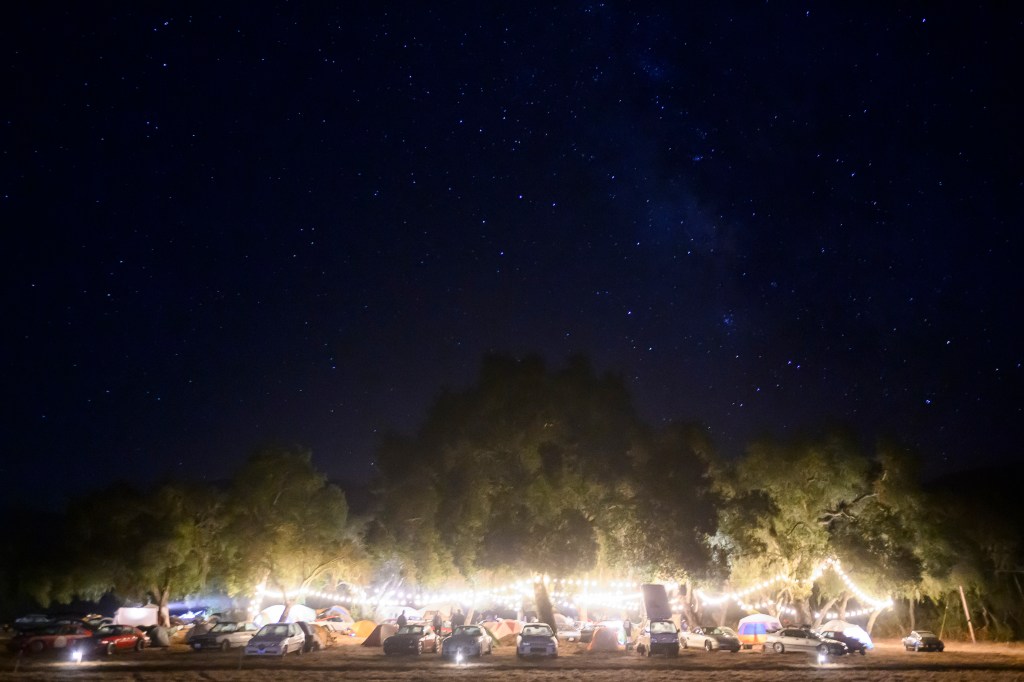
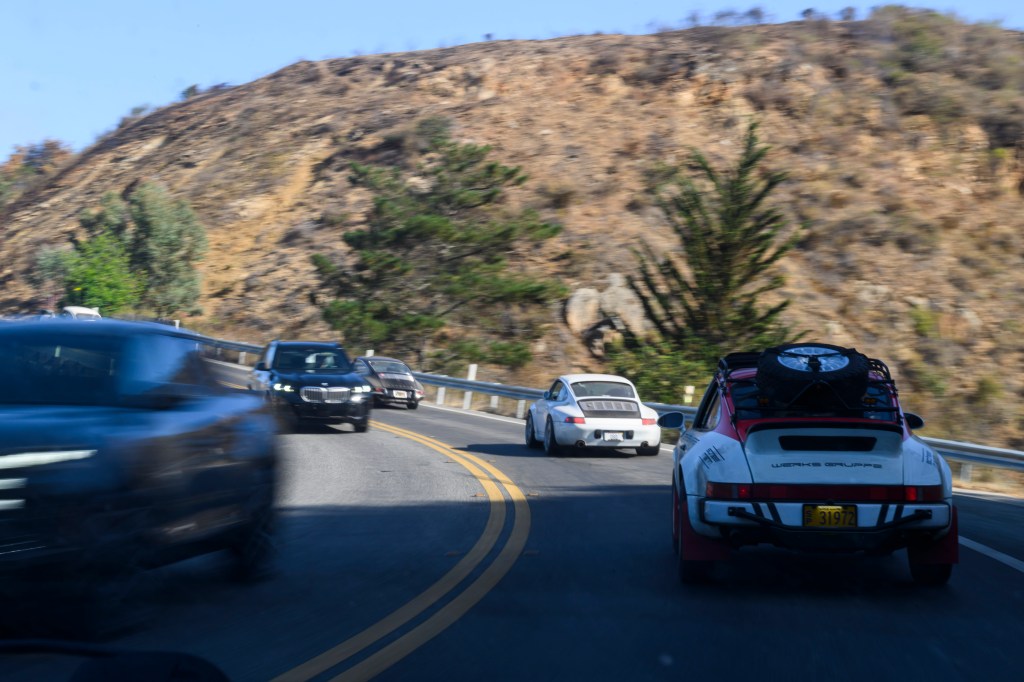
The setting alone justified the cost. Picture tents scattered beneath oak trees at a working vineyard in Carmel Valley, about an hour’s drive from the chaos of Pebble Beach. The drive itself becomes part of the experience. Beautiful windy roads through Carmel Valley that make the journey as memorable as the destination. And when you arrive, you realize you’re not just another attendee. You’re joining volunteers, community members, and the kind of people who understand that the best part of any car event happens in the parking lot, not on the show field.
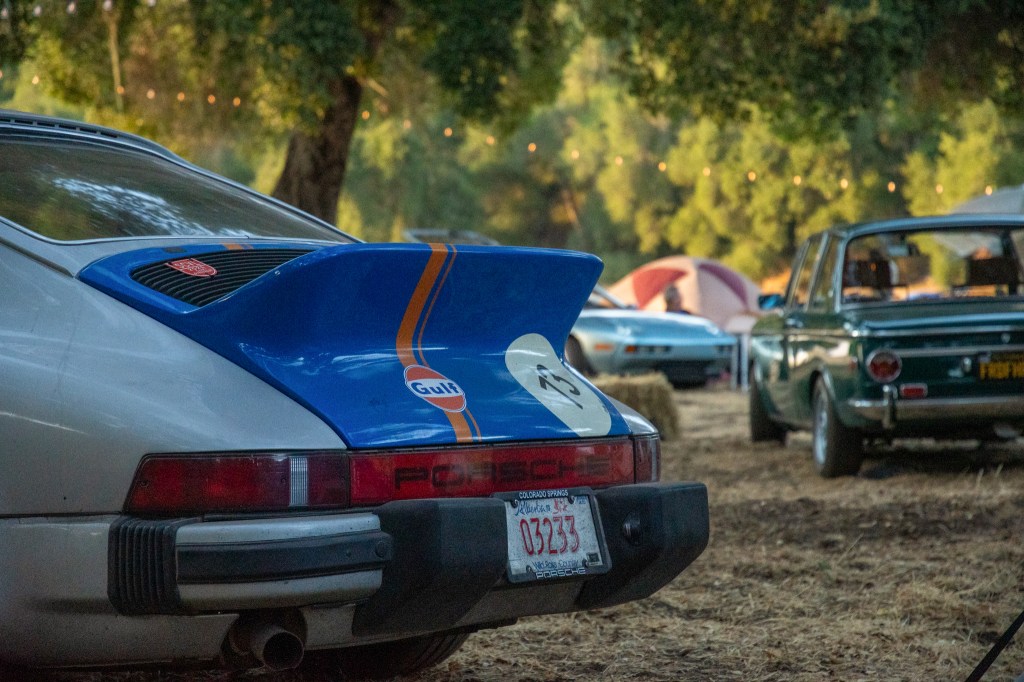
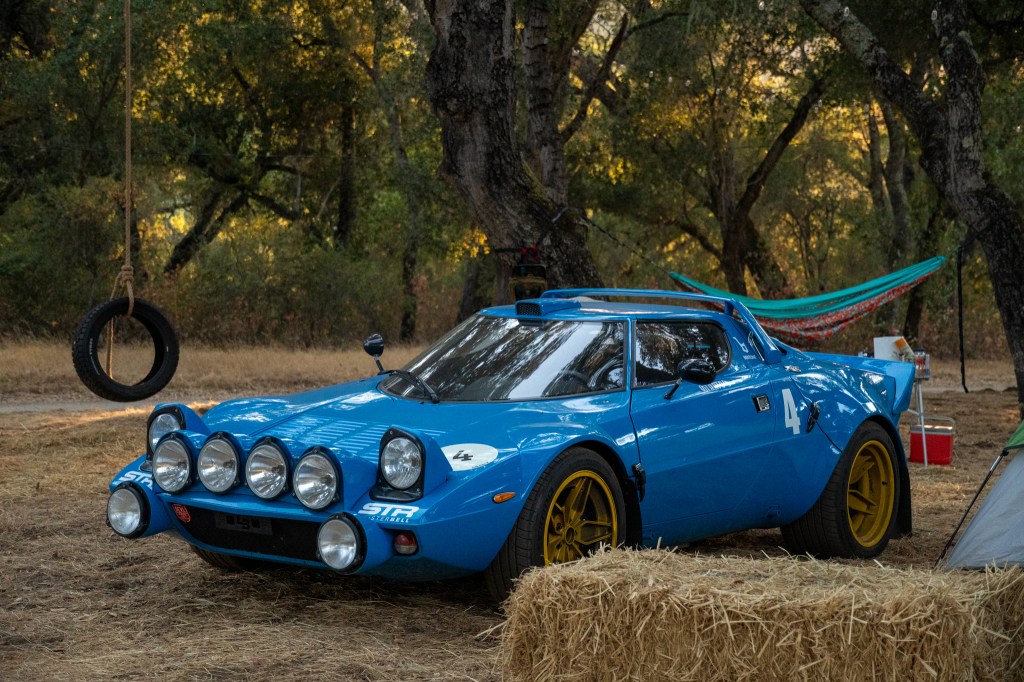
I’ll be honest: camping isn’t my usual style. I’m more of a “find the nearest hotel with decent Wi-Fi” kind of guy. But there was something magnetic about the idea of waking up next to your car, sharing morning coffee with strangers who quickly become friends, and having conversations that stretch well into the night about everything from carburetors to life philosophy. The addition of almost zero cell service really aided the human connection portion of the camping lifestyle. I’m still not sure if that was intentional from Overcrest or just a beautiful coincidence. Based on stories I’ve heard about previous events, I wouldn’t be surprised either way.
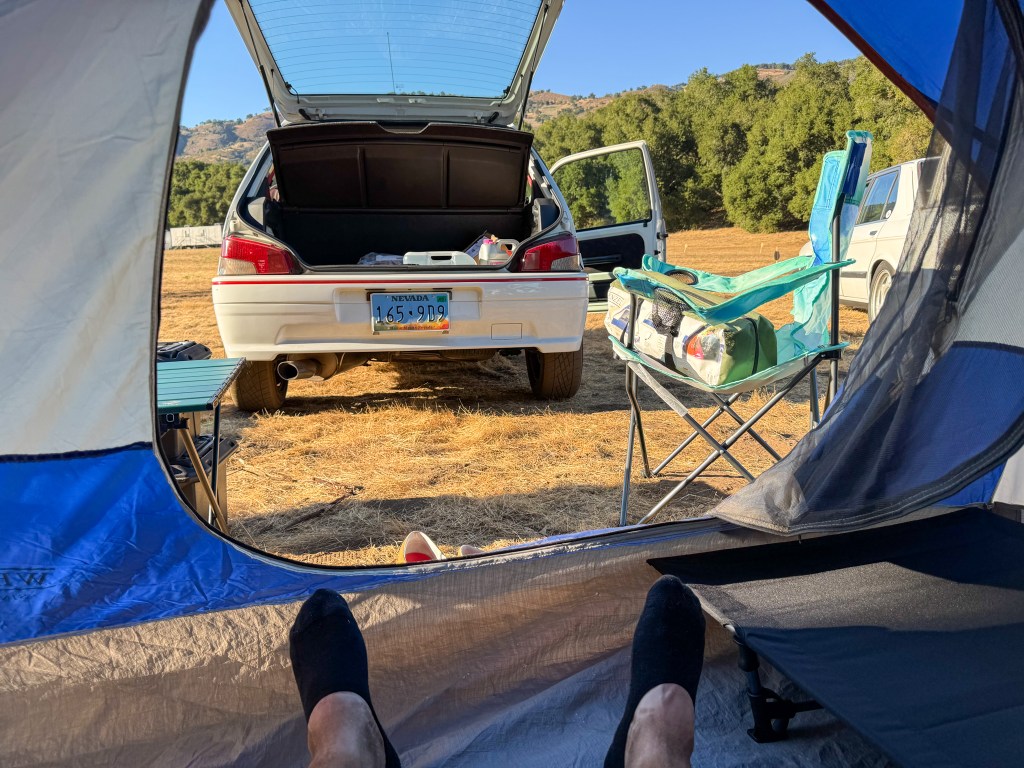
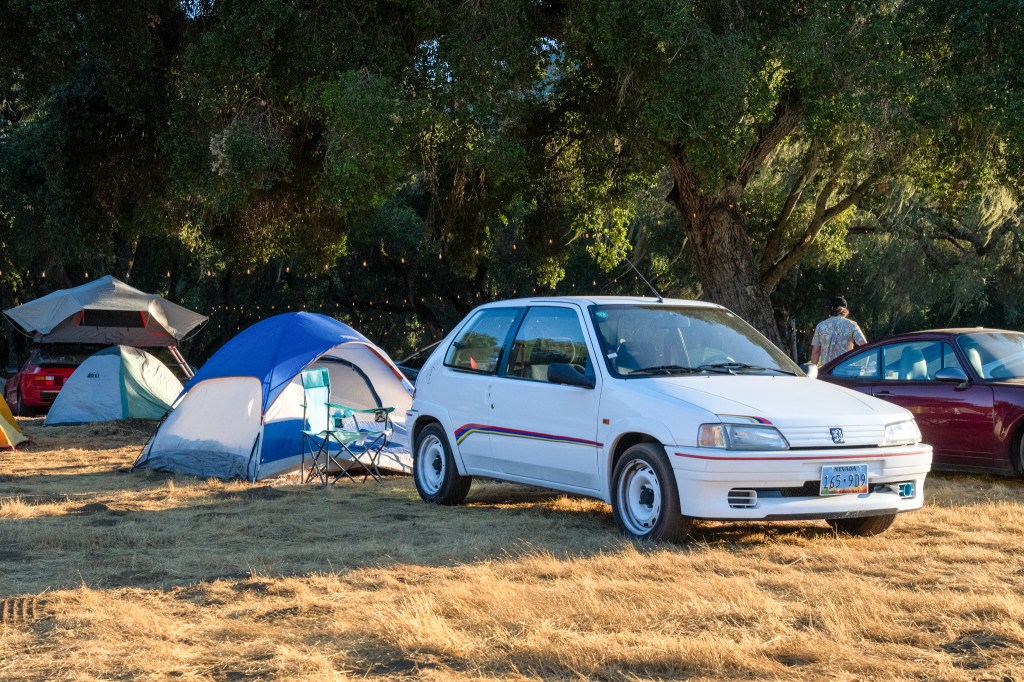
The camping experience was intentionally simple, which turned out to be its greatest strength. No glamping nonsense or luxury amenities. The only thing provided aside from your camping lot was “hot” showers and bathrooms. Nothing you didn’t need, just good people, great cars, and the kind of genuine enthusiasm that’s become increasingly hard to find.
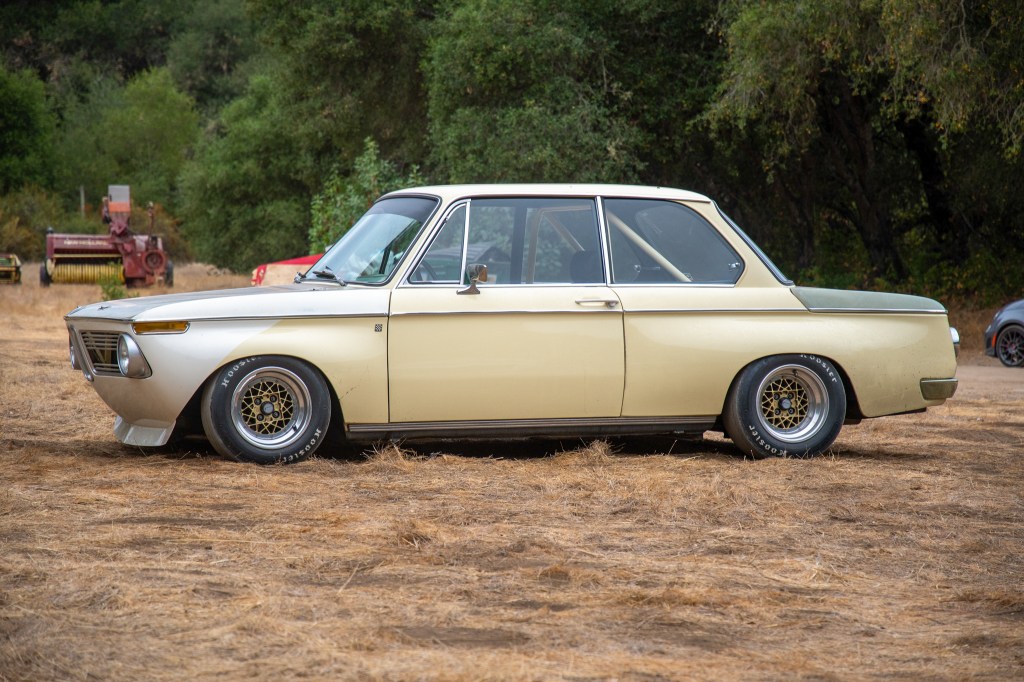
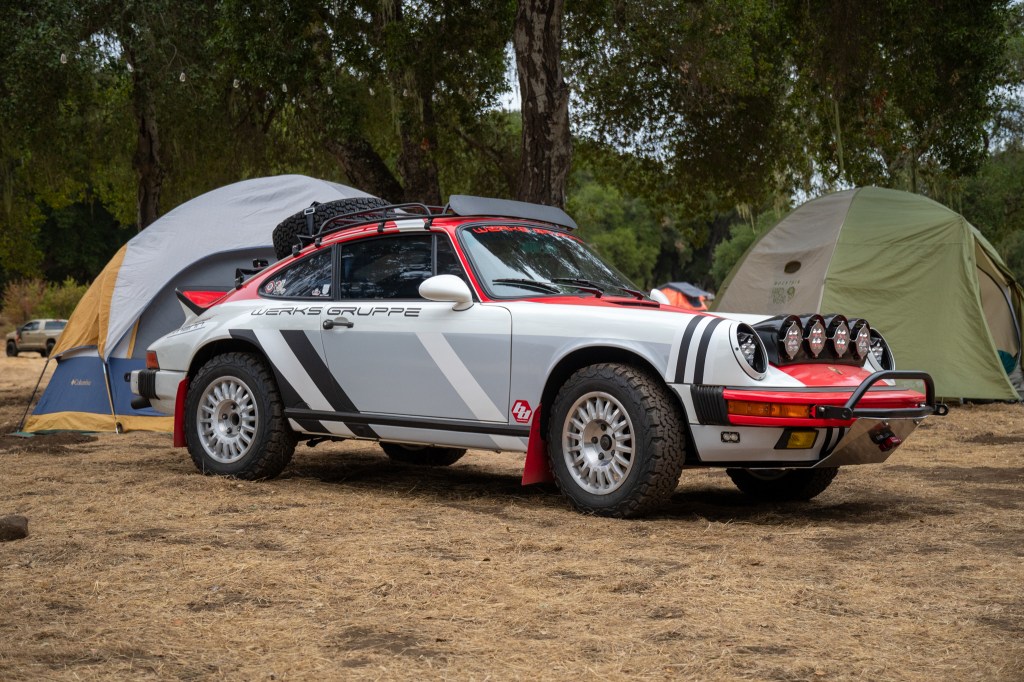
What struck me most was the diversity of the group. Yes, there were plenty of air-cooled Porsches, but there were also ratty project cars, modern performance machines, and everything in between. The common thread wasn’t the cars themselves, but the stories behind them. Every camper had a tale to tell, whether it was about a cross-country adventure, a barn find, or a restoration that took longer than expected.
Sportscar Vacationland: An Event Unlike Any Other
If Camp Overcrest was the home base, then Sportscar Vacationland was the main event. Sportscar Vacationland delivered a refreshingly authentic experience during Monterey Car Week. More than just a car show, Sportscar Vacationland was a celebration of automotive art, culture, and community. And they weren’t kidding about the “refreshingly authentic” part.
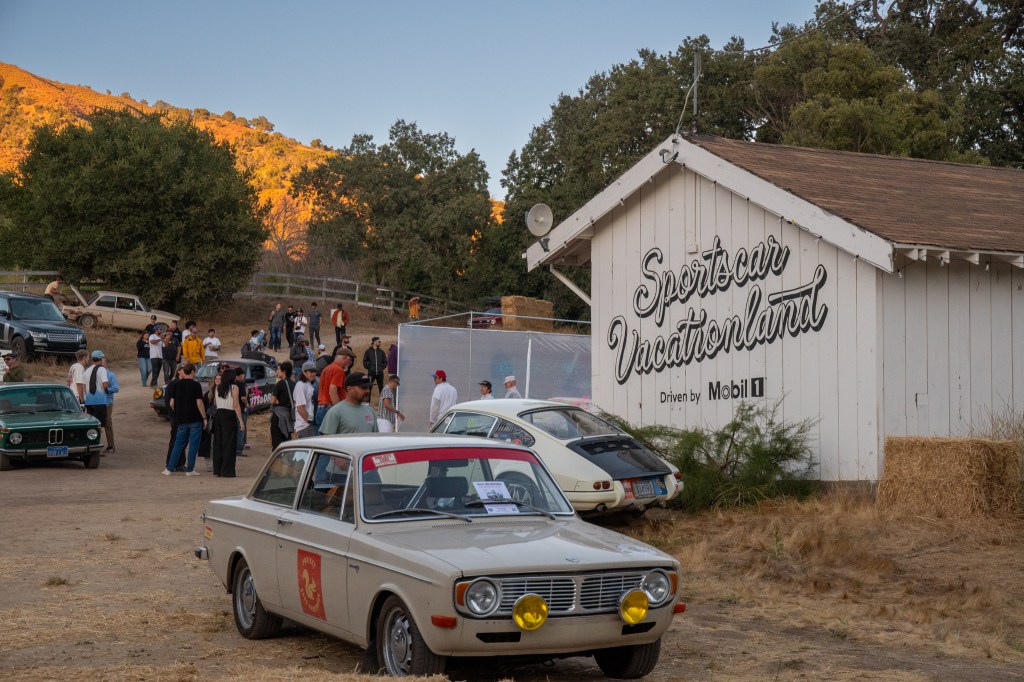
No velvet ropes, no flex culture. Just great people and the kind of machines and camaraderie that remind us what this hobby is supposed to be about. The event took place at a working vineyard, with cars displayed among the vines and open spaces that encouraged actual conversation rather than Instagram photo ops alone. I was even asked to display the Peugeot in one of the preferred showcase spots. It was a small gesture from the team but it was an honor to be part of the display. It even drew attention from one of my favorite YouTube channels, making it into their recent Car Week video.
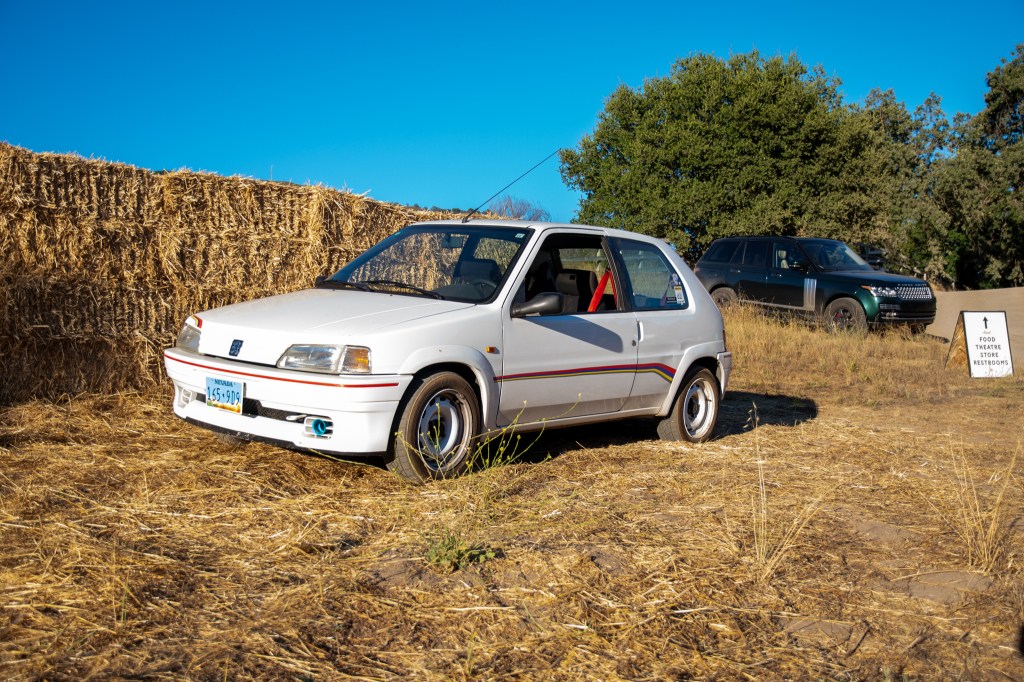
The $99 admission fee felt almost comically reasonable compared to other Car Week events, but a ticket was included for campers. But what you got for that price was something you couldn’t buy at Pebble Beach: access to the people behind the cars, the stories that made them special, and an atmosphere that prioritized substance over spectacle. It’s cliché, but there was far too much to mention in this article so here are a few of my favorite highlights from the event…
Felix’s Hanging 911 Installation
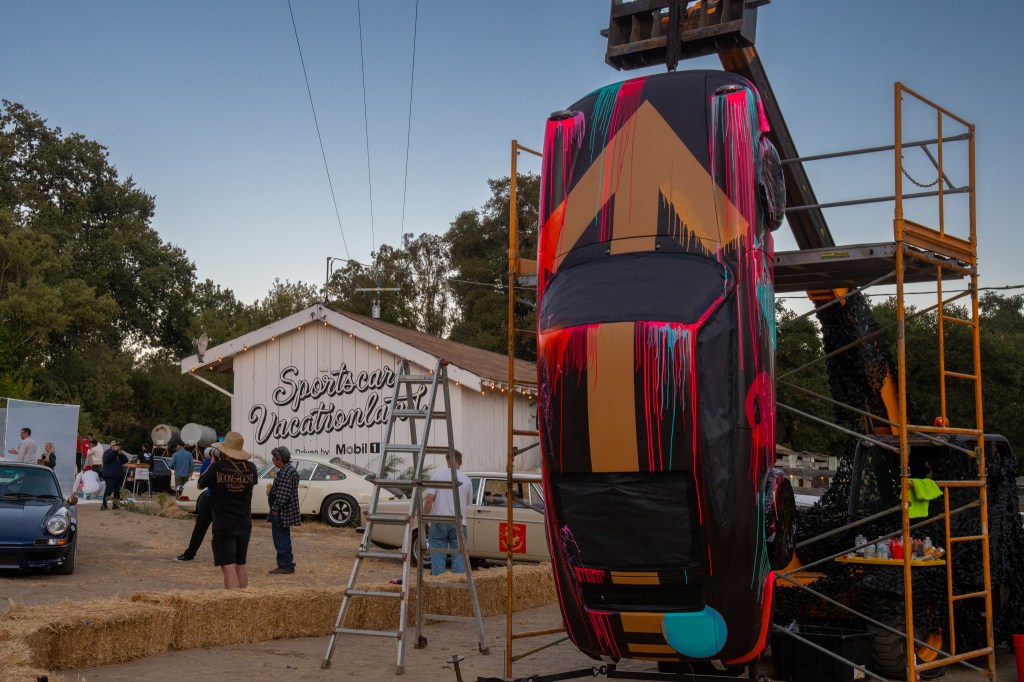
One of the most memorable pieces at Sportscar Vacationland was an art installation that perfectly captured the event’s creative spirit: a real Porsche 912 suspended in mid-air, creating a surreal sculpture that looked like it had been frozen mid-leap. The installation, created by artist Felix Holst, wasn’t just about shock value or Instagram moments. His vision was to let the body lines of the Porsche shape the paint as it dripped down the car. Cool idea, but so much went into this. It wasn’t a shell, it was a full driving car that showed up. The team had to drain all of the fluids in order to pull it off. Such a simple idea but something most people wouldn’t have thought to even try. A common theme at Sportscar Vacationland.
The 944 Driver’s Painting
Among all the high-concept installations and carefully curated displays, one of the most engaging experiences was the 944Driver team’s interactive paint booth. They’d brought a white-wrapped 944 safari-style build, set up a proper paint booth in the vineyard, and got it ready for its new livery. But instead of creating some predetermined design, they handed those paint-filled Super Soakers to attendees and said, “Have at it.”
The result was controlled chaos in the best possible way. Electric blue, hot pink, and fluorescent yellow sprayed across the taped-off car in abstract patterns that no single artist could have planned. Kids and adults alike took turns transforming the pristine white safari build into a psychedelic masterpiece.
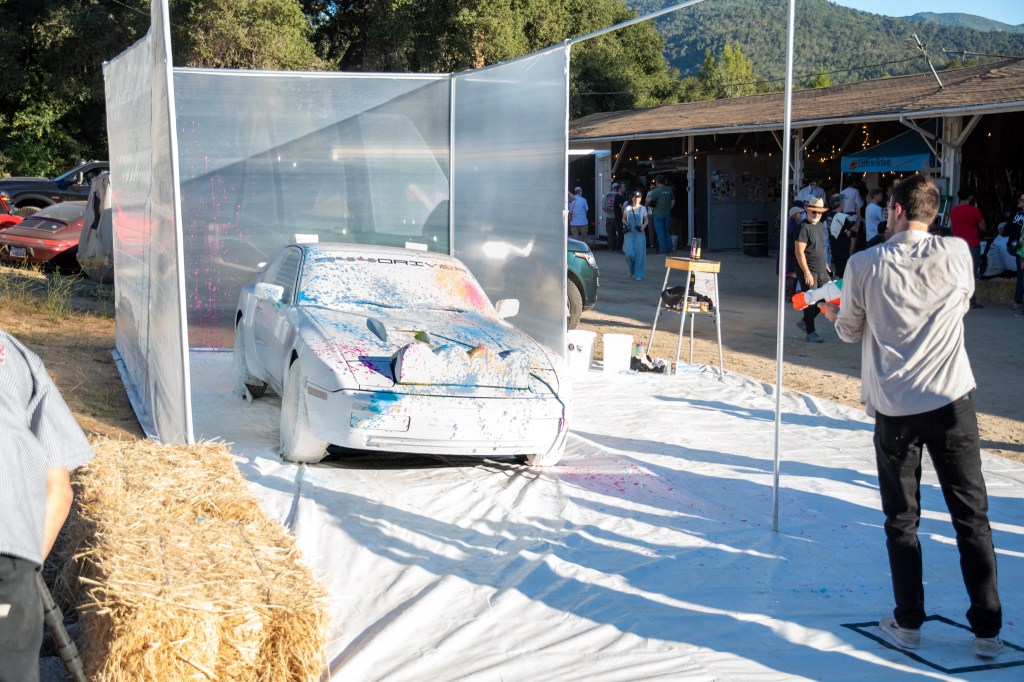
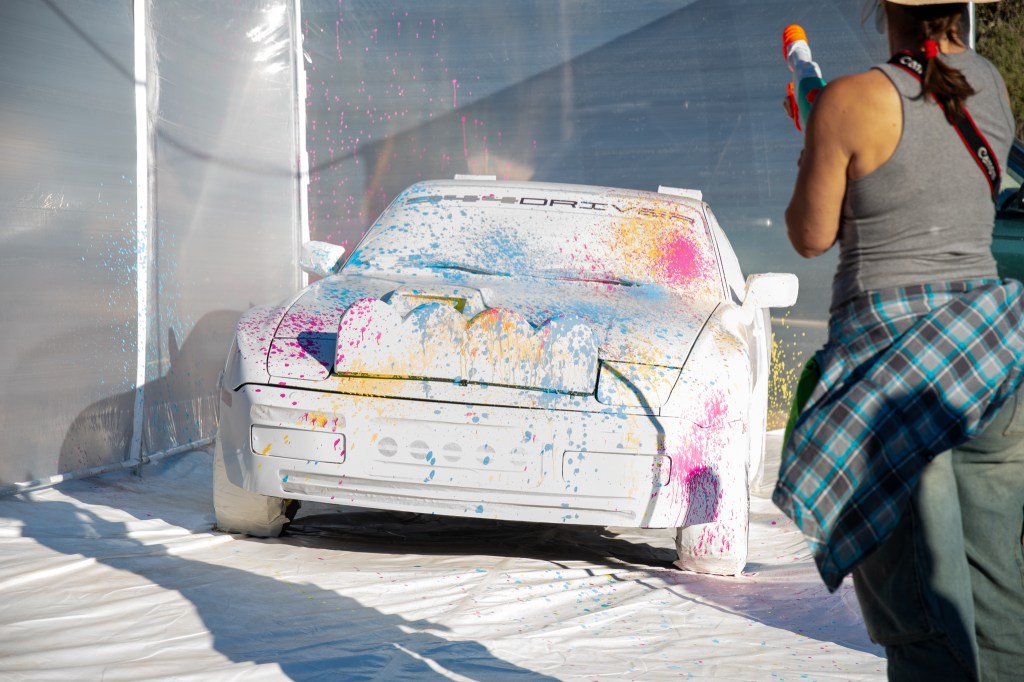
What made this brilliant wasn’t just the visual spectacle. It was the participation. This wasn’t about passive observation. This was hands-on, collaborative art where every attendee could literally leave their mark on something that would outlast the weekend. The 944Driver team wasn’t just painting a car; they were fostering connections through shared creativity that turned spectators into participants.
Project Cars Anonymous Display
If the painted Porsches were about artistic interpretation, the Project Cars Anonymous display was about brutal honesty. This wasn’t a concours-quality showcase but rather a confession booth for automotive sinners. Half-finished builds, perpetual projects, and the kind of cars that live under tarps for years at a time were given equal billing alongside pristine restorations.
Hosting their first live session to help combat “Project Car-aholics”, the beauty of Project Cars Anonymous was in its relatability. For every perfectly restored classic on display, there was a partially disassembled project that made you feel better about your own automotive shortcomings. The show runners were refreshingly honest about their struggles, sharing stories of parts that never arrived, unexpected electrical gremlins, and budgets that spiraled out of control.
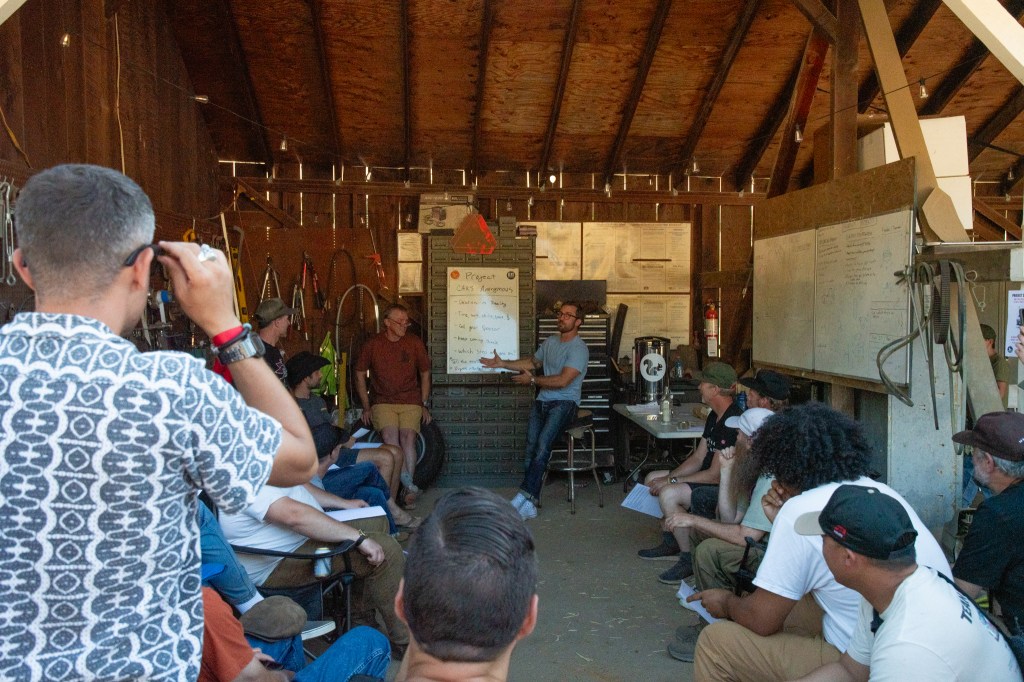
It felt like group therapy for gearheads, and the therapeutic value was real. How often do you get to hear someone else admit that their “quick weekend project” has been occupying half their garage for three years? The display normalized the struggle and celebrated the journey together, not just the destination.
Petrolicious Cinema Under the Stars
As evening fell, the event transitioned into Autocinema, an outdoor film experience that perfectly captured the DIY spirit of Sportscar Vacationland. Picture an amphitheater made entirely of hay bales arranged in natural tiers across a hillside, with campers and attendees settling in with drinks as the sun disappeared behind the Carmel Valley hills. The setup was charmingly rustic yet perfectly functional, creating an intimate outdoor cinema under a canopy of stars.
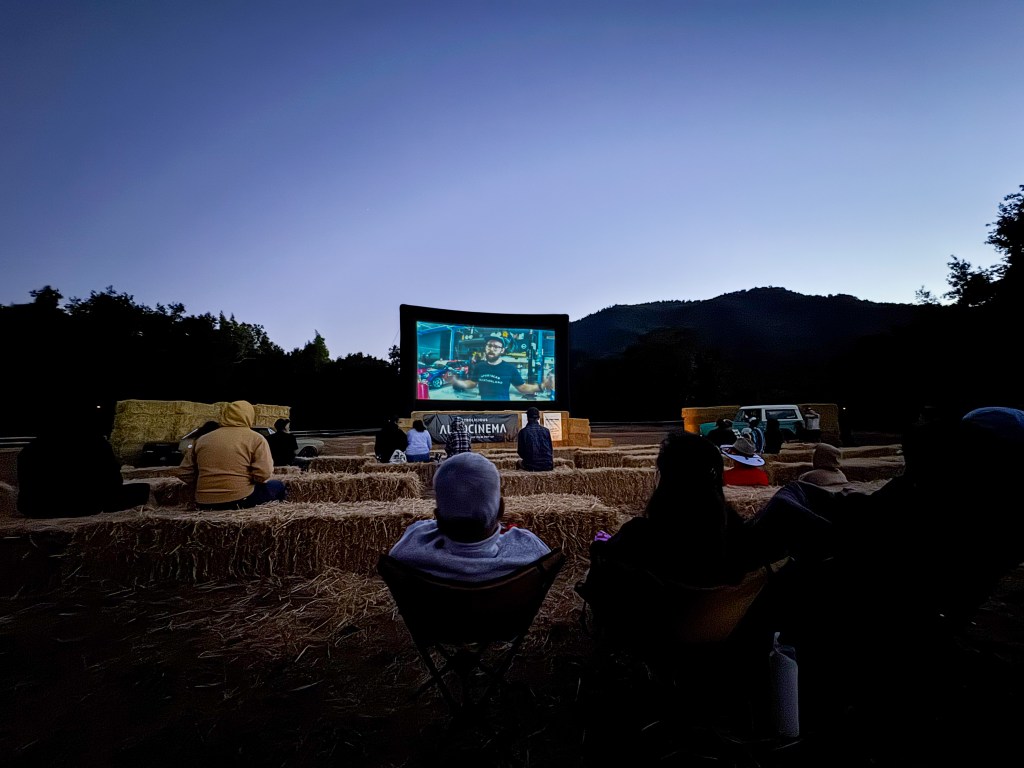
The evening was hosted by Petrolicious, the masters of automotive storytelling who create beautifully crafted films that capture the soul of car culture through passionate owners and their machines. Their videos aren’t just car showcases; they’re intimate portraits that explore the human connection to automotive art, focusing on the stories behind the cars, and not just the cars themselves.
The highlight of the screening was the debut of “One of None,” Petrolicious’s new feature documenting the surreal story of the 1,000-horsepower Lotec C1000. Here was a car so extreme, so over-the-top, that it almost defied belief. A carbon fiber unicorn that represented the absolute pinnacle of automotive obsession, perfectly fitting the celebration of car culture in all its forms that defined Sportscar Vacationland.
What made this experience truly special wasn’t any single film, but the communal atmosphere. Sitting on hay bales under the stars, surrounded by fellow enthusiasts who could appreciate the craftsmanship in a perfectly executed heel-toe downshift or the poetry in a well-timed gear change, felt like a throwback to simpler times. This was car culture at its most authentic: people gathering outdoors to celebrate the machines and stories that connect us all, with nothing but the night sky as a roof and genuine enthusiasm as the soundtrack.
The Future with Overcrest
The success of Sportscar Vacationland wasn’t a fluke. It was the result of Overcrest Productions understanding something fundamental about what car people actually want: authenticity, community, and the freedom to be genuinely enthusiastic about cars without judgment or pretense.
I left the event with a sense of optimism about the future of car culture. In an automotive landscape increasingly dominated by electric appliances and autonomous pods, events like Sportscar Vacationland prove that the human element of car enthusiasm isn’t going anywhere. If anything, it’s becoming more precious and more necessary.
Overcrest Productions has hinted at expanding its events to include Monterey Car Week regularly. The Overcrest Rally, their multi-day driving adventure through untravelled roads, has already gained a cult following among people who prioritize experience over amenities. Their podcast continues to grow, attracting guests and listeners who appreciate thoughtful automotive discourse over clickbait controversy.
What excites me most is their commitment to accessibility. They’re actively working to lower barriers to entry, not raise them. The car world doesn’t need more exclusive events with impossible entry requirements. It needs more gatherings like Sportscar Vacationland: unpretentious, inclusive, and focused on the elements that make car culture worth preserving. The hanging 911 installation, the Project Cars Anonymous confessions, the cinema under the stars, all of it pointed toward a more creative, more human future for automotive events.
My Views on Car Culture are Forever Changed
By the end of the weekend, something had shifted in my perspective. I’d arrived at Sportscar Vacationland with the usual Car Week expectations: impressive machinery, networking opportunities, maybe some good photos for social media. What I found instead was something I hadn’t realized I’d been missing.
Between the film, the art, and the curated mix of cars, Sportscar Vacationland delivered something refreshingly different from the fast-paced intensity of Monterey Car Week. This wasn’t about checking boxes or collecting experiences like trading cards. It was about slowing down, connecting with people, and remembering why we fell in love with cars in the first place.
I arrived at camp alone, armed with a detailed plan of events to hit and media passes to maximize my Car Week coverage. I did almost none of it. Instead, I spent most of my time enjoying the group and hanging out with new friends, even skipping two events I had media passes to, because I realized I didn’t need to go anywhere else to get the authentic Car Week experience. It was all right here. And to the Mythbusters out there, we did answer the age-old question: Can you fit 5 grown men inside of a Peugeot 106 Rallye? Myth confirmed.
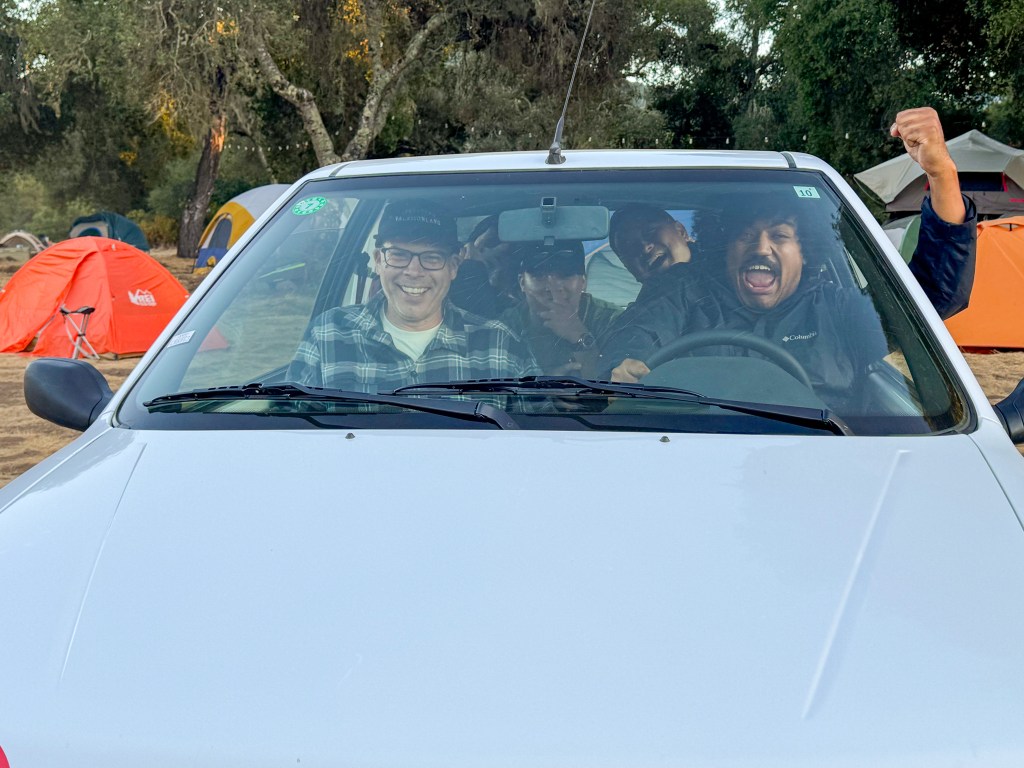
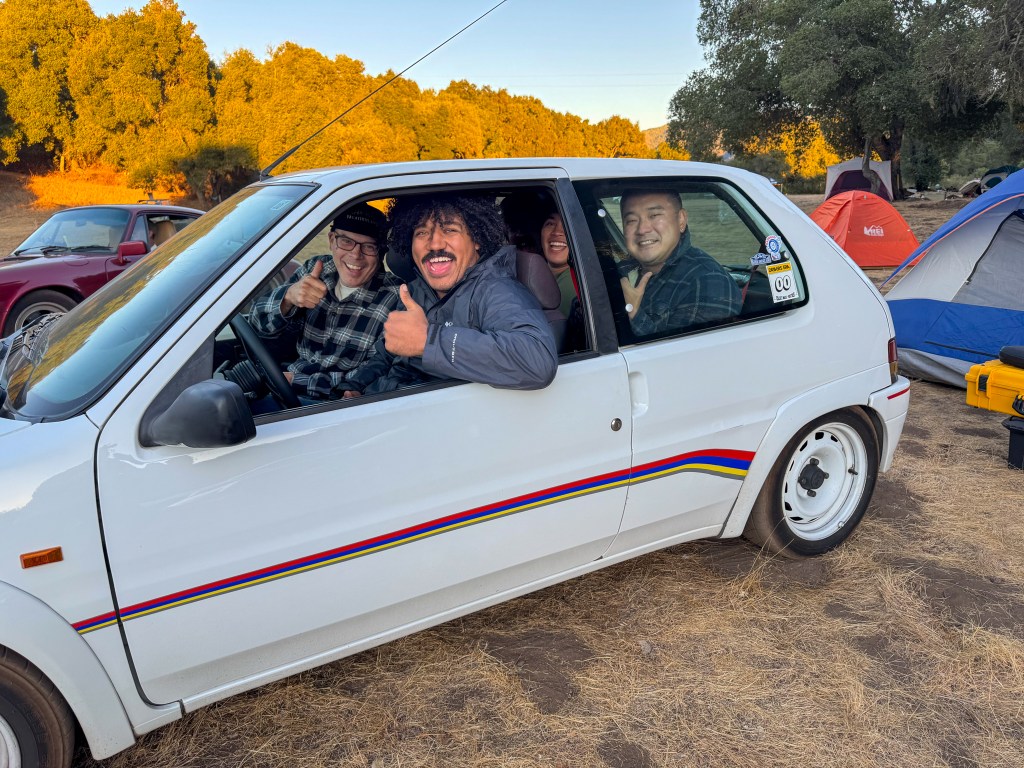
The camaraderie at camp was unlike anything I’d experienced at other automotive events. Within hours, strangers became friends. By the end of the weekend, I found myself in a group chat with people who felt like lifetime connections. This wasn’t an exclusive club based on net worth or garage contents. It was an inclusive community based on genuine passion. The diversity of the crowd proved that car culture, at its best, is about human connection. It’s about the stories we tell, the experiences we share, and the community we build around our common obsession.
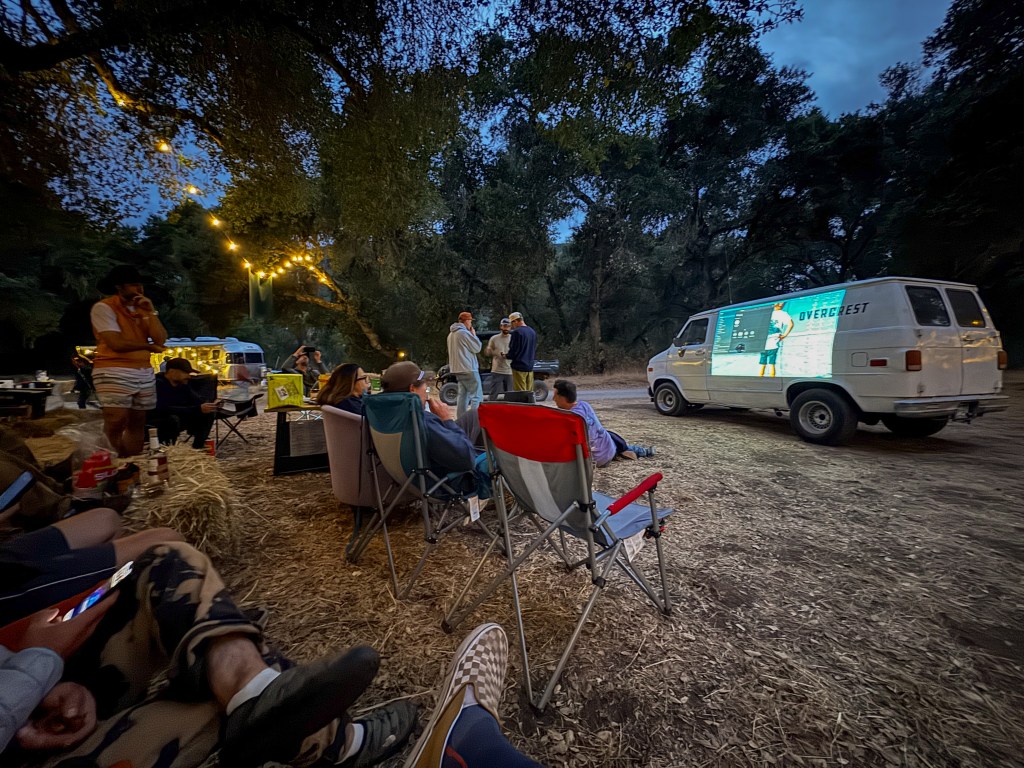
But the real highlight came on Saturday night, when most of the camp had packed up and headed home. A skeleton crew of us diehards gathered in the communal area and watched the car heavy Ronin projected onto the side of the Overcrest merch van. There we were, maybe a dozen or so of us sprawled on camp chairs and blankets, watching one of the greatest car chase movies ever made under the stars in Carmel Valley. It was simple, spontaneous, and absolutely perfect. That impromptu movie night, more than any concours or auction, captured everything that made this weekend special. It was the highlight of my weekend by far. Might have even been the highlight of my year.
Long Story Short: Take. The. Car.
As I loaded my car for the drive home from Carmel Valley, I wasn’t ready for the weekend to end. The conversations, the connections, the reminder of why I love this ridiculous hobby – it all felt too precious to just pack away with my camping gear.
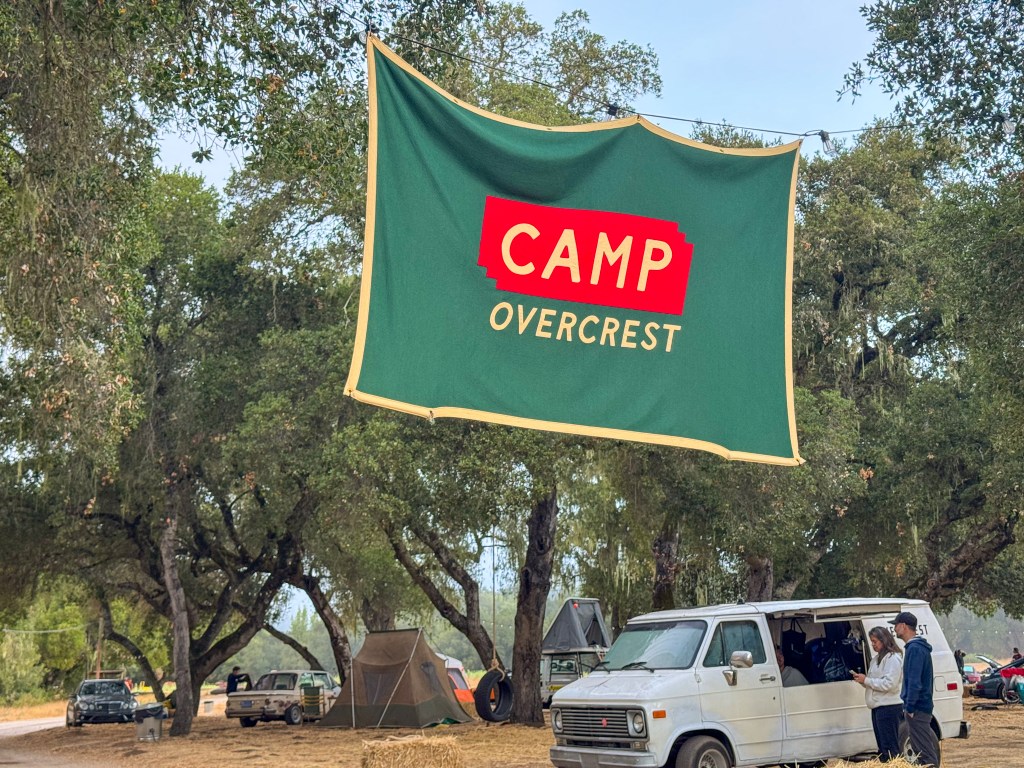
Camp Overcrest and Sportscar Vacationland weren’t just events; they were proof that authentic car culture still exists if you’re willing to seek it out. In a world increasingly obsessed with optimization and efficiency, there’s something rebellious about choosing experience over convenience, about prioritizing human connection over digital metrics.
Overcrest doesn’t gatekeep, but they don’t necessarily outreach either. They have their audience base, and they wait for genuine people to find what makes them great, then welcome them with open arms. It’s like you almost have to earn your way in by simply making the trip, but that’s it. If you show up, you’re one of them. There’s something beautifully honest about that approach.
The next time someone asks me about the state of car culture, I won’t point to auction results or social media follower counts. I’ll tell them about waking up in a tent next to my car, sharing coffee with strangers who became friends, and watching Ronin projected onto the side of a van with a dozen people who’d become family by Sunday morning. I’ll tell them about finding my tribe in a vineyard in Carmel Valley, surrounded by people who understand that cars are just the excuse – the real magic happens in the connections we make along the way.
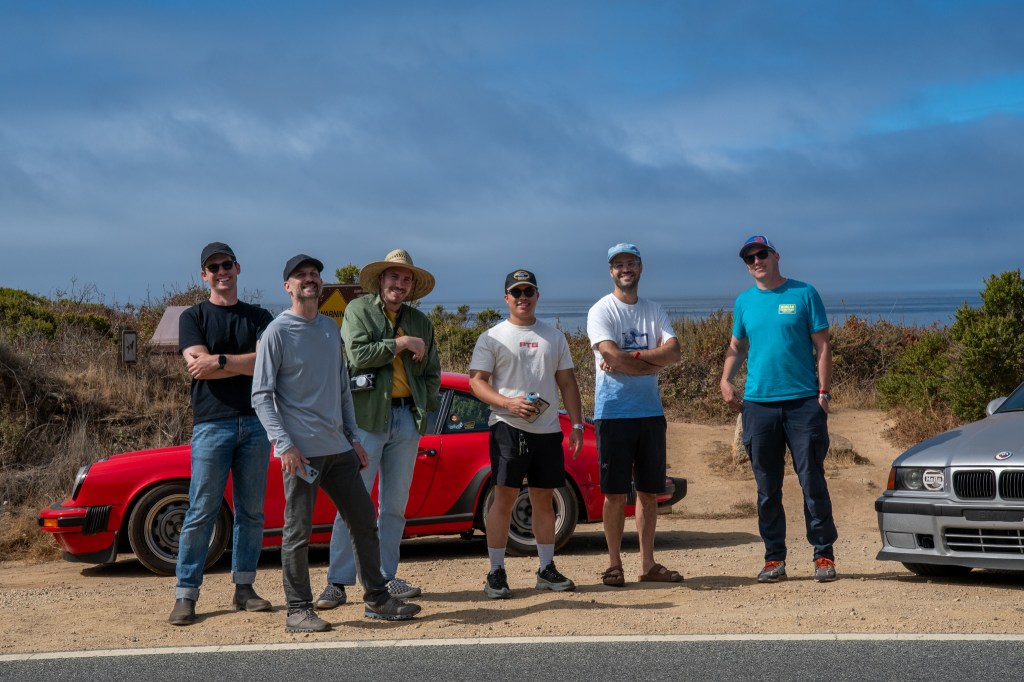
And that’s why you “Take The Car,” as Overcrest says. Not because you know where you’re going or what you’ll find when you get there, but because you never know what will happen. Sometimes you end up at a prestigious concours. Sometimes you end up watching a movie under the stars with people who started as strangers and ended as friends. The car is just the vehicle – literally and figuratively – for the experiences that change you. And if you’re lucky enough to find people who understand that, you hold onto them tight.

 The Late Brake
Leave a reply to puristish Cancel reply