

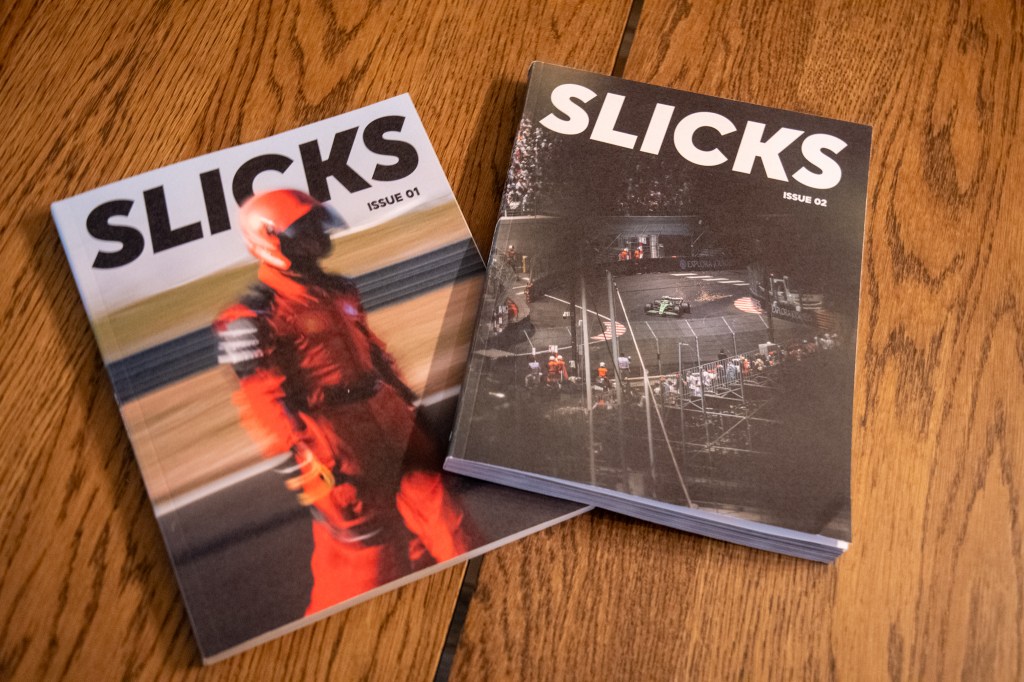
There is something quietly radical about printing a magazine in 2026. The industry will tell you that print is dying. No one has the attention span for long-form anymore, and everything needs to be 15 seconds or less to have impact. And yet here is Lewis Houghton, founder of SLICKS magazine, doing exactly that. Printing a beautiful, ad-free, independent motorsport publication and building a genuine community around it one issue at a time. It might be one of the most interesting things happening in car culture right now.
I had the chance to sit down with Lewis for a proper conversation, and what started as a Q&A about a magazine turned into one of those rare chats where you just keep pulling on threads and every one of them leads somewhere good. We talked about Rally, Formula One, the F1 movie, Valentino Rossi, and why the best racing you will ever watch probably has nothing to do with a grid of 20 cars in Monaco. If you have ever felt like mainstream motorsport media does not quite speak to you, this one is for you.
A Honeymoon, an Airport, and a Gap in the Market
Every great idea has an origin story, and Lewis’s is a good one. He was in an airport, freshly married, heading off on his honeymoon, looking for something to read on the plane. Motorsport had been part of his life since he was a kid, flipping through his dad’s racing magazines and picking up old Top Gear issues. So naturally, he headed to the magazine rack looking for something that felt familiar. Something that spoke to him the way those old reads used to.
He found nothing new, nothing of substance for motorsports that had not already been said. “Everything was written by seemingly editors who have been in the role 30, 40 years and still yearn for the 1980s as the peak… it’s kind of almost as if they stopped discovering,” Lewis told me. “The old ways were better kind of thing.”
That moment of frustration, standing in an airport newsagent with a honeymoon ahead of him and nothing worth reading in hand, was the spark. But what turned it from a personal gripe into something real was the angle he landed on almost immediately. Rather than just making a magazine for himself, he wanted to make one that gave back to the industry he had spent years working in as a freelancer. A platform for independent voices, emerging photographers, writers who had something new to say, and stories that the establishment had no interest in telling.
“I thought, well, why not make my own,” he said. “And turn it into a platform that kind of gives back to the industry that I’ve now worked in and loved since I was a kid.”
So he did exactly that.
What Is SLICKS, and Why Is It Different?
SLICKS is a UK-based print magazine covering motorsport and car culture. That much is straightforward. But the way it goes about it is what makes it worth talking about.
For starters, it is entirely ad-free. No watch adverts. No insurance spreads eating up a quarter of the page count. Lewis was clear on this from the beginning, because he understood that ads are exactly what make most print magazines feel hollow. You are not buying a magazine to look at things you did not ask for. You are buying it to read. SLICKS actually lets you do that.
Beyond the format, the editorial approach is genuinely different. Lewis does not have dedicated editors planning each issue or a staff of regulars filling the same columns every issue. Instead, every issue is built from submissions, pitches, and collaborations with people who have a unique story to tell and a fresh perspective to bring to it. “I don’t want to just write about a race win that next year no one will really care about,” Lewis explained. “If someone’s experienced an event or it’s a really interesting perspective that’s unique and not really been told before, that’s what I’m interested in.” The result feels handcrafted rather than assembled, and each issue takes on its own personality because of it.
A few months before each issue is released, Lewis reaches out to his now built community for submissions. He asks those in the trenches to share their perspectives and bring ideas to him, instead of the other way around. And it’s working too. He has gotten over 900 submissions for the first three issues. It is a full-time job managing that portion alone. But with a seamless process and a man with a plan behind the wheel, the magazine has inadvertently turned into a community of amazing creators.
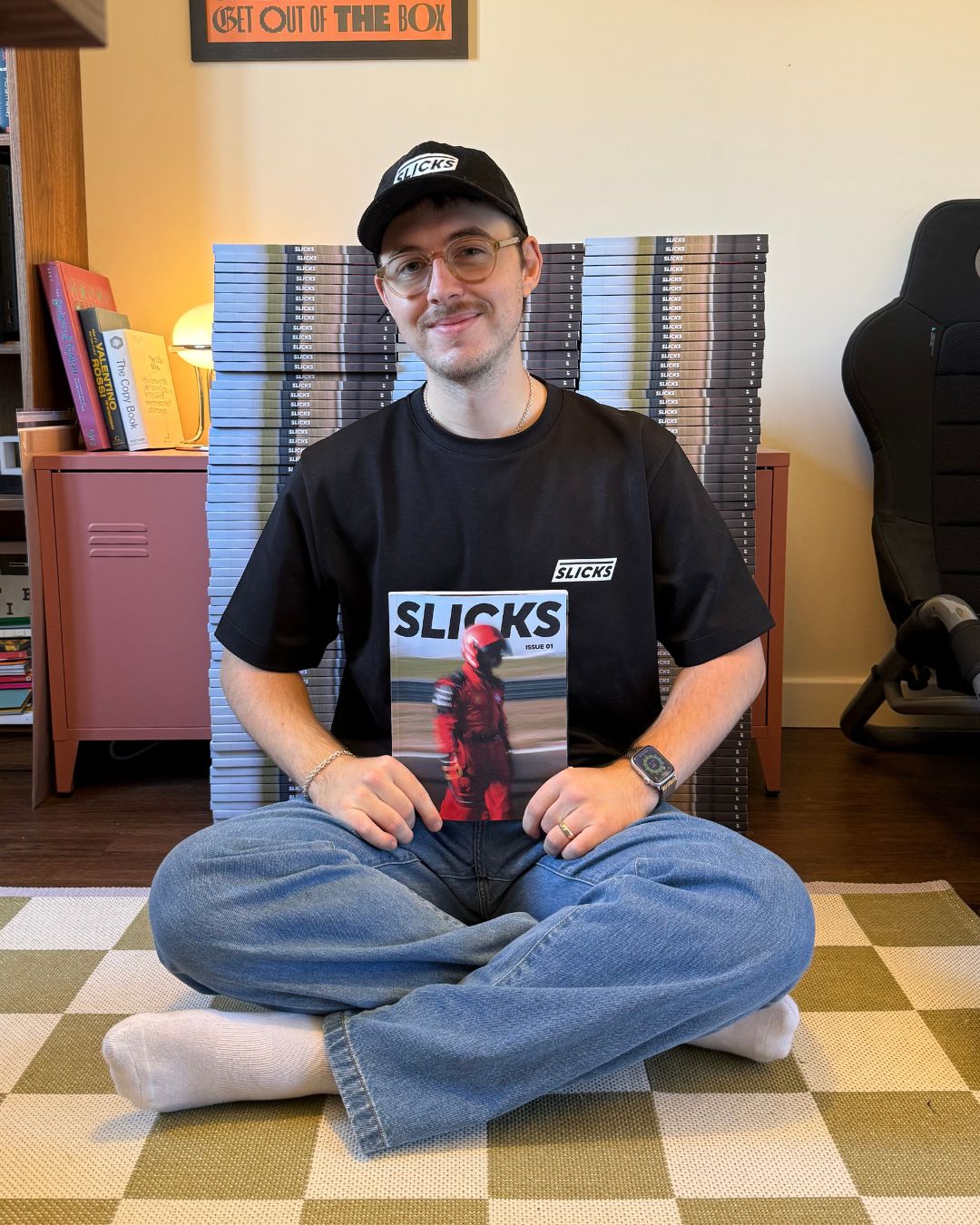
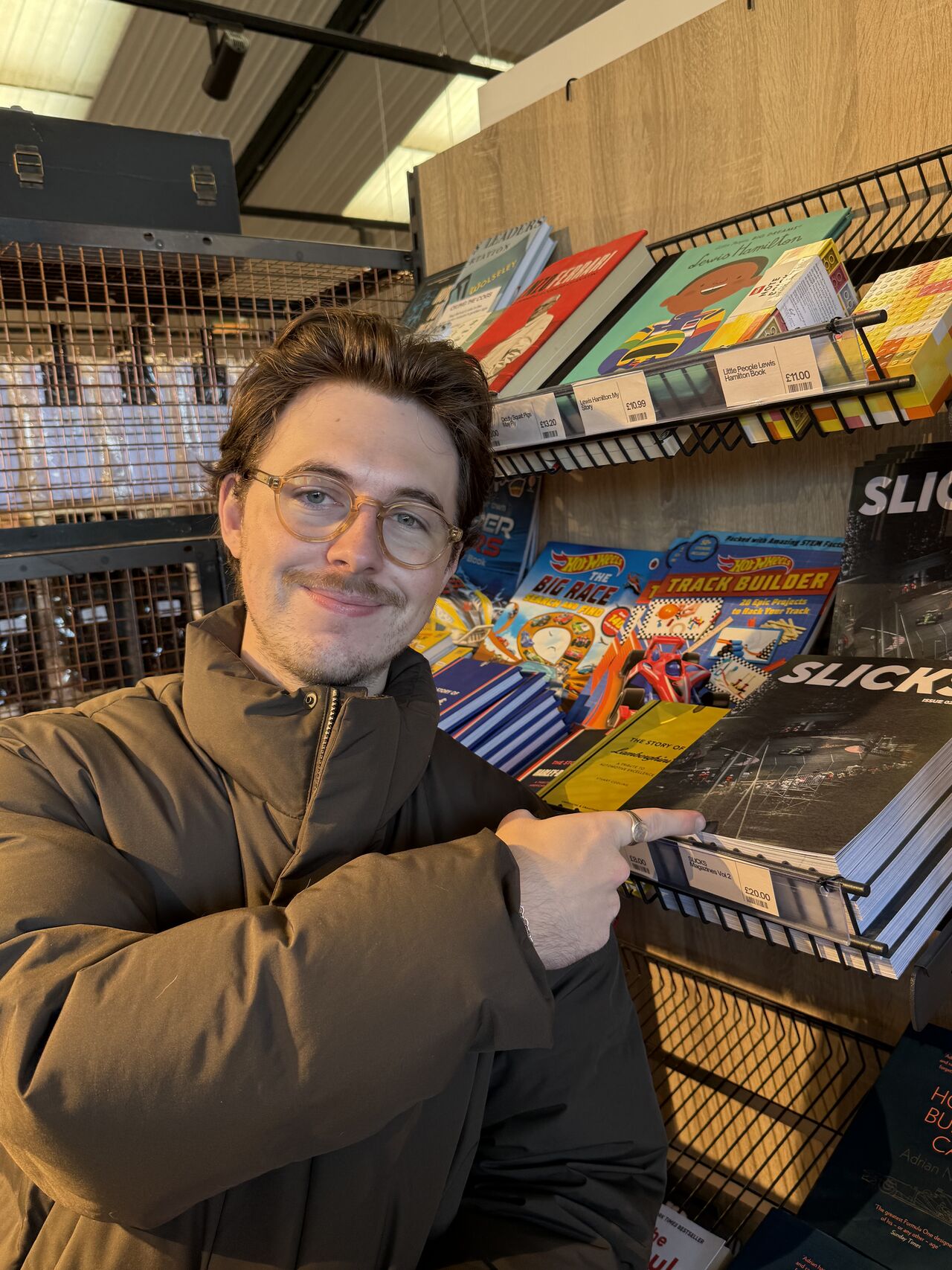
“It has become quite a nice, sort of tight knit community,” Lewis said. “I’ve got people in the US and Australia that I never would have met otherwise.”
What SLICKS is building, more than anything else, is connection. A tight circle of readers, contributors, and supporters has formed around the magazine, connecting people from around the globe who share a love for motorsport in all its forms. People are reaching out to one another, planning trips, collaborating on articles. It is the kind of thing that is genuinely hard to manufacture and impossible to fake, and it all starts with one man reading every single pitch that lands in his inbox.
I was fortunate to have my work featured as the first article in Issue 01. I loved getting to see my work in physical media so much that I applied for Issue 02 as well. Getting this opportunity with SLICKS has led me to some unannounced work that I will share when I can, but it involves very expensive carbon fiber Porsches and me getting paid for looking at them. Something that I would not have been able to do without Lewis and SLICKS. A common theme I hear from other SLICKS contributors. On behalf of all that contributed to SLICKS, can I just say, “Get in there Lewis!”
Speedbumps and Long-Shots that Paid Off
Lewis was working as a motorsport freelancer when SLICKS came together in his head. He had been traveling for work, had seen how the industry operated up close, and had a clear picture of what was missing. The magazine idea was not some grand business plan. It was a gut call from someone who wanted to read something that did not exist yet.
However, it was not without its early growing pains. Issue 01 ran into a legal dispute with a photographer that threw off the entire rollout, forced a faster turnaround on Issue 02, and left Lewis without an issue to sell. I won’t comment more on this out of respect, but it would have been completely understandable for Lewis to close up shop and walk away. Mercifully, he did not. “Thankfully, it’s recovered, and it hasn’t just kept getting harder,” he told me, with the quiet relief of someone who genuinely was not sure for a while. With such tight margins for a self-funded passion project, an early speedbump can be a silver bullet in the heart. But SLICKS is still here.
What kept him going was partly stubbornness and partly something more meaningful. The connections the magazine was already creating were hard to walk away from. People like John Armstrong, a rally driver Lewis featured in Issue 01, who has since made it into the WRC. Or Holly McRae, who Lewis met separately around the same time, and who is now running McRae Media in her own right. Two people he introduced himself to in Wales, now at the top of the rally world, and both still in his contacts.
“I could just send her a message,” he said about Holly. “And John Armstrong, I can just message a world rally driver. It’s weird, you know. It shouldn’t be happening.” Oh, but it is Lewis!
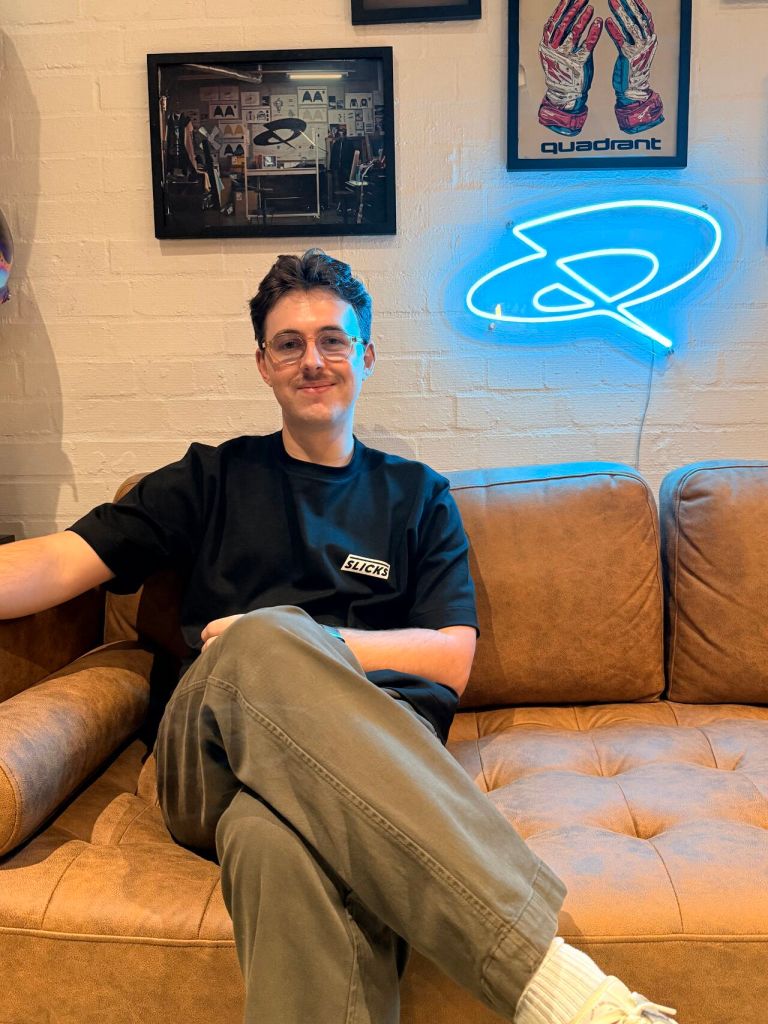
The access that comes with doing this seriously, even on a shoestring, has a way of compounding. Lewis interviewed the CEO of Quadrant, Lando Norris’s brand, who then offered to connect him with Jamie Chadwick, Jean Eric Vergne, and others in the professional racing world. Just like that, names that once felt completely out of reach are suddenly one message away. And the connections keep stretching further. Lewis grew up watching Valentino Rossi the way a lot of us grew up watching whoever first made us fall in love with racing. His dad raced bikes. He still has the autobiography he received as a six or seven year old, back when Rossi was on the Yamaha team and seemingly untouchable. Getting Rossi into SLICKS in some capacity is the stretch goal he has quietly been working toward, and the BMW and WEC connections he has been building are starting to make it feel less like a dream and more like a matter of time.
The magazine is currently breaking even. Lewis is not getting rich off this. But the doors it keeps opening, and the people it keeps connecting him with, have made every complicated editorial decision worth it.
What Is Next for SLICKS and How to Be Part of It
SLICKS is has just released Issue 03 with a rally-heavy lineup and a growing sense of where it is going. Lewis has been to Sweden for the main feature with a collab with Olie Solberg and Monster Energy, and there is already a backlog of material carrying over into Issue 04. That is a good problem to have.
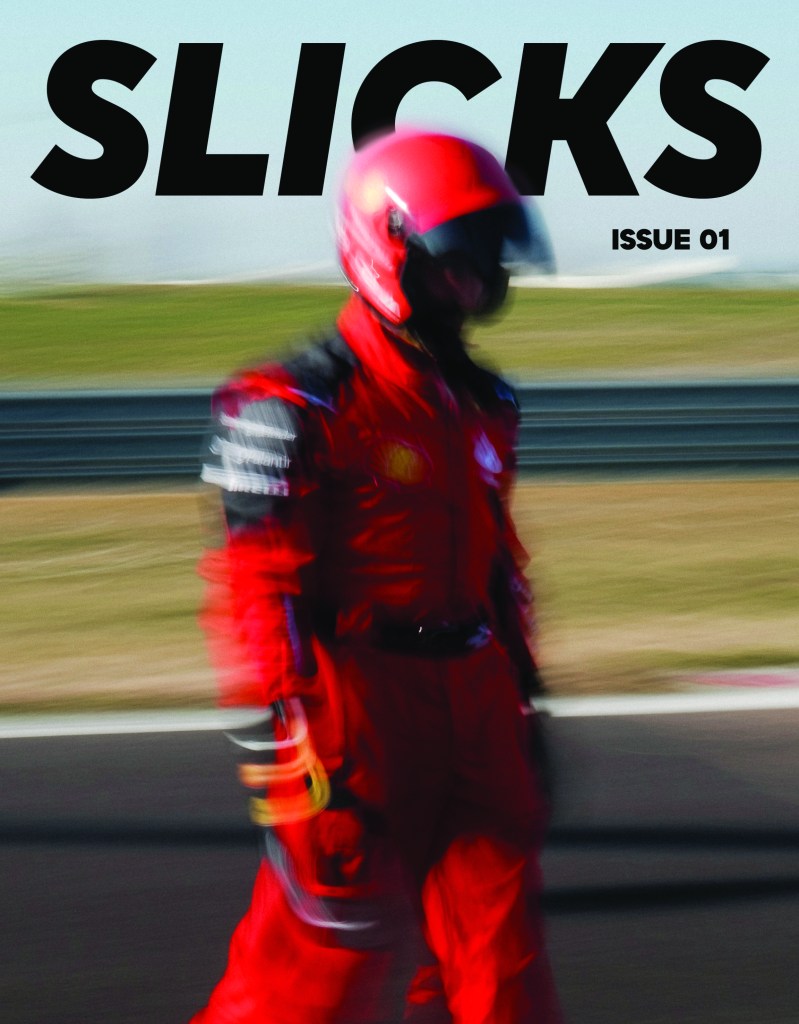
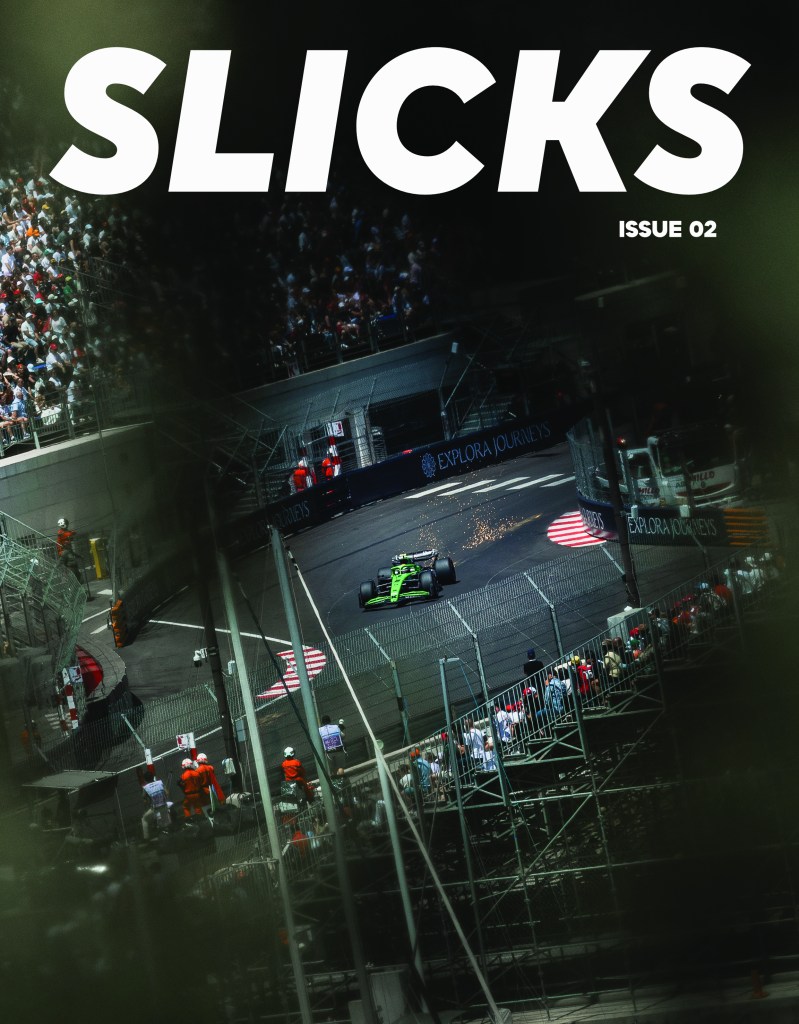
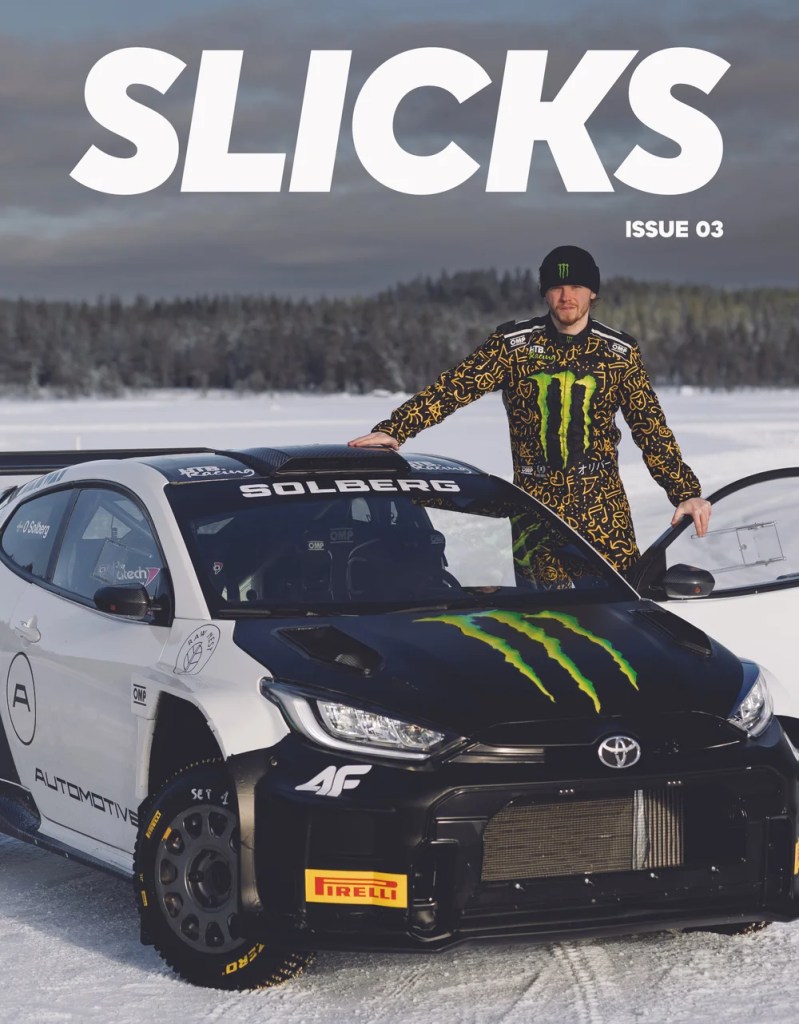
Beyond the page, Lewis keeps coming back to the idea of taking the community offline. He floated the concept of SLICKS Socials, and while he was quick to note the alliteration, the thinking behind it is genuine. Physical meetups for readers, contributors, and anyone who feels connected to what SLICKS is doing. A barbecue, a race watch, something that gets people into the same room and off their phones.
“Community and people,” he said. “Just get together with people and talk, because people are interesting, and it’s better to be off the dumb phone.”
For anyone who wants to submit to SLICKS, the door is open and Lewis reads every pitch personally. What gets him interested is not the prestige of the event or the fame of the subject. It is the angle. The perspective that has not been told before. He described it simply: if a pitch sounds interesting to him personally, he wants it written so he can read it. That is the bar.
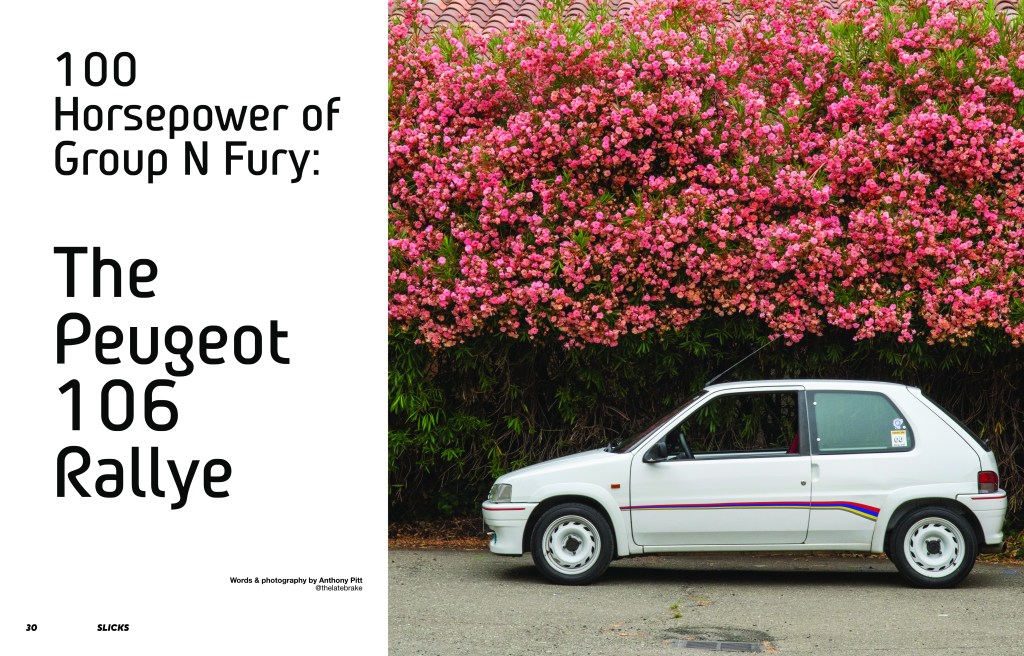
I submitted a piece about my Peugeot 106 Rallye for Issue 02, and that single submission opened more doors than I expected. It is the kind of compounding effect Lewis describes regularly, and it is real. One story leads to a conversation, a conversation leads to a connection, and before long, you are somewhere you never expected to be, talking to someone you never thought you would meet. That is SLICKS at its best.
Print Is Not Dead. It Just Needed the Right People (Person).
At one point in our conversation, we ended up talking about what it actually feels like to hold a piece of your own work in print for the first time. It is genuinely hard to explain to someone who has only ever published online.
You can put something on a website. People can read it, share it, leave a comment. And that is great. But a URL can disappear. A website can change. A domain can lapse. A physical magazine sitting on a shelf is not going anywhere. The story is in there, and it is permanent in a way that almost nothing digital ever really is.
“It feels more intentional when it’s printed,” Lewis said. “It feels more of a moment, more significant.”
That is what SLICKS is chasing. Not just a magazine, but a record. A document of this moment in motorsport culture, made by the people who are actually living it, told in their own words, and printed on paper you can hold.
SLICKS is available in select stores across the UK and ships worldwide through their website. If you want to submit a piece, follow Lewis on Instagram and keep an eye on the SLICKS account for submission details. The worst that happens is nothing. The best that happens is you end up in print, part of a community you did not know you needed, and maybe one good conversation away from something you never saw coming.
Motorsport media is a big world. SLICKS is the best ways into it.

 The Late Brake
Leave a Reply